
 By Pat Kelly
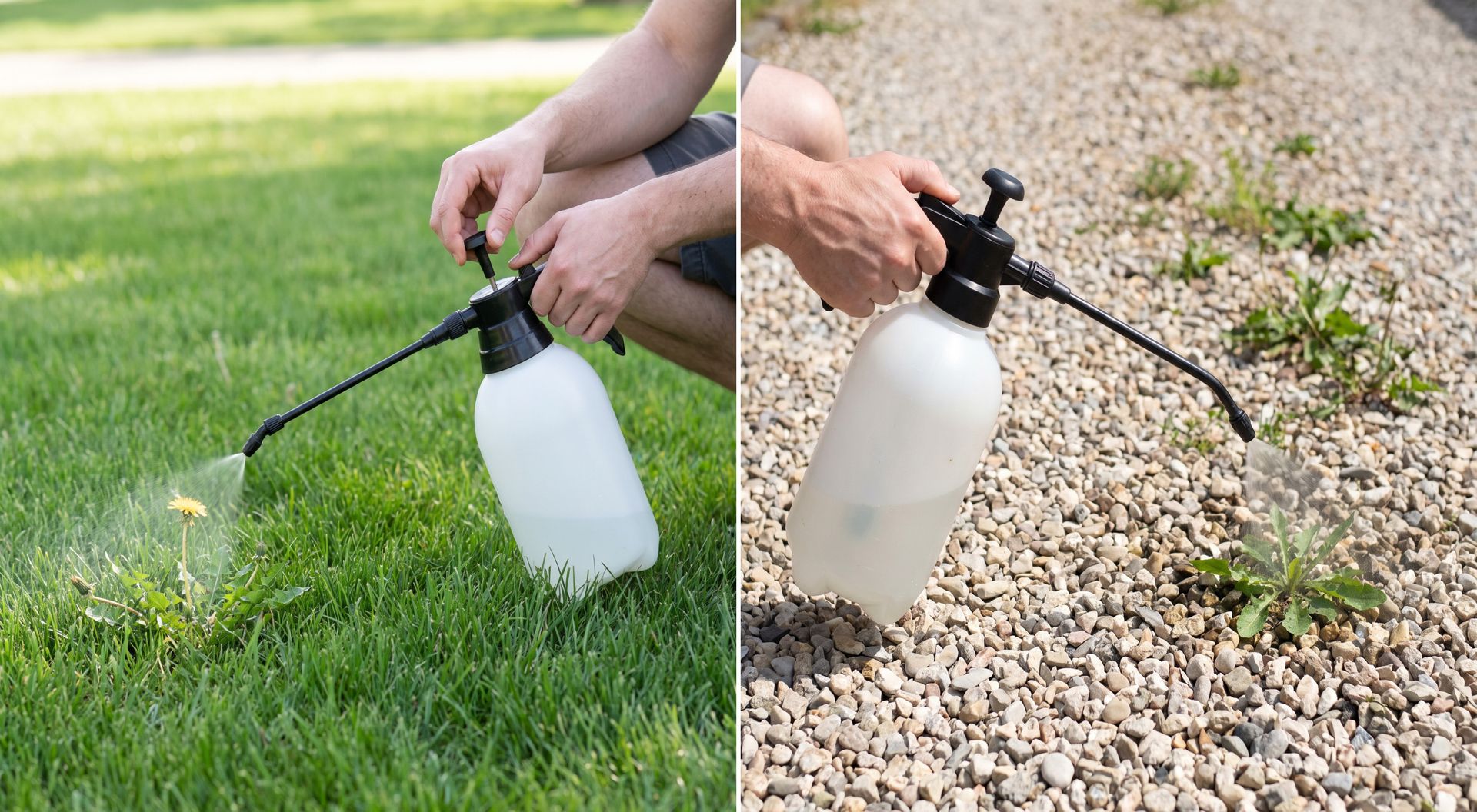
 Most lawn weed killers ask you to make a choice: kill the weeds and damage the grass, or spare the grass and live with the weeds. That's the trade homeowners have made for decades — pick your poison, literally. A selective weed killer is the product class that promised to end that trade by targeting broadleaf weeds while leaving lawn grasses standing. Most selective herbicides do this with synthetic chemistry that organic-lifestyle homeowners want to avoid. Salacia is the first OMRI-certified organic herbicide to deliver true selective action — a category of one in 2026.
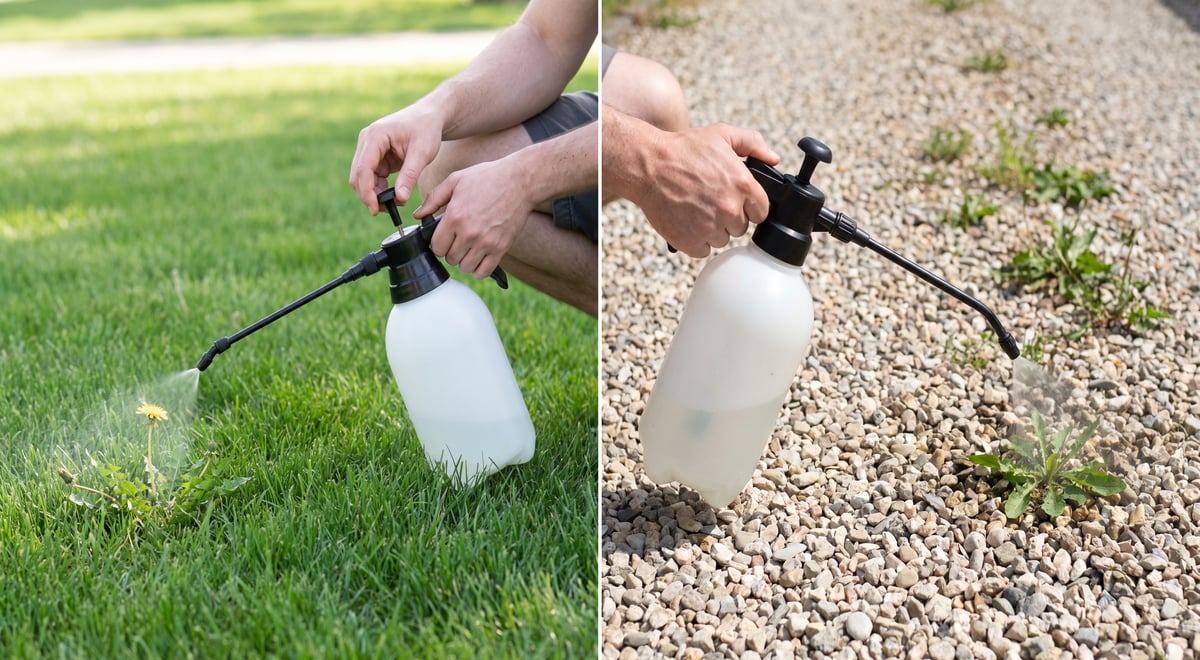
What makes a weed killer "selective" — and what makes one the best?
"Selective" describes herbicides that distinguish between plant types — typically targeting broadleaf weeds (dandelion, clover, chickweed, ground ivy) while leaving lawn grasses untouched. Non-selective herbicides don't make that distinction — they kill any plant they touch.
That definition is the easy part. The harder question — the one this whole post turns on — is what makes one selective weed killer better than another. After auditing the category, four criteria separate the genuinely useful products from the marketing.
The four criteria for the best selective weed killer
- True selectivity — actually spares lawn grass when applied at label rate, with predictable behavior across cool-season and warm-season turf.
- Pet Friendly and people-safe — the active and inert ingredients don't require keeping the family off the lawn for days, and there's no chronic-exposure concern from residue.
- A verified mechanism, not a marketing one — the product works through a real, documented biological pathway (osmotic dehydration, growth-regulator disruption, etc.), not "natural energy" or pseudo-science.
- Independent organic certification — OMRI Listed, not self-declared "natural." OMRI evaluates ingredient compliance with USDA organic standards; self-declared organic claims are unregulated.
Most selective products meet one or two criteria. Synthetic-selective herbicides hit criteria 1 and 3 — they're truly selective and their mechanism is well documented — but they fail criteria 2 and 4. They're built around active ingredients in chemical classes that organic-lifestyle homeowners want to leave outside the yard, and they're not OMRI Listed by definition.
Organic alternatives flip the failure pattern. They meet criteria 2 and 4 but fail 1 — almost all of them are non-selective contact burners that scorch grass alongside weeds. They ship as "organic weed killer" but they can't select. They're commodities pretending to be solutions.
Salacia is the first product to hit all four. That's the category-of-one claim — not a slogan, a structural position in the market.
How selective weed killers actually work
Selectivity isn't magic. It's biology. Plants have different leaf structures, different waxy cuticle compositions, different translocation systems, different growth patterns. A selective herbicide exploits a difference that exists between the target weeds and the desired grass.
Synthetic-selective herbicides typically work through one of two pathways: they mimic plant growth hormones (causing uncontrolled growth that exhausts the weed), or they disrupt a specific enzyme pathway that broadleaf weeds depend on more than grasses do. The difference is metabolic. The weed metabolizes the chemical in a way that kills it; the grass metabolizes it in a way that doesn't.
Organic-selective herbicides — when they exist at all — work differently. Salacia uses rapid osmotic dehydration as its mechanism. The naturally derived active ingredients pull water out of plant tissues on contact. Broadleaf weeds, with their wide flat leaves and shallow protective cuticle, lose moisture rapidly and collapse. Lawn grass, with its narrow vertical blades and thicker waxy cuticle, sheds the application and continues photosynthesis.
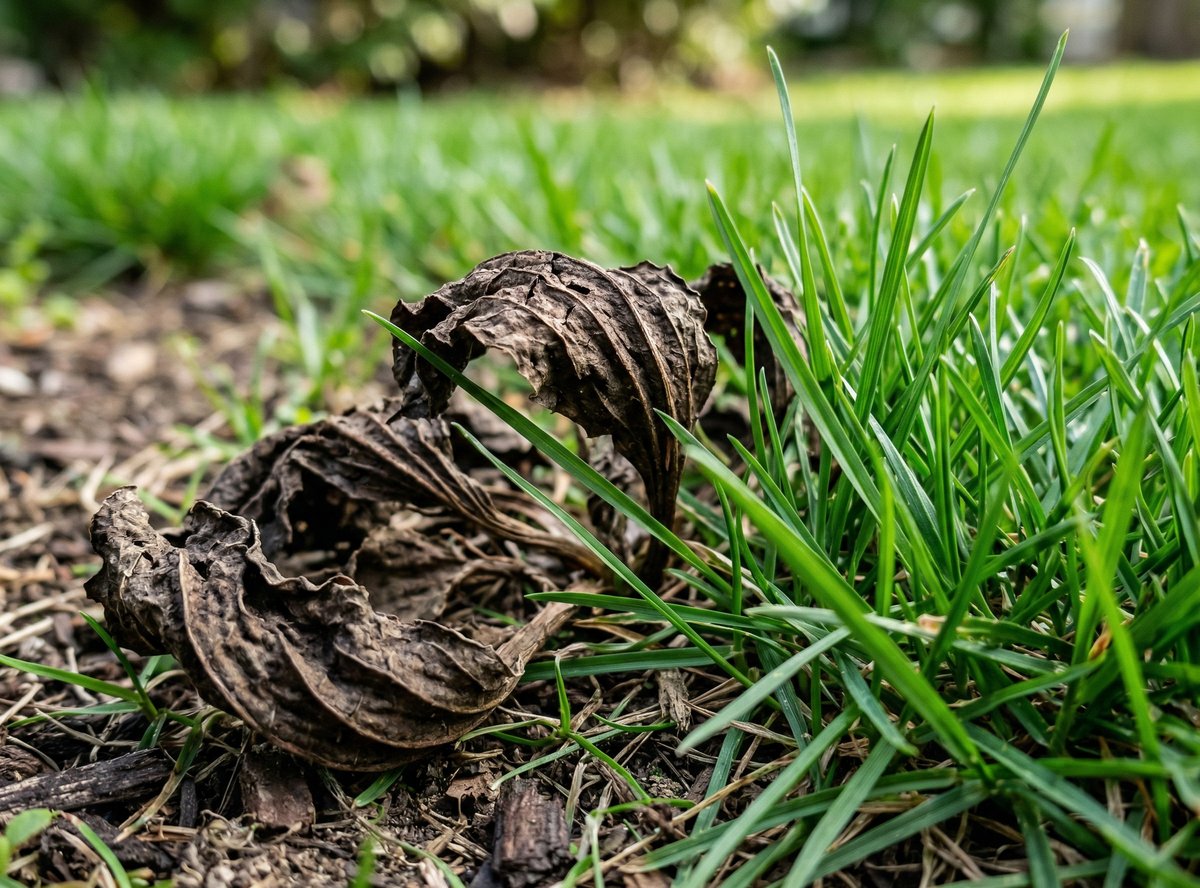
The mechanism is contact-based. The herbicide does its work where it lands. Root death happens indirectly: when the crown and basal tissues collapse, the root system loses its food supply and dies down with the rest of the plant. We cover this in depth in our companion post on how selective weed killers work.
For a side-by-side breakdown of selective versus non-selective approaches — including when you'd want each — see our explainer on selective vs. non-selective herbicide.
Synthetic-selective vs. organic-selective — the trade you don't have to make anymore
Until recently, the selective-herbicide aisle gave homeowners exactly two options.
Option A: synthetic-selective. These are the legacy products built around active ingredients in the phenoxy and benzoic acid families — combination broadleaf herbicides that have been on the market for decades. They are genuinely selective and they genuinely work. They are also the products that pet owners, parents of small children, and organic-lifestyle homeowners want to avoid. Re-entry intervals require keeping the family off the treated area for hours after application, and residue concerns drive a meaningful chunk of the audience out of the synthetic aisle entirely.
Option B: organic non-selective. This is the "natural alternative" aisle — products built around contact-burn formulas. They are typically OMRI Listed or independently certified, and they're broadly considered safer for households with pets and kids. They are also non-selective. They burn whatever you spray. Apply one to a lawn and you get a brown patch where every weed used to be — and where every blade of grass used to be too. They solve the safety problem and reintroduce the original trade.
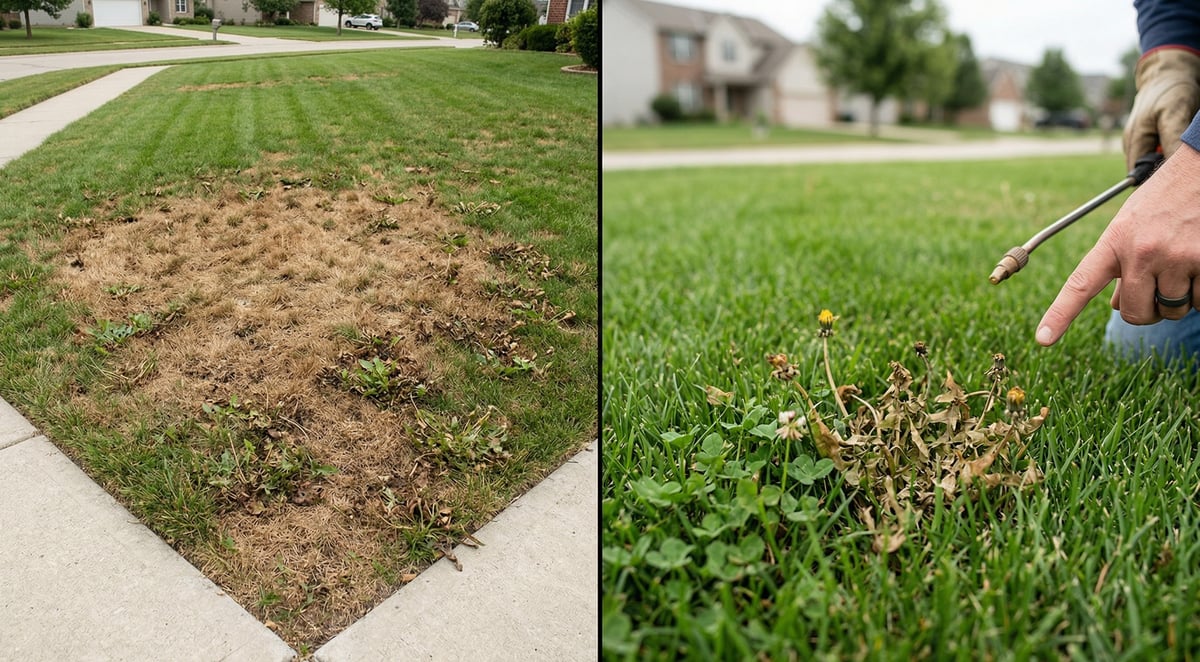
For years that was the entire market. You picked a side, and the side you didn't pick was the trade. Salacia is the product that ended the trade.
The Salacia category-of-one position
Salacia is the first OMRI-certified selective organic herbicide. That phrase is short and the words look standard, but each one carries weight, so it's worth slowing down.
- First — before Salacia, no product existed that combined organic certification with true selectivity. The category did not have a member.
- OMRI-certified — independently evaluated for compliance with USDA organic ingredient standards. Not self-declared "natural." Not "plant-based." Certified.
- Selective — at label rate in lawns, it targets broadleaf weeds while sparing the grass. Salacia is designed to be selective, but temporary paling or yellowing on lawn grass is possible depending on irrigation, lawn health, application rate, and environmental conditions. Always recommend testing a small area first before full-lawn application.
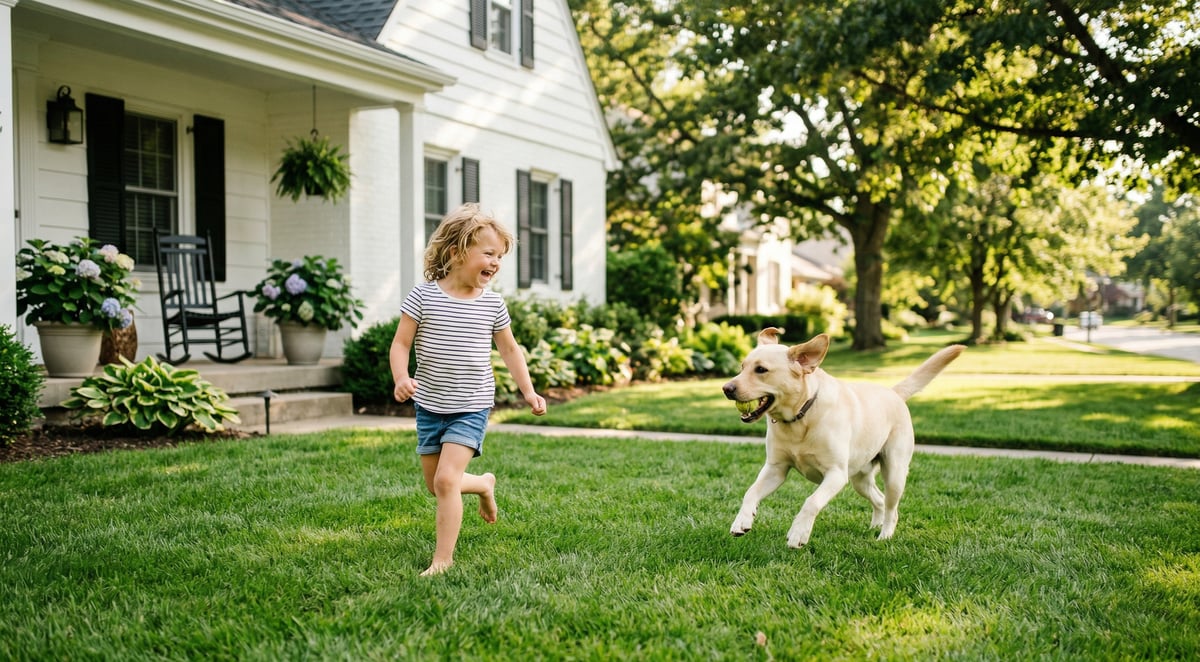
- Organic herbicide — the product works on contact with naturally derived ingredients with long safe-use histories. It is Pet Friendly per its label.
The four criteria above — selectivity, household safety, verified mechanism, independent certification — are the four corners of the category. Synthetic-selective products own two. Organic non-selective products own two. Salacia owns all four. That's not marketing. It's the structural reason the category needed a new entrant.
Ready to Take Back Your Lawn?
Salacia™ is the first OMRI-certified selective organic herbicide — kills weeds, not grass. Choose your lawn size:
How the four classes actually compare
Four broad classes of product get recommended for weeds in a lawn. They behave very differently, and only one of the rows below has a single occupant.
| DIY burn-down sprays | Iron-based (chelated iron) | Synthetic selective | Salacia | |
|---|---|---|---|---|
| Spares the lawn | No — burns whatever it touches, grass included | Yes | Yes | Yes — test a small area first |
| OMRI-certified organic | Some products | No — mineral-based, not certified organic | No | Yes |
| What the kill looks like | Fast top-burn, roots regrow | Broadleaf blackening | Slow wilt over weeks as the plant carries it inward | Rapid dehydration of whatever the spray touches |
| Selective and total-kill from one bag | No | No | No | Yes — the mixing rate decides which job it does |
What the field trials measured
Selectivity here was measured rather than assumed. Across 65 species tested at 28 field sites, every perennial lawn grass survived treatment, and the mortality was concentrated in broadleaf species. Test a small area first.
Only 3 annual grasses out of the 65 species showed any susceptibility in those trials — which is precisely why a selective-rate application is not the tool for grassy weeds, and we say so rather than sell you the wrong job. Penn State Extension's guide to weed management in turf covers the broader selective-versus-non-selective distinction in turf.
On the weeds people actually give up on: ground ivy averaged 98.7% leaf mortality across a multi-site field trial, and one site showed no regrowth a full year after treatment.
Dual-action: selective at lawn rate, non-selective at higher rate
Selectivity is one of two halves of the Salacia story. The other half is dual-action.
Most herbicides are one mode or the other. Selective products are formulated to spare grass; non-selective products are formulated for total vegetation control. They are typically separate bags on separate shelves, and homeowners with both a lawn weed problem and a driveway weed problem buy two products.
Salacia's Hybrisal Technology combines both modes into a single formulation. The difference between selective and non-selective behavior is the mix rate:
- Selective mode (lawns): 1 lb (3 cups) per gallon water. At this rate, the formulation targets broadleaf weeds and leaves the lawn grass standing.
- Non-selective mode (driveways, patios, fence lines): 1.5 lb (4 cups) per gallon water. At this higher concentration, the formulation kills any vegetation it contacts — broadleaf weeds, grasses, anything growing where you don't want growth.
One bag. Two modes. The mixing rate is the switch. That capability — dual-action from a single bag, organic and OMRI-certified — does not exist in any other product on the market.
Which weeds does selective Salacia handle?
At the selective lawn rate, Salacia controls the broadleaf weed range homeowners battle most:
- Spreading lawn invaders: clover, ground ivy (creeping charlie), chickweed, oxalis, wild violet, prostrate spurge, prostrate knotweed
- Taproot weeds: dandelion, thistle (precision required), ragweed
- Stoloniferous weeds: dollarweed, wild strawberry, common lespedeza
- Cool-season annuals: henbit, purple deadnettle, corn speedwell, lamb's-quarter, purslane
- Sub-canopy invaders: Japanese stiltgrass, bindweed
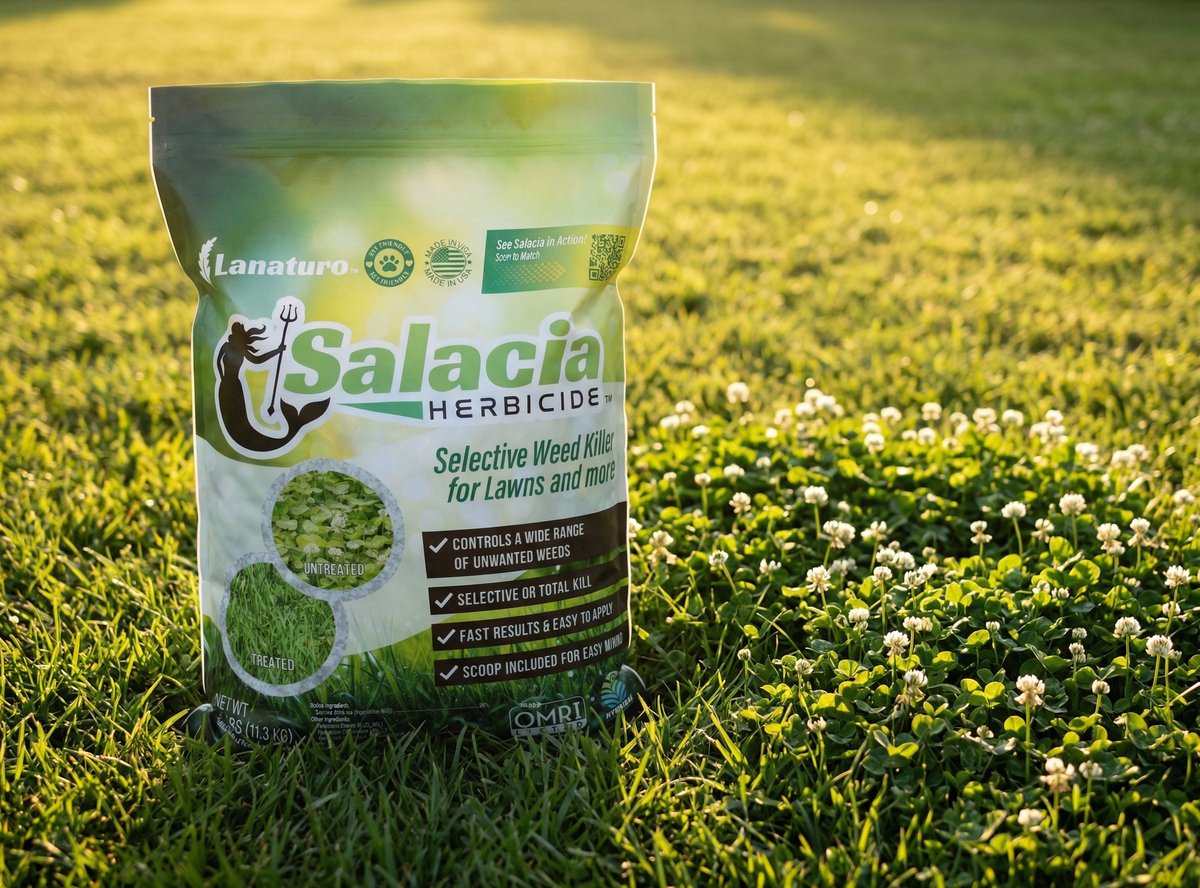
For specific weed treatment guides — including the canopy-lift technique for mat-forming weeds like ground ivy and the crown-pooling technique for dandelions — see our Weed Control Guide, which covers 46 weeds with photo identification, mixing rates, and step-by-step protocols.
A few weeds need the higher non-selective rate even when they appear in a lawn. Poison ivy, Japanese knotweed, and giant hogweed are dense, waxy, or woody enough that the selective rate doesn't penetrate. For these, plan on the 4-cup-per-gallon non-selective application — and accept that the grass underneath will go with them.
For an organic-lifestyle look at where Salacia fits in the broader category, see our best organic weed killer guide.
How to apply selective Salacia for best results
Selective behavior depends on three things: the right mix rate, the right conditions, and full coverage. Miss any of the three and results suffer.
1. Mow first, then wait for new growth
Mowing removes the older, waxier upper canopy and triggers fresh broadleaf growth that's easier to penetrate. Mow the day before application, then apply when you can see new green leaf tissue on the target weeds.
2. Apply at 60-80°F on a calm, dry morning
Above 80°F the active ingredients can evaporate before they finish their work; below 60°F broadleaf plants slow their uptake. Calm morning conditions prevent drift and give the application a full day to do its job before evening dew rewets the leaves.
3. Mix to the selective rate: 3 cups per gallon
Three cups (1 lb) of Salacia per 1 gallon of water for lawn applications. Use a pump, backpack, or larger powered sprayer — hose-end sprayers cannot deliver the correct concentration. Why granules instead of a pre-mixed jug? The full case for the dry form is in our granular weed killer guide.
4. Full coverage is the success factor
This is where most applications fall short of their potential. Salacia is a contact-based herbicide. If the spray doesn't reach the plant tissue, it doesn't act on the plant tissue. Full coverage means:
- Wet the entire canopy — top of every leaf
- Wet the undersides — flip mat-forming weeds with the spray wand and hit underneath
- Wet the crown — the meristem at soil level is where regrowth begins
- Wet to the point of runoff — not misting, drenching
For best results, treat the application as a thorough soaking, not a quick spritz. Your control is directly proportional to your coverage.
5. No watering for 24 hours after
The herbicide needs uninterrupted contact time to complete its work. Hold off on irrigation for 24 hours after application, and check the forecast for rain.
Selective weed killer FAQ
Quick answers to the questions homeowners ask most when evaluating selective weed killers.
What's the difference between selective and non-selective weed killer?
Selective products distinguish between plant types — typically targeting broadleaf weeds while leaving lawn grasses standing. Non-selective products kill any plant they contact. Selective is for lawns. Non-selective is for hardscapes (driveways, patios, fence lines) where you want zero vegetation.
Is there a selective weed killer that's safe for pets?
Most synthetic-selective products carry re-entry intervals that require keeping pets off the lawn for hours after application. Salacia is Pet Friendly per its label — naturally derived ingredients with long safe-use histories. Let the treated area dry before allowing pets back, not because of safety concerns, but because animals may be attracted to lick it, which could affect results on the weeds.
Can I make my own selective weed killer at home?
Homemade weed killer recipes that circulate online are non-selective by definition — they kill any plant they touch, including the grass you're trying to save. There is no DIY recipe that delivers true selectivity. Selectivity comes from a formulation that exploits specific biological differences between weeds and grasses, which requires precise active ingredient ratios.
How quickly does Salacia work on weeds?
You'll see visual changes on broadleaf weeds within the first day, with continued progression over the following week. Stubborn weeds and mat-formers may require a second application to complete the job.
Does Salacia kill weeds permanently?
Salacia kills the existing weed and its crown/basal tissues, which prevents regrowth from the same plant. It does not affect dormant seed banks in the soil — new weeds can germinate from existing seeds in future seasons. Annual treatment, combined with healthy lawn density that crowds out weed germination, gives long-term control.
Ready to choose a product?
Once the selective principle clicks, the practical question is which product to trust on a real lawn. Our ranked answer: the best weed killer that won't kill grass.

Lanaturo
Intelligence
Not sure which weed you're looking at? Show Sal.
Sal is the lawn-care brain behind Lanaturo Intelligence. He doesn't just name the weed — he builds your exact treatment plan and checks whether today is the right day to spray.
Ready to Take Back Your Lawn?
Salacia™ is the first OMRI-certified selective organic herbicide — kills weeds, not grass. Choose your lawn size:
The trade between "kills the weeds" and "spares the lawn" was never a law of nature. It was a gap in the market. The gap is closed.
Salacia is designed to be selective, but temporary paling or yellowing on lawn grass is possible depending on irrigation, general lawn health, application rate, and environmental conditions. Always test a small area before full-lawn application. Always follow label directions.