
 By Pat Kelly
 You spray a selective herbicide on your lawn. The dandelions die. The clover collapses. The grass stays perfectly green. How does the product know the difference? The answer lies in fundamental biology — broadleaf weeds and grasses are structurally different plants, and selective herbicides exploit those differences to deliver targeted control. Understanding the mechanism helps you apply the product correctly and get better results.
This guide covers the science behind selective weed control — the three main mechanisms, why application technique matters as much as the product itself, and how organic dehydration compares to synthetic hormone disruption. If you need to understand what selective herbicides are and compare types, start with the complete guide to selective weed killers.
What Is a Broadleaf Weed?
A broadleaf weed is any plant with wide, flat leaves and a net-like vein pattern — as opposed to grasses, which have narrow blades with parallel veins. Common broadleaf lawn weeds include dandelions, clover, wild violet, ground ivy, and chickweed. Because broadleaf weeds have a larger leaf surface area and an exposed growth point at the soil surface, selective herbicides can target them while leaving narrow-bladed grass unharmed.
The Biology Behind Selectivity
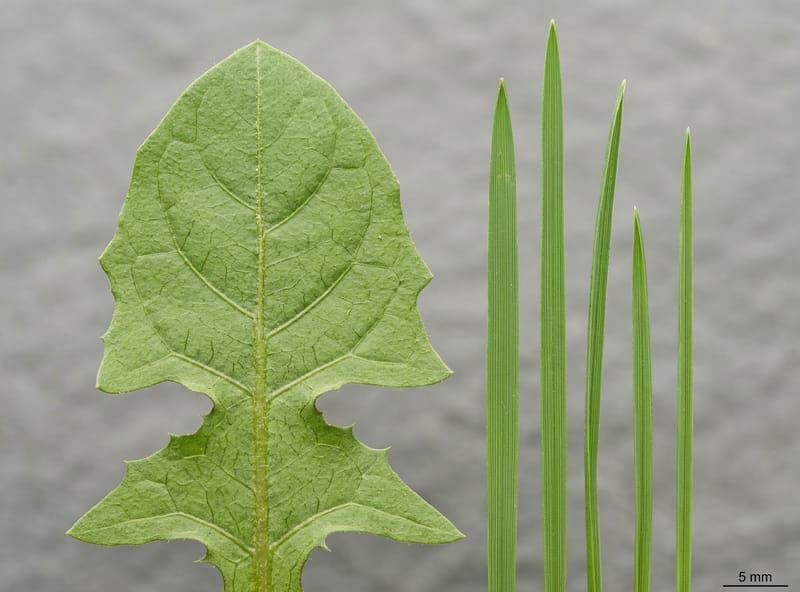
Selective herbicides work because broadleaf weeds and grasses are fundamentally different organisms. They belong to different plant classes — dicots (broadleaf) and monocots (grasses) — that diverged in evolutionary history over 140 million years ago. These differences show up in every aspect of their biology:
Want to see selective and non-selective compared side by side? Read our full guide → Selective vs. Non-Selective Herbicide: The Third Option
Broadleaf Weeds (Dicots)
- Wide, flat leaves with large surface area
- Exposed growth point (crown) at soil level
- Net-like vein pattern in leaves
- High surface-to-volume ratio — absorbs more product
- Examples: dandelion, clover, wild violet, ground ivy
Grasses (Monocots)
- Narrow, upright blades with small surface area
- Protected growth point below soil surface
- Parallel vein pattern in blades
- Low surface-to-volume ratio — sheds product
- Examples: Kentucky bluegrass, fescue, Bermuda, zoysia
These structural differences are why selectivity is possible. A broadleaf weed's wide leaves catch and hold more spray solution than a narrow grass blade. The exposed crown of a dandelion absorbs product directly into the growth tissue, while a grass plant's growth point sits protected below the soil surface. Penn State's weed science program identifies these morphological differences as the foundation of all selective herbicide technology.
3 Mechanisms of Selective Weed Control
Different selective herbicides use different biological mechanisms to kill weeds. Understanding these mechanisms helps you choose the right product and apply it correctly.
1. Auxin Mimicry (Synthetic Hormone Disruption)
The most common mechanism in synthetic selective herbicides. Products containing 2,4-D, dicamba, or triclopyr mimic a natural plant hormone called auxin. When absorbed by a broadleaf weed, these synthetic auxins cause uncontrolled cell growth — stems twist, leaves curl, and the plant essentially grows itself to death. Grasses are less sensitive to auxin disruption because their vascular system processes the hormone differently.
Trade-off: Effective but systemic — the active ingredient moves through the entire plant and can persist in soil. Research from USGS water quality studies documents how these compounds move into groundwater and surface waterways.
2. Photosynthesis Inhibition
Some selective herbicides block specific photosynthesis pathways that differ between plant types. By shutting down the weed's ability to convert sunlight into energy, the plant starves. These are more commonly used in agricultural settings than residential lawns.
3. Osmotic Dehydration (Contact-Based)
This is the mechanism used by Salacia — and it represents a fundamentally different approach to weed control. Instead of disrupting hormones or enzymes, the naturally derived formula creates a high-concentration solution on the weed's leaf surface that draws moisture out of the plant cells through osmosis.
The weed tissue loses water, loses turgor pressure, and collapses. The dehydration moves from the leaves down through the crown — the critical growth point where the above-ground plant meets the root system. When the crown tissue dies, the weed cannot regenerate.
Selectivity works because of the structural differences described above: a dandelion's wide rosette of leaves catches and holds the formula, while a narrow grass blade sheds it. The broadleaf crown sits exposed at the surface and absorbs the product; the grass growth point sits protected below ground.
This same mechanism enables Salacia's unique dual-mode capability — at the selective rate it targets broadleaf weeds, and at a higher rate it acts as a non-selective herbicide for driveways and hardscapes. Learn more in our selective vs. non-selective herbicide comparison.
Why dehydration matters for pet owners: Osmotic dehydration is a physical mechanism that targets plant biology. Animal tissue does not respond the same way — which is why Salacia carries a Pet Friendly on its label. The product is devastating to a dandelion and completely benign to a dog running through the same lawn once the application has dried. Learn more in the Pet Friendly weed killer guide.
How Organic Dehydration Works — Step by Step
Understanding the dehydration process helps you apply the product more effectively. Here is what happens when Salacia contacts a broadleaf weed:
Contact and Absorption
The spray solution lands on the weed's leaf surface and is absorbed through the cuticle and stomata. Broadleaf weeds absorb significantly more product than grass blades due to their larger surface area and horizontal leaf orientation.
Osmotic Water Loss
The concentrated naturally derived formula creates an osmotic gradient that pulls water out of plant cells. Cells lose turgor pressure — the internal water pressure that keeps the plant rigid. The tissue begins to wilt and collapse.
Crown and Basal Tissue Death
Dehydration progresses from the leaves downward into the crown — the growth point where stems, leaves, and roots converge. When the crown tissue dies, the weed loses its ability to regenerate new growth. This is why targeting the crown directly produces the most complete kills.
No Residue
Because dehydration is a physical mechanism — not a chemical poison — there is no synthetic compound accumulating in the soil. The naturally derived formula breaks down after the application, leaving no persistent residue. This is a critical difference from synthetic herbicides, which can remain active in soil for days to weeks. Learn more about the environmental impact in our hidden costs of synthetic herbicides guide.
Application Technique: Why It Matters
Even the best selective herbicide will underperform with poor application technique. The mechanism of action determines how you should apply the product. For contact-based products like Salacia, coverage is everything.
Salacia is designed to be selective, but always test a small area first — temporary paling or yellowing is possible depending on lawn health and conditions. Healthy, well-watered grass bounces back; the weeds do not.
Target the Weed Directly
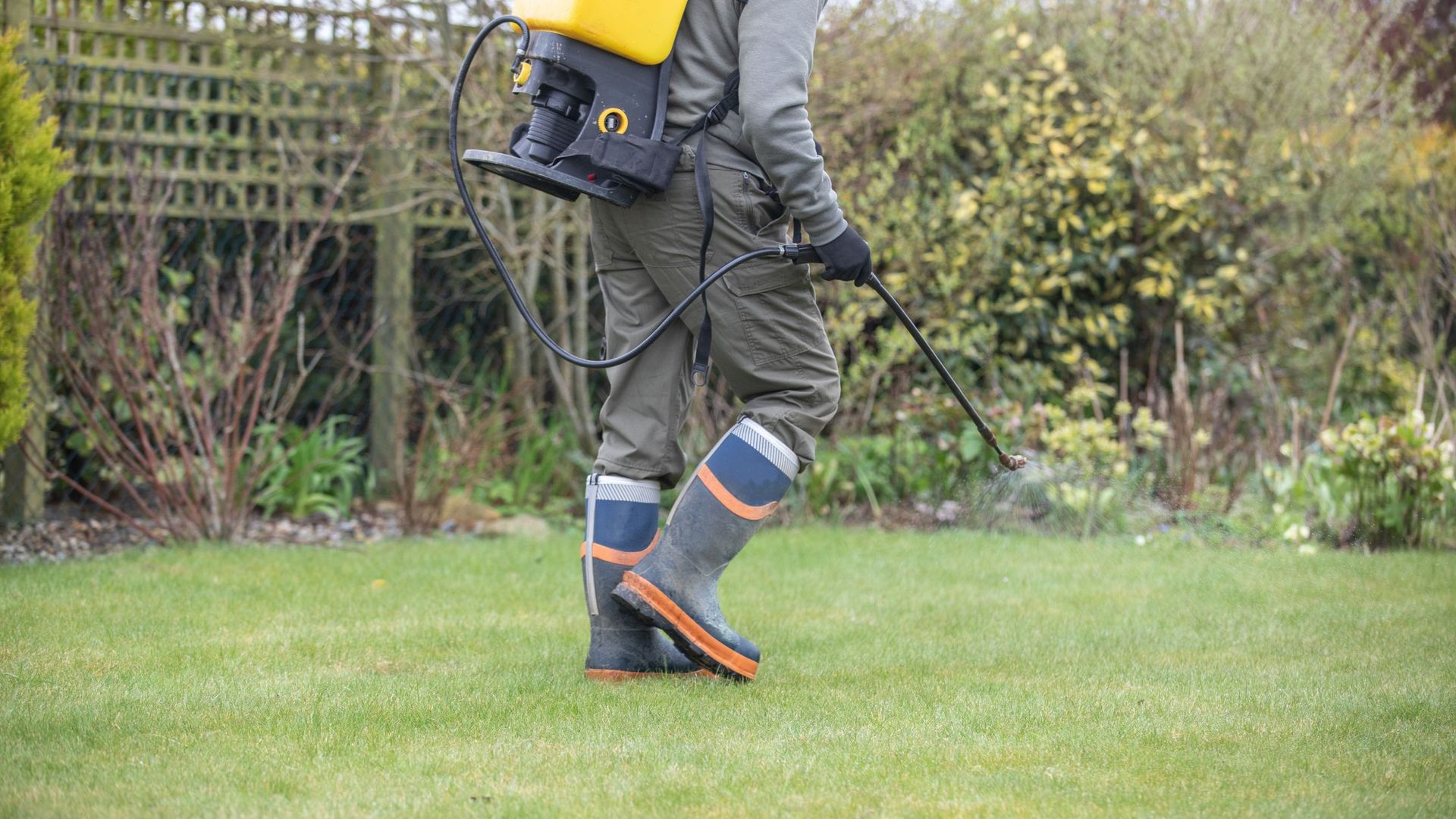
Spray directly onto weed foliage — leaves, stems, and especially the crown where leaves meet the root. Do not blanket-spray the entire lawn.
Wet to the Point of Runoff
Thorough coverage means all exposed weed surfaces are wet. For rosette weeds like dandelions, pool the spray into the center crown for maximum absorption.
Mow First, Then Spray
Mowing before application exposes the weed crowns and reduces grass height so the spray reaches the weeds instead of being intercepted by tall grass blades.
Calm, Dry Conditions
Apply on calm mornings with temperatures between 60 and 80 degrees Fahrenheit. Pick a dry stretch with no rain in the forecast so the product has time to work before it gets washed off. Wind causes drift to non-target plants.
For a complete seasonal calendar and advanced techniques (including the crown technique for dandelions), see the timing and application guide. The dandelion control guide covers specific application methods for the most common lawn weed. For the full picture on treating your whole lawn, start with the complete weed control guide.
Pre-Emergent vs. Post-Emergent: Timing Your Strategy
The timing of your selective herbicide application determines which mechanism you are using and which weeds you can control.
Pre-Emergent Application
Applied before weeds germinate — typically late winter or early spring before soil temperatures reach 55 degrees Fahrenheit. Creates a barrier in the top soil layer that prevents weed seeds from establishing roots. Does not affect established plants (weeds or grass). Must be timed precisely — once weeds have emerged, pre-emergent is ineffective.
Best for: Preventing annual weeds from establishing
Post-Emergent Application
Applied to weeds that are already growing and visible in the lawn. Most effective during active growth periods — early to mid spring and early fall. Salacia is a post-emergent selective herbicide, meaning you apply it directly to weeds you can see. This gives you precise control over which weeds are treated.
Best for: Eliminating visible broadleaf weeds in an established lawn
Most homeowners dealing with dandelions, clover, or ground ivy need post-emergent treatment — the weeds are already visible and growing. Applying a post-emergent selective herbicide during active growth ensures maximum absorption and the most complete kill. For detailed temperature ranges, seasonal windows, and regional considerations, see the timing and application guide.
Ready to Take Back Your Lawn?
Salacia™ is the first OMRI-certified selective organic herbicide — kills weeds, not grass. Choose your lawn size:
See the Results
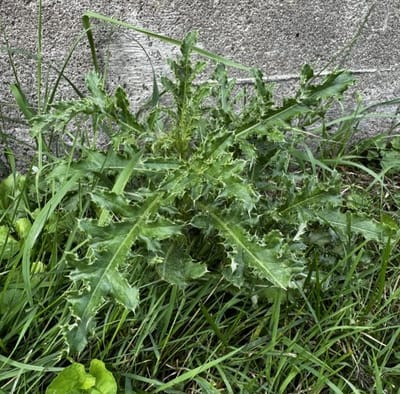
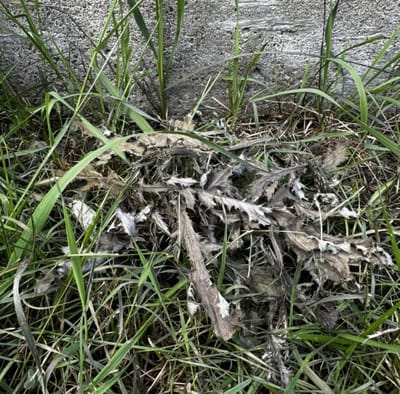
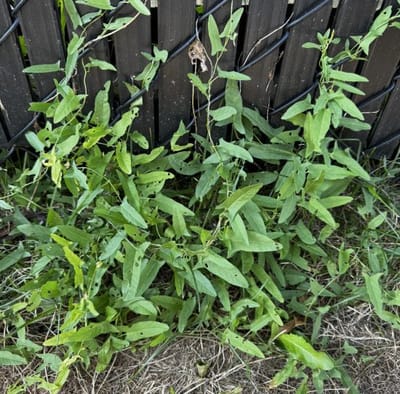
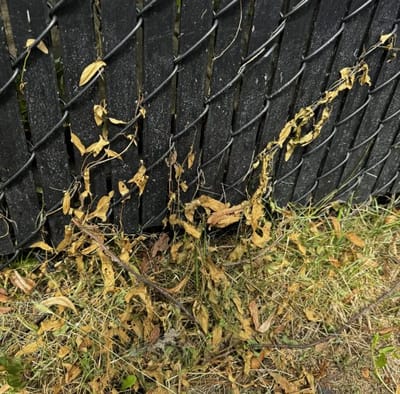
Real results, real lawns — watch Salacia eliminate tough weeds while your grass stays perfectly untouched.
Ready to put selective weed control to work in your own lawn?
The Selective Weed Killer That Puts This Science to Work →Salacia is the first OMRI-certified selective organic herbicide, made by Lanaturo: it removes broadleaf lawn weeds while keeping your grass unharmed.
Ready to choose a product?
Once the selective principle clicks, the practical question is which product to trust on a real lawn. Our ranked answer: the best weed killer that won't kill grass.

Lawn
Advisor
Not sure which weed you're looking at? Show Sal.
Sal is Lanaturo's lawn-care expert. He doesn't just name the weed — he builds your exact treatment plan and checks whether today is the right day to spray.
Ready to Take Back Your Lawn?
Salacia™ is the first OMRI-certified selective organic herbicide — kills weeds, not grass. Choose your lawn size:
The Science Is Simple. The Results Speak.
Selective herbicides have been around for decades — but until now, every organic option destroyed the grass along with the weeds. Osmotic dehydration changes the equation. A physical mechanism. Naturally derived. OMRI certified. The weed collapses. The grass stays.
Pet Friendly — everything else second.
This article is for informational purposes. Always follow product label directions for application rates, timing, and use. Salacia is OMRI certified organic and labeled Pet Friendly.