
 By Pat Kelly
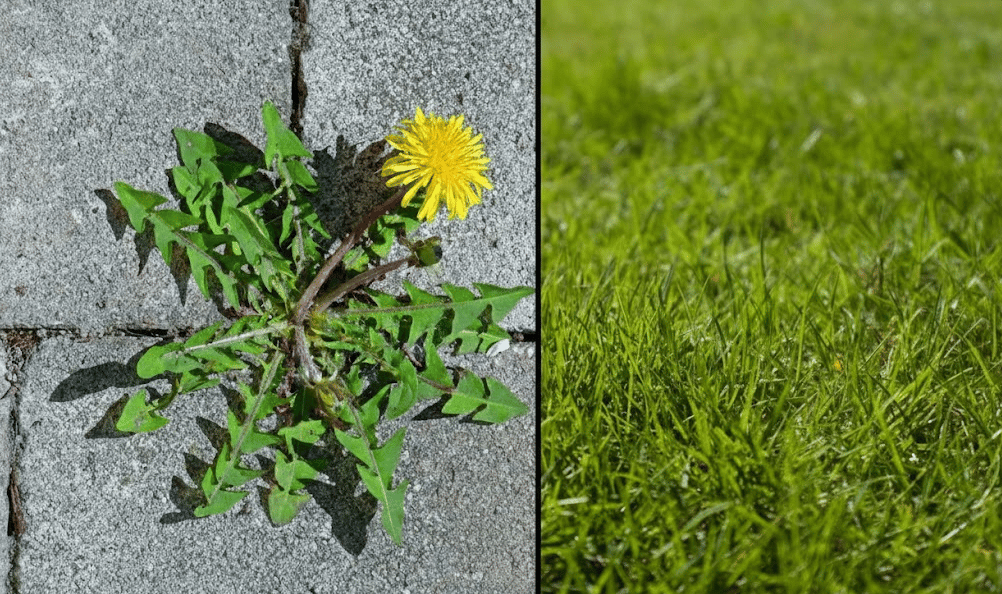
 The difference between a selective and non-selective herbicide is what they kill. A selective herbicide targets specific weed types — typically broadleaf weeds like dandelions and clover — while preserving grass. A non-selective herbicide kills all vegetation it contacts, including grass. For lawns, use selective. For driveways and hardscapes, use non-selective. Salacia is the first product that does both, controlled by mixing rate.
What Is a Selective Herbicide?
A selective herbicide targets specific weed types while leaving surrounding vegetation unharmed. In lawn care, this means killing broadleaf weeds — dandelions, clover, ground ivy, wild violet — without damaging your grass.
Selectivity works because broadleaf weeds and grasses are biologically different. They have different leaf structures, different growth points, and different tissue composition. A selective herbicide exploits those differences to kill the weed and spare the turf.
This is the category every lawn owner needs for weed control in turf. Without selectivity, removing weeds means destroying the grass around them — which creates bare patches that invite even more weeds.
Go deeper: For a comprehensive breakdown of selective herbicide types, how they work, and which weeds they control, read our complete guide to selective weed killers.
What Is a Non-Selective Herbicide?
A non-selective herbicide kills all vegetation it contacts — weeds, grass, flowers, shrubs, everything. There is no differentiation. Whatever the spray touches, it destroys.
Non-selective herbicides are designed for situations where you want total vegetation removal: driveways, sidewalk cracks, fence lines, gravel paths, patio edges, and areas you plan to replant from scratch. The most well-known non-selective herbicide is glyphosate — a systemic chemical that kills plants by blocking a key enzyme needed for growth.
In the organic space, every herbicide on the market was non-selective until recently. Non-selective burn-down sprays — commodity contact formulas — kill everything they contact. This was the fundamental limitation that made organic weed control impractical for lawns: the products worked on weeds, but they also destroyed the turf.
The rule that saves your lawn: Keep non-selective herbicide off your turf. On a lawn, a non-selective spray takes the grass down with the weeds and leaves bare patches that new weeds move into within weeks. If you want to keep your lawn, use selective on turf and save non-selective for the driveway and hardscapes.
Side-by-Side Comparison
Here is how selective and non-selective herbicides compare across the factors that matter most to homeowners:
| Factor | Selective Herbicide | Non-Selective Herbicide |
|---|---|---|
| Mechanism | Targets specific plant biology (broadleaf vs. grass) | Destroys all plant tissue on contact |
| Primary Use | Lawns, turf, pastures — areas with desirable vegetation | Driveways, sidewalks, fence lines, gravel — bare areas |
| Turf Safety | Yes — grass stays intact | No — kills grass along with weeds |
| Organic Options | Salacia (first OMRI-certified selective) | Non-selective burn-down sprays |
| Synthetic Examples | 2,4-D, dicamba, triclopyr | Glyphosate, glufosinate, diquat |
| Best Practice | Mix at the selective rate on the label to keep grass safe | Reserve for driveways and hardscapes, away from turf |
The Problem: Why Most Homeowners Need Both
Here is the reality no herbicide label explains: most properties require both selective and non-selective weed control. Your lawn needs a selective herbicide. Your driveway needs a non-selective one. Your sidewalk cracks, patio edges, and fence lines need non-selective. Your turf around the mailbox needs selective.
Until now, that meant buying two completely different products, learning two different application methods, and keeping track of which one goes where. Use the wrong product in the wrong place, and you either kill your grass or fail to kill the weeds.
Oregon State Extension notes that this confusion is one of the most common sources of lawn damage — homeowners grabbing a non-selective herbicide from the garage and spraying it on lawn weeds because they do not understand the distinction. The result: dead weeds surrounded by dead grass, followed by bare patches that new weeds colonize within weeks.
The environmental trade-offs add another layer. Synthetic selective herbicides work on lawns but contribute to soil contamination and waterway pollution. Organic non-selective herbicides avoid those problems but destroy your turf. Homeowners who want both organic credentials and selective action had zero options.
That was the gap — until it was filled.
The Third Option: One Product, Two Modes
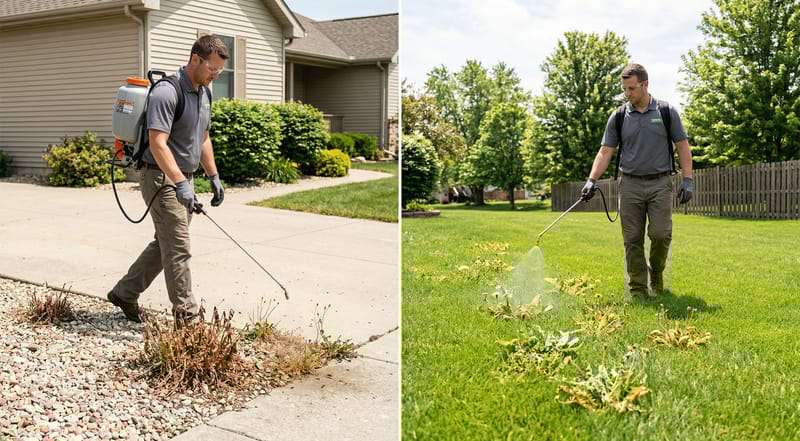
Salacia by Lanaturo is the first herbicide that operates in both selective and non-selective modes — controlled entirely by how you mix it. One product covers your entire property.
Selective Mode
For Lawns & Turf
- Kills broadleaf weeds — dandelions, clover, ground ivy, wild violet, chickweed, henbit
- Grass stays completely unharmed
- Use on any turf area you want to preserve
- Mix at the selective rate on the label
Non-Selective Mode
For Driveways & Hardscapes
- Eliminates all vegetation — weeds, grass, everything
- Driveways, sidewalks, fence lines, gravel, patio edges
- Total vegetation clearance without synthetic chemicals
- Mix at the non-selective rate on the label
How It Works: Hybrisal Technology
Salacia uses Hybrisal Technology — a naturally derived formula that works through osmotic dehydration. When applied to weed foliage, the formula creates a high-concentration solution on the leaf surface that draws moisture out of plant cells through osmosis. The tissue loses turgor pressure, collapses, and the plant dehydrates from the leaves down through the crown.
The dual-mode capability comes from concentration:
- At the selective rate, the dehydration effect is calibrated to overwhelm broadleaf weed tissue (which has a high surface-to-volume ratio and catches more product) while narrow grass blades shed the solution and retain enough moisture to recover
- At the non-selective rate, the concentration is high enough to dehydrate all plant tissue regardless of leaf architecture — total vegetation removal
For the complete science behind how selective dehydration differentiates between weed and grass tissue, read how selective weed killers work.
What Makes This Different
OMRI Certified Organic
Independently verified by the Organic Materials Review Institute. Not a marketing claim — a real certification you can check.
Pet Friendly
The dehydration mechanism targets plant biology, not animal biology. Pet Friendly is right on the label. Learn more in our pet safety guide.
No Synthetic Residue
Physical dehydration leaves no synthetic compounds in your soil. No contribution to the waterway contamination documented by USGS research on conventional herbicides.
One Product, Full Property
No more buying two herbicides. Selective for the lawn, non-selective for the driveway — same bottle, different mixing rate. Simpler, cheaper, fewer chemicals in the garage.
Ready to Take Back Your Lawn?
Salacia™ is the first OMRI-certified selective organic herbicide — kills weeds, not grass. Choose your lawn size:
When to Use Each Mode
Choosing the right mode comes down to one question: do you want to keep the surrounding vegetation, or clear it all?
Use Selective Mode When:
- Removing dandelions, clover, or ground ivy from your lawn
- Treating broadleaf weeds in turf without killing the grass
- Spot-treating weeds in garden borders where you want to keep other plants
- Controlling weeds around ornamental plantings and garden edges
Use Non-Selective Mode When:
- Clearing weeds from driveways, sidewalks, and patio cracks
- Eliminating all vegetation along fence lines and gravel paths
- Preparing a garden bed for replanting from scratch
- Removing everything from areas where no vegetation is wanted
For both modes, application technique and timing matter. Apply during active weed growth (spring and early fall), on calm, dry days with temperatures between 60 and 80 degrees Fahrenheit. For the complete seasonal calendar and temperature guidance, see the timing and application guide.
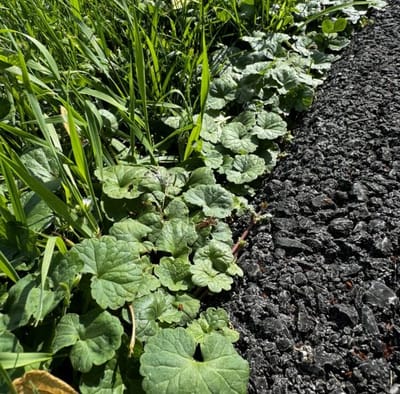
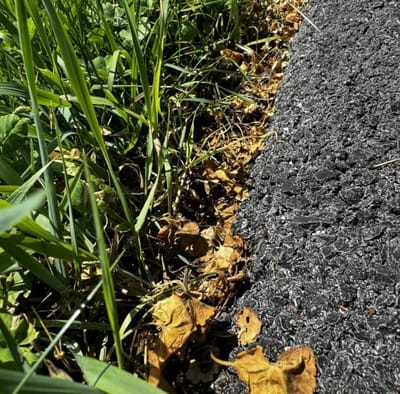
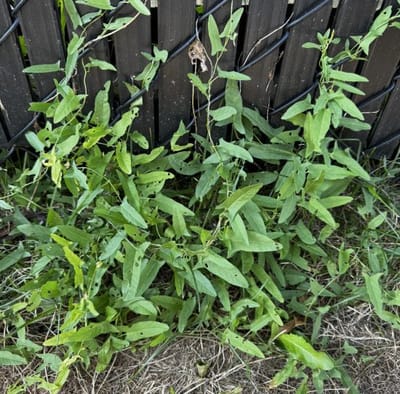
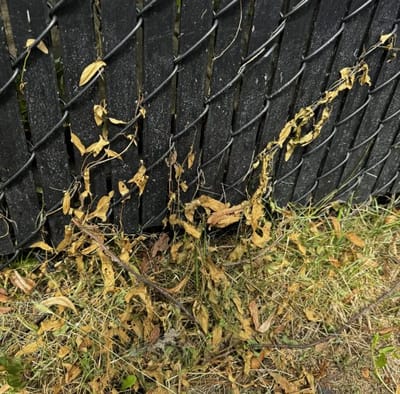
See the Results
One product, two modes — see what each one looks like in action.
Not sure what's in your lawn?
Our Weed Control Guide covers 46 weeds with before-and-after photos, mixing rates, treatment techniques, and full guides.
Explore the Weed Control Guide →Ready to put selective weed control to work in your own lawn?
Meet the First OMRI-Certified Selective Organic Weed Killer →Ready to choose a product?
Once the selective principle clicks, the practical question is which product to trust on a real lawn. Our ranked answer: the best weed killer that won't kill grass.

Lawn
Advisor
Not sure which weed you're looking at? Show Sal.
Sal is Lanaturo's lawn-care expert. He doesn't just name the weed — he builds your exact treatment plan and checks whether today is the right day to spray.
Ready to Take Back Your Lawn?
Salacia™ is the first OMRI-certified selective organic herbicide — kills weeds, not grass. Choose your lawn size:
Stop Choosing Between Selective and Non-Selective
Every property has areas that need targeted weed control and areas that need total vegetation removal. Until now, that meant two products, two application methods, and twice the opportunity for mistakes. Salacia eliminates the trade-off — one OMRI-certified organic product that switches between selective and non-selective modes based on how you mix it.
Pet Friendly. OMRI certified. The first dual-action organic herbicide — built for exactly this.
Salacia is OMRI Listed for organic use and made from naturally derived ingredients. Always follow label directions for best results. Performance may vary based on weed maturity, environmental conditions, and application method. When using selective mode on turf, test a small area first — grass may show temporary paling or yellowing before it recovers.