
 By Pat Kelly
 Creeping charlie (Glechoma hederacea) — botanically known as ground ivy, also called gill-over-the-ground or runaway robin — is one of the most aggressive creeping weeds in American lawns. It hugs the ground, spreads in every direction through a relentless stolon network, and thrives in the exact conditions where your grass struggles most: shade, moisture, and compacted soil.
If you have tried pulling it, you already know why that does not work. Every fragment of stem left behind becomes a new plant. If you have tried non-selective organic sprays, you know the outcome there too — your grass dies alongside the ground ivy, and the ground ivy grows back first because it is better adapted to the bare soil you just created.
The real question is not whether you can kill ground ivy. It is whether you can kill ground ivy without killing your grass. This guide covers the first organic approach that does both — a selective herbicide that dehydrates ground ivy on contact while preserving your lawn.
The direct answer: to kill creeping charlie (ground ivy) without killing grass, blanket-spray the infested area with a selective organic herbicide at the lawn rate, drenching through the canopy so the stems and crowns underneath get wet. Salacia — the first OMRI-certified selective organic herbicide — dehydrates the stolon network while your grass is preserved.
What Is Creeping Charlie?
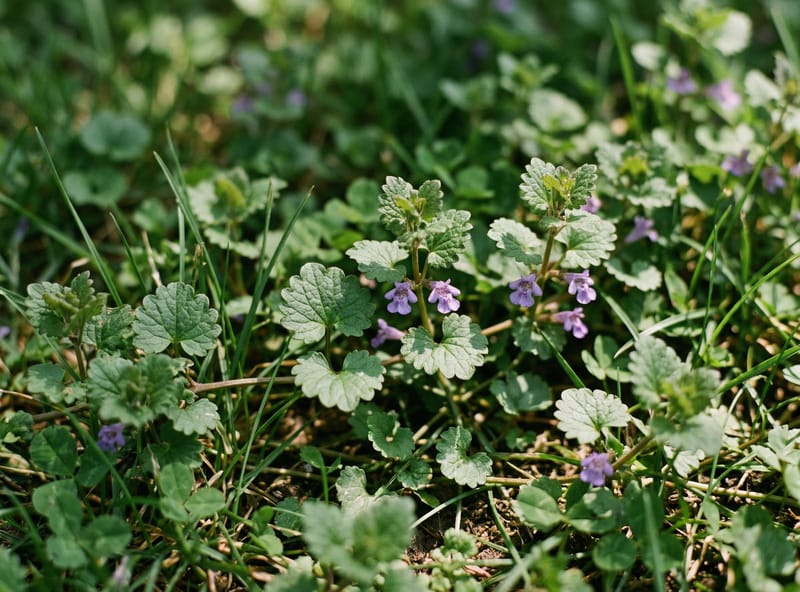
Ground ivy is a tenacious creeping perennial in the mint family (Lamiaceae). It is native to Europe and was originally brought to North America as a ground cover and medicinal herb. It has since become one of the most problematic lawn weeds across the eastern and central United States.
How to Identify Ground Ivy
Learning to identify ground ivy is the first step. It is often confused with other creeping weeds, but it has several distinctive features:
- Leaves: Round to kidney-shaped with scalloped (crenate) edges. Leaves grow in opposite pairs along the stem. When crushed, they release a faint minty odor — a telltale sign of the mint family.
- Stems: Square in cross-section, another mint-family trait. Stems creep along the ground and root at every node, forming a dense, interconnected mat.
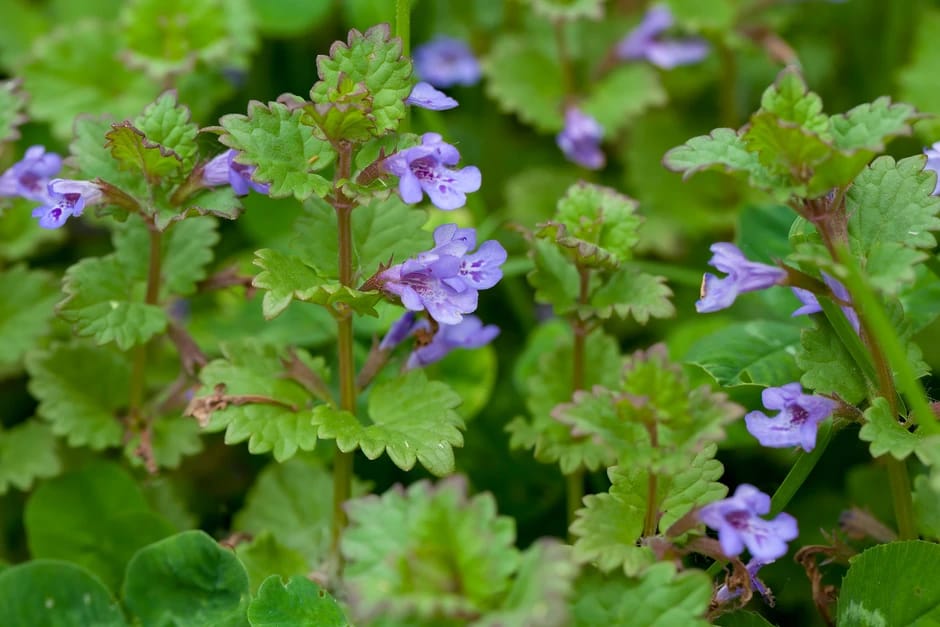
- Flowers: Small, funnel-shaped, purple to violet-blue flowers that bloom in spring (April to June). They appear in clusters at the leaf axils. While they may look charming, they also produce seed that spreads the weed further. For more on these deceptive purple flowers, see our guide on purple-flowering weeds that take over lawns.
- Growth habit: Low, mat-forming. Ground ivy rarely grows more than a few inches tall but can spread several feet in a single growing season via stolons.
Where Ground Ivy Thrives
Ground ivy favors conditions that stress your grass:
- Shade. Partial to full shade is where ground ivy is most aggressive. Under trees, along north-facing walls, beneath decks — anywhere sunlight is limited.
- Moist soil. Poorly drained or consistently damp areas are prime ground ivy habitat. It tolerates wet feet far better than most turfgrass species.
- Thin turf. Any lawn with bare spots or weak grass density is vulnerable. Ground ivy colonizes gaps quickly and holds territory tenaciously.
According to University of Wisconsin Extension, ground ivy is one of the most common and difficult-to-control perennial weeds in the upper Midwest and northeastern United States. Once established, it persists year after year and expands its coverage each season.
Why Creeping Charlie Is So Hard to Kill
Ground ivy is not just another broadleaf weed. It has specific biological traits that make it one of the most resilient lawn invaders you will encounter:
- Stolon network. Ground ivy spreads through horizontal stems (stolons) that root at every node. Pull up a section and you will see the network — interconnected runners radiating outward in every direction. Leave even a small fragment behind and it regenerates into a new plant. Hand-pulling ground ivy is an exercise in frustration.
- Dual reproduction. Ground ivy spreads via stolons AND seeds. Even if you destroy the stolon network, the seed bank in your soil can produce new plants for years. This is why follow-up treatments are important — you are not dealing with a single wave but a sustained invasion.
- Shade dominance. Most lawn grasses need at least 4 to 6 hours of direct sunlight. Ground ivy thrives with far less. In shaded areas, grass thins naturally and ground ivy fills the void. You cannot simply "outgrow" ground ivy in shaded conditions.
- Non-selective sprays make it worse. Most organic weed killers are non-selective burn-down sprays — they kill everything they contact, grass included. When you use a non-selective product on ground ivy in your lawn, you kill the surrounding grass along with the weed. The result: bare soil that ground ivy recolonizes faster than grass can recover. You end up with less grass and more ground ivy than when you started.
- Chemical avoidance. Synthetic broadleaf herbicides containing 2,4-D, dicamba, or triclopyr are effective against ground ivy, but many homeowners want to avoid these chemicals — especially in yards where children and pets play. Penn State Extension notes that repeated synthetic herbicide applications are typically required, compounding exposure concerns.
This combination — aggressive spread, shade tolerance, and resistance to non-selective organic methods — is what makes ground ivy uniquely difficult. It demands a solution that is both selective (kills ground ivy, not grass) and organic (no synthetic residues). Until recently, that combination did not exist.
How to Kill Creeping Charlie With Salacia
Salacia by Lanaturo is the first OMRI-certified selective herbicide. The naturally derived formula works through rapid osmotic dehydration — it draws moisture out of broadleaf weed tissue on contact, causing the plant to dry out and collapse. This is dehydration, not poisoning. Because the mechanism is physical, there is no synthetic residue building up in your soil.
Here is why Salacia is particularly effective against ground ivy: it is selective. At the lawn-safe mixing rate, it targets broadleaf weeds while being designed to preserve your grass. This means you can blanket spray an entire ground ivy infestation — stolons, leaves, and all — while keeping your turf intact. That selectivity is the killer advantage when dealing with a weed that is intertwined with your grass at every point.
If ground ivy is not in your lawn — say it is on a patio, fence line, or gravel path — you can use the non-selective rate (4 cups per gallon) for faster, more aggressive control.
Important: Always test a small area of your lawn first before full application. Salacia is designed to be selective, but temporary paling or yellowing on grass is possible depending on irrigation, lawn health, and environmental conditions. Results vary — your lawn is unique.
Step-by-Step: Killing Ground Ivy in Your Lawn
- Mow first. Cut your lawn to normal height before treating. Shorter grass blades mean the spray reaches ground ivy foliage directly with less interference. Ground ivy grows low, so mowing exposes it for better contact.
- Mix at the selective rate. For lawn applications: 1 lb (3 cups) of Salacia per 1 gallon of water. This concentration targets broadleaf weeds while being designed to preserve your grass. Do not exceed the selective rate for lawn use. Salacia is sold in granular form — dissolve it fully before spraying so the contact action reaches every rooted node.
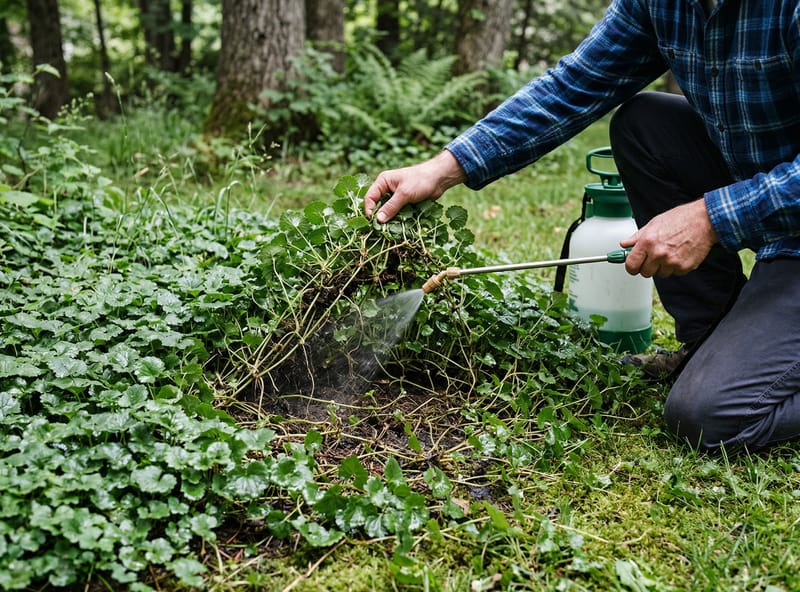
- Blanket spray the infested area. Unlike dandelions where you spot-treat individual plants, ground ivy infestations call for blanket application. The stolon network means ground ivy is everywhere in the affected zone — visible and hidden. Spray the entire area generously.
- Full coverage is everything. This is the #1 factor that determines your results. Salacia works on contact — if the product does not touch it, it does not kill it. Do not just mist the top of the canopy. Get thorough coverage on the leaf tops, undersides, stems, and the soil area around the base of the ground ivy. The hidden growth underneath the visible canopy is what grows back if you only treat the surface. Drench the foliage until it runs off. Your results are directly proportional to your coverage.
- Choose the right conditions. Apply on a warm, calm morning when temperatures are between 60 and 80 degrees F. No rain in the forecast. Calm air prevents drift. Morning application gives the product a full day of warm temperatures to work.
- Wait and observe. Visible wilting and browning will occur as the ground ivy dehydrates. Full collapse of treated tissue follows. Do not water the treated area immediately after application.
- Follow up on regrowth. Ground ivy typically requires 1 to 2 applications. New growth may appear from the seed bank or surviving stolon fragments below the soil surface — this is normal and expected, not a product failure. A follow-up application handles the regrowth.
For detailed seasonal timing and application technique across climates, see our timing and application best practices.
Why Selectivity Changes Everything for Ground Ivy
Here is the core problem with every other organic approach to ground ivy: they are non-selective. Non-selective burn-down sprays kill everything — ground ivy and your grass. After treatment, you are left with bare soil. Ground ivy, adapted to colonize bare ground, comes back faster than grass. You spray again. More bare soil. More ground ivy. It is a losing cycle.
Salacia breaks this cycle because your grass survives the treatment. The ground ivy dies. The grass fills in the gaps. The turf gets denser. And denser turf is the single best long-term defense against ground ivy reinvasion. Selective treatment does not just kill the weed — it tips the competitive balance permanently in favor of your lawn.
To understand how selectivity works at the biological level, read our guide on how to kill weeds organically without killing grass.
The Best Creeping Charlie Killer for Lawns
Search results for "best creeping charlie killer" split into two camps: synthetic three-way broadleaf blends (2,4-D, dicamba, triclopyr), and non-selective organic burn-downs that take your grass with them. Neither is a clean answer. The synthetics work, but they bring the chemical-exposure tradeoffs covered above. The burn-downs hand creeping charlie exactly what it wants — freshly cleared bare soil to recolonize.
The criteria that actually matter for a creeping charlie killer used in a lawn:
- Selective action. Creeping charlie weaves through turf. Any product that kills grass leaves a mat-shaped dead zone where the weed returns first.
- Rewards thorough coverage. The stolon network punishes surface-only treatment. The product has to work on contact, under the canopy, on stems and crowns.
- Repeatable without residue. Creeping charlie typically takes 1 to 2 applications. With synthetics, repeat applications mean repeat chemical exposure; with a naturally derived formula, they don't.
- Verified organic credentials. OMRI listing, not label marketing.
Salacia is the first product to meet all four — the first OMRI-certified selective organic herbicide, with ground ivy (creeping charlie) on its selective lawn-rate weed list. Pet households should also read our guide to weed killers that are safe around pets — creeping charlie mats are exactly where dogs love to roll.
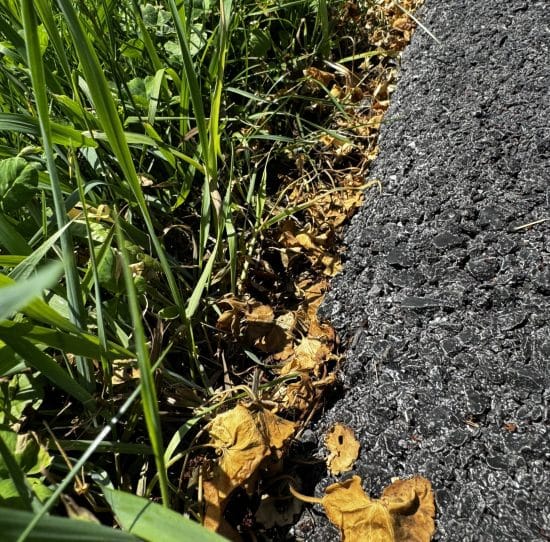
See the Results
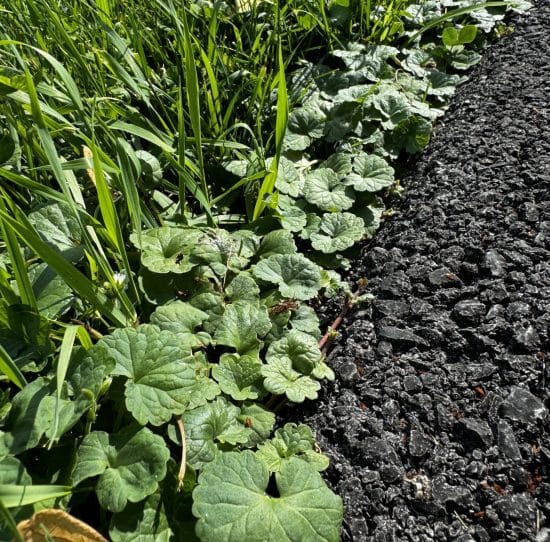
Real ground ivy. Real results. No grass damage.
Ready to Take Back Your Lawn?
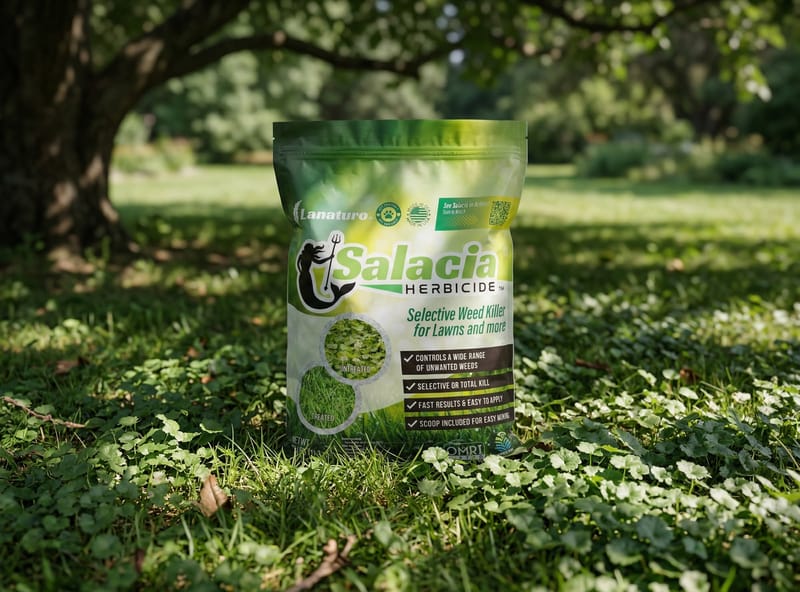
Salacia™ is the first OMRI-certified selective organic herbicide — kills weeds, not grass. Choose your lawn size:
How to Prevent Creeping Charlie from Coming Back
Killing existing ground ivy is half the job. The seed bank in your soil and the conditions that invited ground ivy in the first place will bring it back unless you address the root causes. Long-term prevention means making your lawn inhospitable to ground ivy.
Improve Grass Density
Dense turf is the single best defense against ground ivy. After treating and eliminating ground ivy, overseed the cleared areas immediately. For cool-season grasses, early fall is the ideal seeding window. Thick grass coverage blocks light from reaching the soil surface, preventing ground ivy seeds from germinating.
Reduce Shade Where Possible
Ground ivy dominates in shade. Prune lower tree branches to increase light penetration. Remove unnecessary structures that cast shadows. Where shade cannot be reduced, consider shade-tolerant grass varieties (fine fescues for cool-season lawns) that compete better in low-light conditions. The University of Wisconsin Extension recommends fine fescues as the best turfgrass option for shaded areas prone to ground ivy invasion.
Maintain Proper Mowing Height
Mow at 3 to 4 inches for cool-season grasses. Taller grass shades the soil, suppresses weed seed germination, and develops deeper root systems that outcompete shallow-rooted weeds like ground ivy. Scalping your lawn opens the door for reinvasion.
Improve Drainage
Ground ivy thrives in moist soil. If you have areas with consistently wet or poorly drained soil, address the drainage. Core aeration in fall helps. Redirecting downspouts, grading low spots, and amending heavy clay soil with organic matter all reduce the moisture conditions that ground ivy prefers.
Fertilize Strategically
A well-fed lawn outcompetes weeds. Apply nitrogen-based fertilizer according to your grass species requirements — typically 2 to 4 pounds of nitrogen per 1,000 square feet per year, split across multiple applications. Strong grass crowds out ground ivy seedlings before they can establish.
For a broader look at organic weed management across your entire lawn, visit our Weed Control Guide. And for pet-specific concerns when treating any lawn weed, read Is Organic Weed Killer Safe for Pets?
Not Sure If It Is Ground Ivy?
Ground ivy is frequently confused with henbit, purple deadnettle, and wild violet — all of which have purple flowers and creeping growth habits. If you are not sure what you are looking at, upload a photo to Lanaturo Intelligence and get instant weed identification plus a tailored treatment plan specific to your weed species. No guessing, no misidentification, no wasted product.
Comparing your options?
Our full breakdown of what to look for — and what to avoid — is in the selective organic weed killer. Four criteria, real comparison, no marketing fluff. If keeping your grass is the worry, see the best weed killer that won't kill grass.

Lanaturo
Intelligence
Not sure which weed you're looking at? Show Sal.
Sal is the lawn-care brain behind Lanaturo Intelligence. He doesn't just name the weed — he builds your exact treatment plan and checks whether today is the right day to spray.
Where Ground Ivy Grows Most
Ground ivy, also called creeping charlie, runs heaviest across the Great Lakes, the Ohio Valley, the Northeast and the Pacific Northwest — Michigan, Ohio, Indiana, Illinois, Wisconsin, Minnesota, Iowa, Pennsylvania, New York, New Jersey and New England. Damp, shaded ground is what it wants, and the northern half of the country gives it plenty.
Look where the lawn is shaded and slow to dry: under trees, along the north side of a house, near downspouts and low corners. It spreads by creeping stems that root at every node they touch, so a patch expands outward as a mat rather than appearing as scattered plants. That is also why pulling it rarely works — every rooted node left behind is a new plant.
It carries a waxy leaf and grows in overlapping layers, so getting under the canopy matters more here than almost anywhere else. Wet what is hidden beneath the top layer, not just the surface you can see. At the selective lawn rate Salacia targets it while being designed to spare grass; temporary paling or yellowing of nearby turf is possible and recovers. Always test a small area of your lawn first. Not sure what you are looking at? Sal will identify it from a photo.
Ready to Take Back Your Lawn?
Salacia™ is the first OMRI-certified selective organic herbicide — kills weeds, not grass. Choose your lawn size:
Take Your Lawn Back from Creeping Charlie
Ground ivy is relentless. It spreads underground, thrives in shade, and comes back from fragments you cannot even see. But it is a broadleaf weed — and broadleaf weeds are vulnerable to the right selective treatment.
You do not have to choose between effective weed control and an organic lawn. You do not have to accept synthetic residues in the soil where your family and pets spend their time. And you do not have to watch ground ivy consume another square foot of grass you worked hard to grow.
Pet Friendly. OMRI certified organic. The first selective organic herbicide — built for exactly this.
Salacia is OMRI Listed for organic use and made from naturally derived ingredients. Always follow label directions for best results. Performance may vary based on weed maturity, environmental conditions, and application method.