
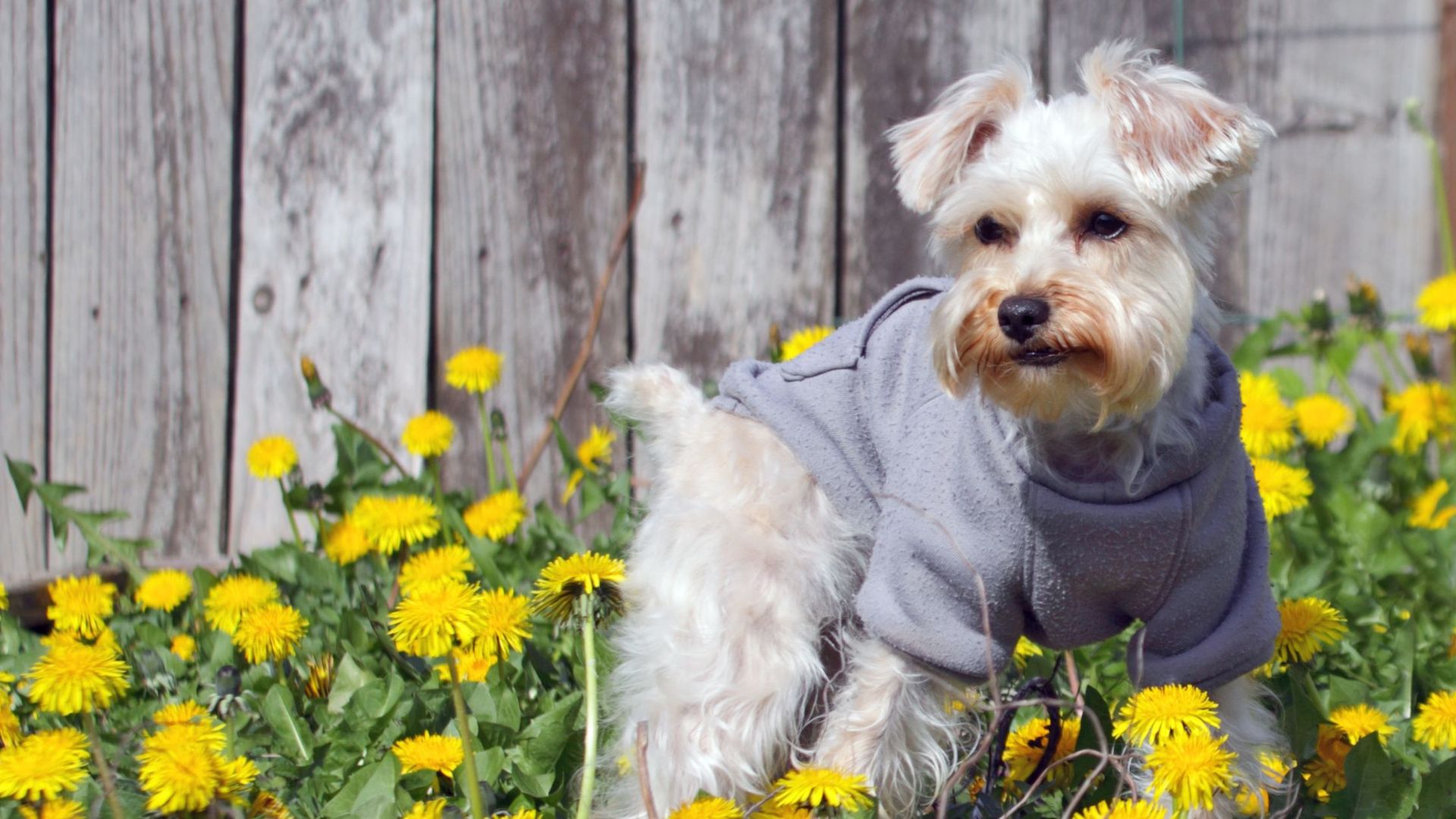
 By Pat Kelly
 Every summer, we hear the same story from new customers. A dog gets sick after exposure to lawn chemicals. A vet visit happens. Sometimes it's minor. Sometimes it's serious. And the pet owner stands in their garage afterward, staring at half-used bottles of herbicide, wondering what they've been putting on their lawn for years.
If you're reading this, you're probably in that garage right now — metaphorically or literally — searching for a weed killer safe for dogs that actually works. Not another product that kills your grass along with the weeds. Not another "eco friendly weed killer" that barely singes a dandelion. A real solution. Salacia was built specifically to answer that question.
Here's the truth: Salacia works by dehydrating weeds — not poisoning them. Its naturally derived formula pulls moisture from weed tissue until the plant collapses from the root up. It's a physical mechanism, not a chemical one. Powerful on weeds. Gentle on everything else.
Can Weed Killers Cause Cancer in Dogs? The Peer-Reviewed Evidence
Before we talk about what makes a weed killer safe for dogs and cats, let's talk about what isn't. Because the data coming out of veterinary research in the last decade should concern every pet owner using synthetic lawn chemicals.
70%
Higher lymphoma risk
7×
Bladder cancer risk
50%
Untreated lawns still exposed
A six-year case-control study at Tufts University — published in the peer-reviewed journal Environmental Research — found that dogs exposed to professionally applied lawn pesticides had a 70% higher risk of developing canine malignant lymphoma. Lymphoma is one of the most common cancers in dogs, accounting for roughly 20% of all canine cancers. And researchers note it has similar biology and behavior to non-Hodgkin's lymphoma in humans.
That wasn't an isolated finding. A Purdue University study found that Scottish Terriers exposed to herbicide-treated lawns had significantly higher rates of bladder cancer — with some breeds showing up to seven times the risk. A separate 2013 study detected herbicides in the urine of pet dogs after lawn treatments, and — here's the part that should stop you — in half of the dogs whose owners' lawns weren't even treated, due to chemical drift from neighboring properties.
The chemicals at the center of these studies include 2,4-D (found in most "weed and feed" products), dicamba, and glyphosate. The World Health Organization's International Agency for Research on Cancer classifies glyphosate as "probably carcinogenic to humans." And 2,4-D — the most commonly used broadleaf herbicide in residential lawn care — acts as an endocrine disruptor that can interfere with thyroid and hormone function.
A 2025 laboratory study from the University of Wisconsin found that both 2,4-D and glyphosate caused DNA damage in canine blood cells at measurable concentrations — and that these herbicides were detectable in the urine of virtually every pet golden retriever sampled, regardless of whether their own lawn had been treated.
Your dog doesn't read the "stay off lawn" flags. They walk on treated grass, roll in it, lick their paws, dig in the soil, and breathe at ground level where chemical concentrations are highest. Their exposure is fundamentally different from yours — and the research increasingly reflects that.
Is Weed Killer Safe for Pets?
Most synthetic weed killers are not safe for pets. The peer-reviewed evidence above — from Tufts, Purdue, and the University of Wisconsin — shows that common herbicide chemicals like 2,4-D, dicamba, and glyphosate are directly linked to canine lymphoma, bladder cancer, and measurable DNA damage in dogs.
Related: For the regulatory backdrop — 192,000 lawsuits, WHO classification, 32 countries restricting it — and what the non-glyphosate organic option changes about the family-safety calculus, read our companion guide.
For a deeper look at the research and how dogs specifically are affected, read our guide on weed killer safe for dogs.
Organic herbicides that use a physical mechanism — like dehydration rather than synthetic chemical action — present a fundamentally different risk profile. Salacia carries Pet Friendly right on the label and is OMRI certified organic, meaning its naturally derived ingredients have been independently verified. Once the application dries, dogs can return to the treated area.
The key distinction is how the product works. Synthetic herbicides persist in soil and can be tracked indoors on paws for days. Salacia's formulation degrades naturally after doing its job — no residue accumulating in your yard, no chemical drift to worry about from treated areas.
Ready to Take Back Your Lawn?
Salacia™ is the first OMRI-certified selective organic herbicide — kills weeds, not grass. Choose your lawn size:
What "Pet Friendly" Actually Means in Weed Killers
Here's the thing about "organic" and "pet friendly." These words get slapped on everything, and half the time they don't mean what people think they mean.
With weed killers, "organic" should mean the product is made from natural and naturally derived ingredients — compounds that exist in nature, formulated to actually control weeds. But the word alone doesn't tell you much. What matters is whether the product has been independently verified. That's what certifications like OMRI (Organic Materials Review Institute) exist for — to separate real organic products from marketing claims.
The other thing most people don't realize: almost every organic herbicide on the market is non-selective — it kills everything it touches, including your grass. That's fine for a driveway. It's a disaster for a lawn. And it's one of the key reasons people assume organic weed control "doesn't work" — they've been using the wrong type of product for the job. To understand the difference, see our guide on how selective herbicides work.
A genuinely pet friendly weed killer should check three boxes: independently certified organic ingredients, selective action that preserves your lawn, and a mechanism that doesn't rely on synthetic poisons. If a product can't do all three, it's solving one problem while creating another. That's the difference between real pet friendly weed control and a label slapped on a bottle.
Built for Pet Owners
Why Salacia Was Built Around Animal Wellness First
Salacia wasn't designed to be just another organic weed killer lost in the sea of "natural" products that barely work.
We built it from the ground up with one non-negotiable priority — Pet Friendly from the very first formulation decision. Not as an afterthought. Not as a marketing angle. As the actual starting point of the entire development process. Every concentration level, every mixing rate was evaluated through the lens of animal wellness before anything else was considered.
Our team includes people who've got dogs sleeping on their couches and cats knocking things off their counters. People who read the studies we just cited and decided the industry needed a product that didn't force pet owners to choose between a healthy lawn and a healthy animal.
That's not how most herbicides are developed. Most start with efficacy — what kills the weed — and then add safety warnings after the fact. We reversed the process entirely. Animal wellness was the design constraint. Weed-killing performance had to work within that constraint, not the other way around.
What Makes Salacia Different from Every Other Option
Hybrisal™ Technology
A unique dual-action mode giving you both selective and non-selective control in one product. Selective mode kills broadleaf weeds while preserving grass. Non-selective mode handles driveways, patios, and fence lines.
Professional-Grade Results
Lawn care companies are switching their entire operations to Salacia because it delivers genuine pro-grade performance without the liability that comes with synthetic chemicals around clients' families and pets.
Independently Certified
OMRI certified organic, made from naturally derived ingredients. These aren't marketing badges — they represent independent testing by organizations with no financial stake in our success.
No Harmful Chemicals
No glyphosate. No 2,4-D. No dicamba. No triclopyr. None of the chemicals linked to canine lymphoma, bladder cancer, or endocrine disruption. Made in the USA from naturally derived ingredients that break down naturally.
How a Pet Friendly Herbicide Should Actually Work — And Why Chemical Drift Matters
People searching for a herbicide safe for pets deserve a straight answer, not marketing language. Here's why the answer is simple with Salacia: it works by dehydration. The naturally derived formula draws moisture out of weed tissue until the plant dries out and collapses from the root up. There's no synthetic poison involved, no toxic residue moving through the soil, nothing accumulating in your yard after application.
Animal biology doesn't respond the same way plant biology does. That's not marketing — that's the reason naturally derived ingredients can be devastating to a weed and completely benign to a dog running through the same lawn afterward. It doesn't persist in soil. It doesn't bioaccumulate. It doesn't show up in groundwater testing years later. It does its job and breaks down.
That matters more than most people realize — because chemical persistence isn't just a problem for treated lawns. Remember what the research shows: herbicides were detected in the urine of dogs from properties that were never directly treated. Synthetic chemicals drift through air and soil from neighboring yards. Your pet can be exposed even if you never sprayed anything. We've heard from customers who used popular chemical herbicides years ago — three, four, even five years back — and their soil tests still show residual contamination. Learn more about the hidden costs of synthetic herbicides and how organic farmers approach weed management without these chemicals.
Salacia's formulation degrades naturally after it does its job. It doesn't accumulate in soil. It doesn't drift into your neighbor's yard. And once the application dries, the lawn is Pet Friendly again — exactly as the label says.
Practical Steps When You Apply
Let It Dry
Let the treated area dry before your dog runs through it — not for safety reasons, but because Salacia is saline-based and dogs are attracted to salt. If they lick treated foliage before it's absorbed, they're working against the application.
Store Properly
Store out of reach the same way you'd store anything you wouldn't want a dog eating by the pound. Common sense, not a hazard warning.
Know Your Animal
Some dogs could eat a shoe and be fine. Others get upset stomachs from the slightest change. Pay attention to your specific pet — you know them better than anyone.
How the options compare on the things pet owners ask about
Four broad classes of weed killer get recommended for lawns. The differences that matter to someone with animals are how the product acts, whether it spares the grass, and what it leaves behind.
| DIY burn-down sprays | Iron-based (chelated iron) | Synthetic selective | Salacia | |
|---|---|---|---|---|
| How it acts on the plant | Burns the surface of whatever it touches | Blackens broadleaf tissue | Taken up and carried inward over weeks | Draws water out of the leaf until the tissue collapses |
| Spares the lawn | No — grass included | Yes | Yes | Yes — test a small area first |
| OMRI-certified organic | Some products | No — mineral-based, not certified organic | No | Yes |
| What is left in the soil | Varies by product | Iron residue | Varies by active ingredient | Chloride measured at 608–811 ppm in field trials, under the 1,250 ppm threshold, and it washes out with rain |
Salacia is Pet Friendly. It works by dehydration rather than poisoning — a physical process on the leaf surface, and nothing is taken up and carried through the plant. Let the treated area dry before allowing pets back, not because of safety concerns, but because animals may be attracted to lick it, which could affect results.
How Long to Keep Dogs Off Lawn After Weed Killer
With organic herbicides like Salacia, let the treated area dry before allowing pets back — not because of safety concerns, but because animals may be attracted to lick it, which could affect results on the weeds. Once the application has dried and been absorbed into the weed tissue, the treated area is Pet Friendly again as stated on the label.
This is a practical consideration, not a safety warning. Salacia is saline-based, and dogs are naturally attracted to salt. If they lick treated foliage before it dries, they may reduce the product's effectiveness on the weed — not harm themselves, but work against your application.
Compare this to synthetic herbicides, whose chemical residues can linger on grass for days after application, and the Tufts study found exposure even from lawns treated days earlier. With conventional products, the "stay off lawn" period reflects genuine toxicity concerns. With Salacia, it is about giving the product time to work. For best results, apply during your dog's nap time or when they are inside — by the time they are back out, the lawn is ready.
For guidance on optimal application windows and conditions, see our timing and application guide.
Why Cat Owners Need to Pay Even Closer Attention
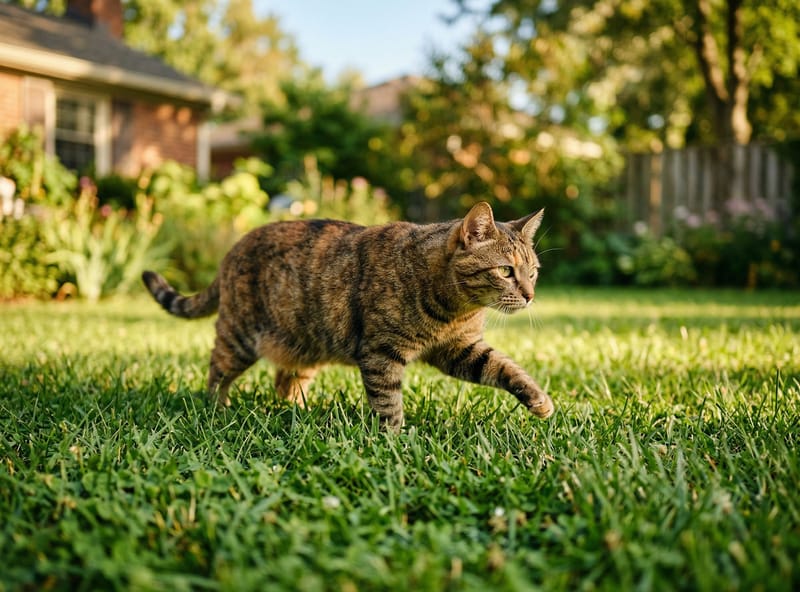
Most conversations about lawn chemicals and pets focus on dogs. But if you have cats, the risks from synthetic herbicides are arguably even more serious — and less discussed.
Cats groom obsessively. Any chemical that lands on their fur goes directly into their system through ingestion — not just skin absorption, but repeated oral exposure every time they clean themselves. Their smaller body weight means lower thresholds for harmful exposure. And cats are uniquely sensitive to certain compounds found in many "natural" products, including some plant-derived oils that other animals tolerate without issue.
The ASPCA Animal Poison Control Center consistently lists lawn and garden chemicals among the top categories of pet poisoning calls. Indoor-outdoor cats that walk across treated lawns and then groom their paws represent one of the most direct exposure pathways researchers have identified.
This is where Salacia's mechanism becomes especially relevant for cat owners. Because it works through dehydration of plant tissue using naturally derived ingredients — not through synthetic chemical action — the risk profile is fundamentally different from conventional herbicides. If you've been searching for a weed killer safe for cats, this is what that actually looks like: a product that carries Pet Friendly on the label, works through a physical mechanism rather than a chemical one, and once the application has dried, lets cats return to their normal routine of lounging in exactly the spot you just treated.
See the Results
Real results, real lawns — watch Salacia eliminate tough weeds while your grass stays perfectly untouched.
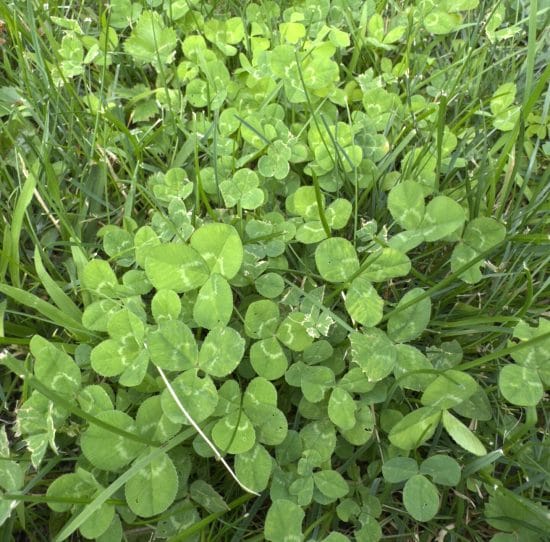
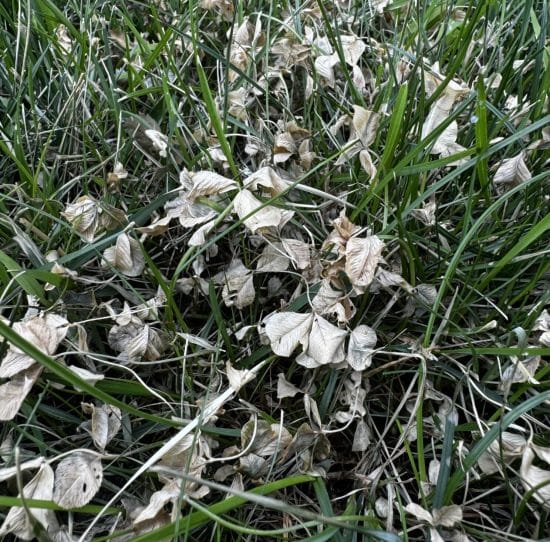
Watch Salacia in action — pet friendly weed control that actually works
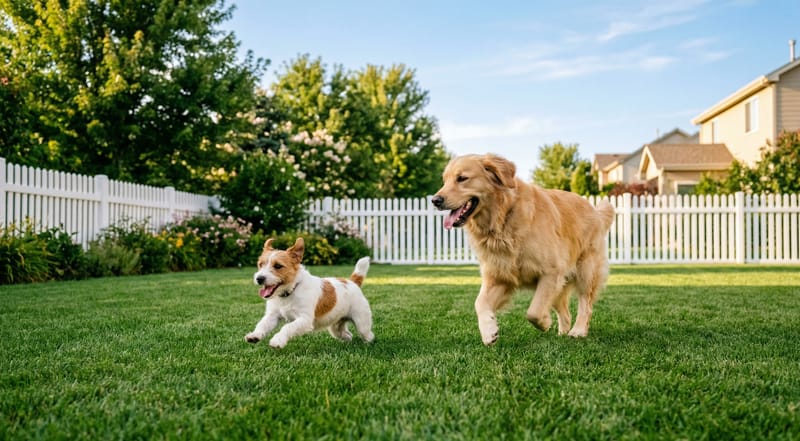
Do Pet Friendly Weed Killers Actually Work on Lawns?
We know what people are thinking. A "pet friendly weed killer" sounds great until you're staring at a lawn full of creeping charlie laughing at your environmentally conscious choices.
Traditional organic options have been — let's not sugarcoat it — mostly terrible. They burn the top leaves, the weed looks sad for a few days, and then it grows right back from the root. And here's the other problem: all organic herbicides on the market are non-selective — they kill everything they touch, weeds and grass alike. That's not a solution for a lawn.
Salacia is different on both counts. It controls weeds down to the root — not just a surface burn — and at the selective mixing rate, it does it without harming your grass. That combination — the first OMRI-certified selective herbicide, Pet Friendly and effective — didn't exist before Salacia.
Salacia is designed to be selective at the lawn mixing rate, but temporary paling or yellowing of grass is possible depending on lawn health, irrigation, application rate, and conditions. Test a small area first — it's the professional habit that guarantees confidence across the whole lawn.
"We tried every 'natural' herbicide on the market. Honestly? They felt like temporary Band-Aids — you'd get a week or two, then the weeds came roaring back. With Salacia, we're finally seeing real, lasting results without any compromise on safety for our crews, our clients' families, or their pets."
— Trevor, Professional Lawn Care Company
It handles broadleaf weeds — dandelions, clover, chickweed, creeping charlie, ground ivy, wild violet, henbit, and bindweed. And when you need serious knockout power for driveways, patios, or tough brush, you adjust the mixing rate for non-selective action. See the full weed control guide for species-specific results.
Best Pet Friendly Weed Killer for Lawns
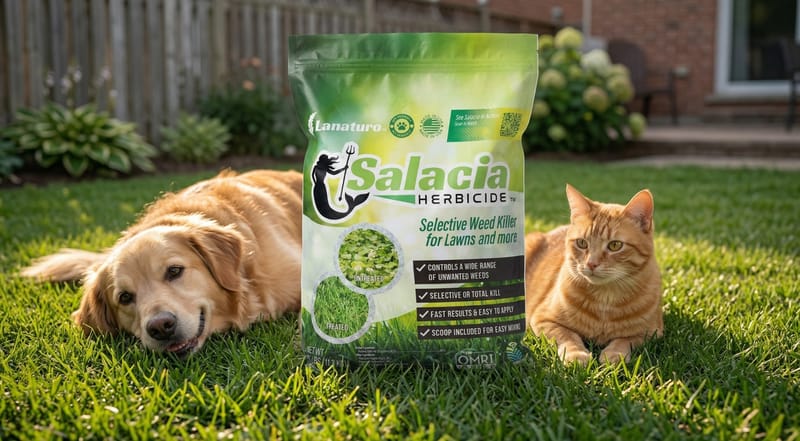
The best pet friendly weed killer for lawns is one that is OMRI certified, selective, and uses a physical mechanism rather than synthetic chemicals. That combination — certified organic ingredients, the ability to kill weeds without killing grass, and a formulation that works through dehydration instead of poisoning — narrows the field to essentially one product.
Salacia is the first OMRI-certified selective herbicide. It controls broadleaf weeds like dandelions, clover, chickweed, creeping charlie, ground ivy, and wild violet at the selective mixing rate — while preserving your grass. At the non-selective rate, it handles driveways, patios, and tough brush. One product, two modes, zero synthetic chemicals.
What sets it apart from every other organic option on the market:
- Selective action — every other organic herbicide kills everything it touches, including grass. Salacia does not. Learn what selective means and why it matters for lawns.
- Pet Friendly — not a marketing claim, but backed by OMRI certification and naturally derived ingredients.
- Professional-grade results — lawn care companies are switching their operations to Salacia because it delivers real performance without the liability of synthetic chemicals around pets and families.
- Dehydration mechanism — pulls moisture from weed tissue until the plant collapses from the root up. No toxic residue, no soil persistence, no chemical drift.
If you have been searching for a weed killer safe for dogs and cats that actually controls weeds without destroying your lawn, this is what that looks like — the choice of pet owners, homeowners, and professional applicators.
Looking for a Pet Friendly Weed and Feed? Read This First
"Weed and feed" sounds like a shortcut — fertilizer and weed control in one pass. Here's what the bag doesn't advertise: conventional weed-and-feed products work by spreading a synthetic broadleaf herbicide (typically 2,4-D, one of the chemicals at the center of the canine cancer research above) across every square foot of your lawn, whether weeds are growing there or not. For a pet household, that's the maximum-exposure approach — the entire surface your dog rolls on gets the chemical treatment.
The pet-conscious alternative is to decouple the two jobs. Feed your lawn separately. Then control weeds with a targeted application of an OMRI-certified selective organic herbicide — weed control that goes where the weeds are, not blanket chemical coverage where your pets play. Prefer a granular-style product? Read our breakdown of granular weed killer options for why targeted liquid application wins for weed control in pet households.
A Weed Killer Safe for Pets That Handles Creeping Charlie
The question we hear most from pet owners isn't "is it safe?" — it's "fine, but will it actually kill creeping charlie?" Fair question. Creeping charlie (ground ivy) is one of the most stubborn lawn weeds in North America, and most gentle products don't touch it.
Salacia controls creeping charlie at the selective lawn rate — same Pet Friendly application, no separate product needed. The key is coverage: creeping charlie grows as a low mat, so the product has to reach under the canopy, onto the stems and crowns — not just mist the top leaves. Your results are directly proportional to your coverage: the product does its job, but only where it lands. Full technique, before/after photos, and mix rate in our guide on how to kill creeping charlie organically.
The same goes for the rest of the broadleaf lineup pet owners battle: clover, wild violet, chickweed, and dandelions. One Pet Friendly product, one technique standard: thorough, drenching coverage of the whole plant.
How to Switch to a Dog Friendly Herbicide: What to Expect
Making the switch to eco friendly weed control is simpler than most people expect — but there are a few things nobody tells you until you've learned them the hard way:
Timing matters way more than with chemicals
Hit weeds when they're young and actively growing. Spring and fall are your best windows. For specific weeds like dandelions, the crown technique makes a dramatic difference in results.
Your definition of "dead" might need adjusting
Salacia works by dehydrating weeds — you'll see the plant dry out and collapse within hours. The end result is the same as chemical herbicides, the mechanism is entirely different. No synthetic residue, no chemical wilt — just moisture withdrawal from the root up.
Coverage counts
You need to actually hit the weed foliage. Salacia has surfactants that help the product stick and spread, but get those leaves wet. For dandelions specifically, target the crown — the center where all leaves meet — for the best root-level results.
Your lawn gets healthier over time
This is the part people don't expect. When you stop poisoning soil with synthetic chemicals, beneficial organisms come back. Earthworms return. Microbial activity increases. Grass roots grow deeper. You end up needing less product overall because your lawn is actually healthy, not just chemically propped up.

Lawn
Advisor
Not sure which weed you're looking at? Show Sal.
Sal is Lanaturo's lawn-care expert. He doesn't just name the weed — he builds your exact treatment plan and checks whether today is the right day to spray.
Related: The Best Selective Weed Killer — And the First That Does Both →
Ready to Take Back Your Lawn?
Salacia™ is the first OMRI-certified selective organic herbicide — kills weeds, not grass. Choose your lawn size:
Your Lawn Shouldn't Be a Hazard Zone
A yard should be a place where your dog rolls in the grass without consequence. Where your cat lounges in the sun without absorbing chemicals through their fur. Where your kids can go barefoot and you don't have to wonder what's soaking into their skin.
The research is clear: synthetic lawn chemicals pose real, measurable risks to pets. A 70% increase in lymphoma risk. Bladder cancer in susceptible breeds. Herbicides showing up in dogs' urine from lawns that were never even treated. DNA damage at detectable exposure levels.
That's not fear-mongering. That's Tufts. That's Purdue. That's the University of Wisconsin. That's the World Health Organization.
Pet Friendly — everything else second.
The same Pet Friendly contact mechanism that protects dogs and cats also matters for horse owners. Horses graze continuously, making chemical residue concerns even more critical. See our guide on horse pasture weed control for pasture-specific organic treatment strategies.
Always read and follow label directions. Results vary based on weed type, application timing, and conditions.
Frequently Asked Questions
Is organic weed killer safe for dogs and cats?
Yes — organic weed killers made from naturally derived ingredients are significantly safer for pets than synthetic herbicides. Products with OMRI certification, like Salacia, have been independently verified as organic. That said, let the treated area dry before allowing pets back, and store concentrates out of reach.
How long after spraying organic weed killer can my dog go outside?
With organic herbicides like Salacia, let the treated area dry before allowing dogs back — not because of safety concerns, but because Salacia is saline-based and dogs are attracted to salt; licking treated foliage works against the application. Compare this to synthetic herbicides, where researchers have detected chemical residues on grass for days after application.
Can chemical weed killers cause cancer in dogs?
Yes. A peer-reviewed six-year study at Tufts University found that dogs exposed to professionally applied lawn pesticides had a 70% higher risk of canine malignant lymphoma. A Purdue University study found up to 7× higher bladder cancer rates in certain breeds. These studies focused on common chemicals like 2,4-D, dicamba, and glyphosate.
What should I look for in a weed killer that's safe for pets?
Look for three things: (1) OMRI certification — meaning independently verified organic ingredients, (2) Pet Friendly on the label, and (3) a formulation free of glyphosate, 2,4-D, dicamba, and triclopyr. Also check whether the product is selective (kills weeds only) or non-selective (kills everything including grass). Learn the difference here.
What is the best weed killer safe for pets?
The best weed killer safe for pets is one that is OMRI certified organic, selective (designed to kill weeds while sparing grass), and works through dehydration rather than synthetic chemicals. Salacia is the first OMRI-certified selective herbicide and carries Pet Friendly on the label. It controls broadleaf weeds through dehydration of plant tissue — no glyphosate, no 2,4-D, no toxic residue.
Is weed killer harmful to dogs?
Synthetic weed killers containing 2,4-D, glyphosate, and dicamba have been linked to canine lymphoma (70% higher risk per Tufts University research) and bladder cancer in dogs. Organic herbicides that work through physical mechanisms — like Salacia, which dehydrates weeds using naturally derived ingredients — present a fundamentally different and safer profile for dogs.
How long after weed killer can dogs go on lawn?
With organic herbicides like Salacia, dogs can return to treated areas once the product has dried. The drying period is practical, not a safety concern: Salacia is saline-based and dogs are attracted to salt, so letting it dry ensures the product works on the weeds rather than getting licked off. With synthetic herbicides, researchers have detected chemical residues on grass for days after application.
Can I use weed killer if I have a dog?
Yes — but choose carefully. Avoid synthetic herbicides containing glyphosate, 2,4-D, or dicamba, which peer-reviewed research has linked to cancer and DNA damage in dogs. Look for an OMRI-certified organic product that's Pet Friendly on the label and uses a non-toxic mechanism. Salacia was designed from the ground up with pet wellness as the starting constraint, not an afterthought.
Is there a pet friendly weed and feed?
Conventional weed-and-feed products spread a synthetic broadleaf herbicide across the entire lawn — the maximum-exposure approach for a pet household. The pet-conscious alternative is to decouple the jobs: fertilize separately, then control weeds with a targeted application of an OMRI-certified selective organic herbicide like Salacia, so weed control goes only where the weeds are.
What weed killer is safe for pets and won't kill the grass?
A selective organic herbicide. Selective means it targets broadleaf weeds while sparing lawn grass — and the first OMRI-certified selective organic option is also Pet Friendly on the label. Temporary paling of grass is possible depending on conditions, so test a small area first.