
 By Pat Kelly
 If you have been trying to kill wild violet in your lawn and nothing seems to work, you are not alone. Wild violet (Viola sororia) is one of the most stubborn broadleaf weeds in North American lawns. Its heart-shaped leaves, charming purple flowers, and low-growing habit make it look harmless — even attractive — but underneath that appearance is a weed that spreads aggressively and resists most herbicides.
The reason wild violet frustrates so many homeowners comes down to one thing: its waxy leaf coating. That thick, glossy cuticle on every leaf causes most liquid sprays to bead up and roll right off before they can do anything. People try product after product, watch the spray slide off the leaves, and conclude that nothing works. It is not a product problem — it is an application problem.
This guide covers exactly how to kill wild violet in your lawn, why standard approaches fail, and what technique actually breaks through the wax barrier to eliminate this weed for good — without killing your grass.
What Is Wild Violet?
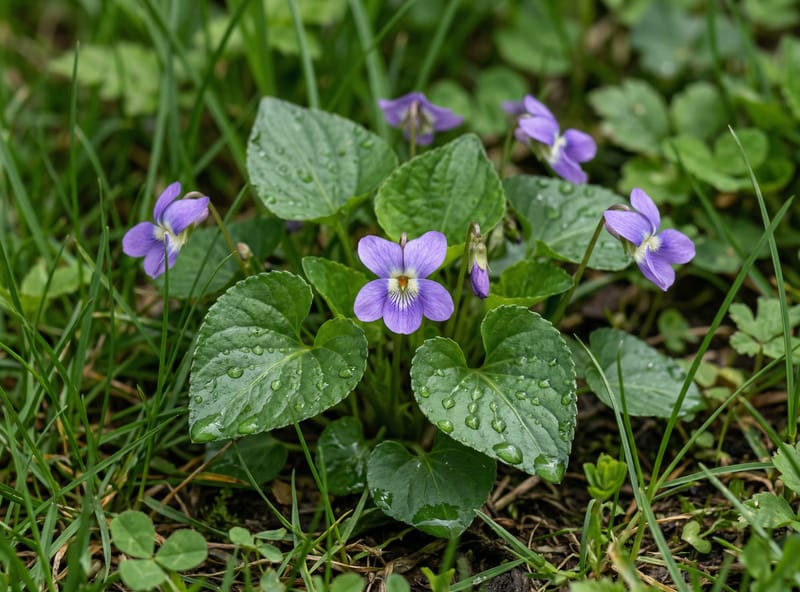
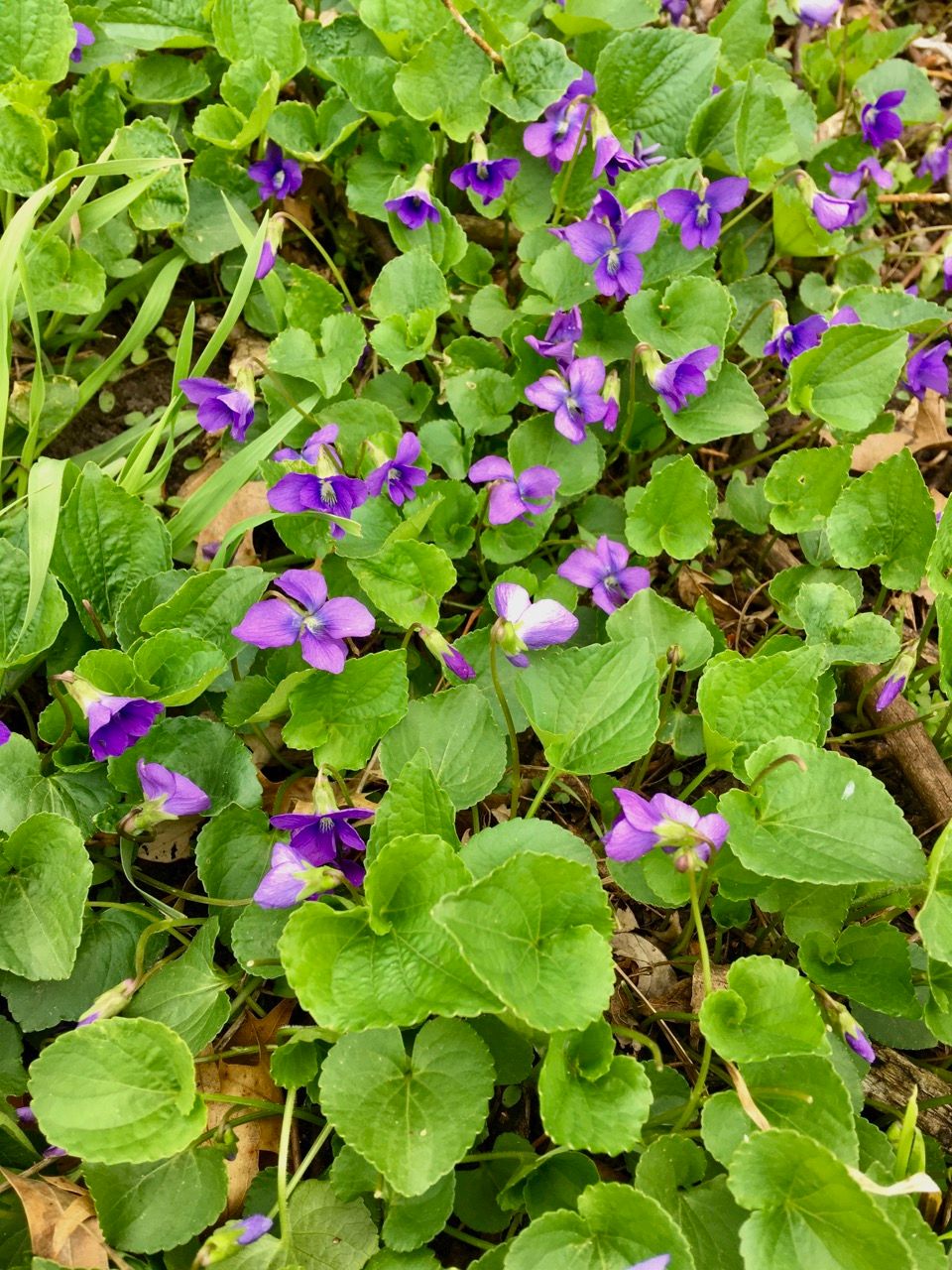
Wild violet (Viola sororia) is a resilient perennial broadleaf weed native to eastern North America. It is also commonly called common blue violet, purple violet, or simply viola. You will recognize it by these features:
- Heart-shaped leaves. The leaves are distinctive — rounded with slightly scalloped edges and a deep crease at the base that forms a heart shape. They grow in a low rosette close to the ground.
- Purple or white flowers. Wild violet produces small, five-petaled flowers in spring, typically purple or violet, though white and bicolor varieties exist. The flowers appear on thin stalks just above the leaf canopy.
- Waxy, glossy leaves. This is the defining characteristic for weed control purposes. Every leaf is coated with a thick waxy cuticle that makes the surface nearly waterproof. Run your finger across a wild violet leaf and you can feel the slickness.
- Low, spreading growth. Wild violet stays close to the ground and spreads through both rhizomes (underground stems) and seeds. It thrives in shady, moist areas but adapts to a wide range of conditions once established.
Wild violet is a true perennial — it comes back every year from its root system. Unlike annual weeds that die off each season, wild violet builds a deeper and wider root network year after year. Left alone, a few plants become dense patches that crowd out grass and resist mowing. For a broader look at this weed's behavior and lifecycle, see our article on the charming purple flowers that can take over your lawn.
Why Wild Violet Is So Hard to Kill
Wild violet has earned its reputation as one of the most difficult lawn weeds to eliminate. If you have already tried multiple products with no results, there are specific biological reasons — and understanding them is the key to finally beating it.
The Waxy Leaf Barrier
This is the primary obstacle. Wild violet leaves are coated with an unusually thick waxy cuticle — a natural waterproof layer that protects the leaf surface. When you spray most herbicides on wild violet, the liquid beads up on the waxy surface and rolls off before it can penetrate the leaf tissue. This is why so many homeowners spray wild violet repeatedly and see zero results. The product never actually reaches the plant.
According to university extension research, wild violet's waxy cuticle is significantly thicker than most common lawn weeds, making it one of the hardest broadleaf weeds to treat with foliar sprays.
Deep, Established Root Systems
Wild violet develops thick, fleshy rhizomes that store energy and spread laterally underground. Even if a surface treatment manages to burn the above-ground foliage, the root system often survives and sends up new growth within weeks. Non-selective burn-down sprays are particularly ineffective for this reason — they scorch the leaves but leave the roots untouched.
Shade Tolerance
Wild violet thrives in shady, moist areas where grass struggles. It often establishes in the weakest parts of your lawn — under trees, along north-facing walls, in areas with poor drainage — and then spreads into healthier turf from there. The shade creates conditions where grass is already at a competitive disadvantage.
Dual Reproduction
Wild violet reproduces through both seeds and rhizomes. The visible flowers produce seeds that drop into the soil, but the plant also produces hidden, self-pollinating flowers at ground level (called cleistogamous flowers) that generate seeds without ever opening. Meanwhile, the rhizome network expands underground. This dual strategy means wild violet attacks from above and below simultaneously.
All of this adds up to a weed that shrugs off most treatments. The homeowners searching "how to kill wild violet" have usually already tried multiple products and failed. They are frustrated, and understandably so. The answer is not a stronger chemical — it is a different approach to application.
How to Kill Wild Violet With Salacia
Salacia by Lanaturo is the first OMRI-certified selective herbicide. The naturally derived formula works through rapid osmotic dehydration — not poisoning. Unlike herbicides that need to be absorbed through the leaf and translocated to the roots, Salacia works on contact through osmotic pressure. It draws moisture directly out of broadleaf weed tissue, causing the plant to dehydrate and collapse.
This contact-based mechanism is particularly effective on wild violet because it does not depend on deep leaf absorption the way conventional herbicides do. The dehydration effect works at the surface level — which means even waxy leaves are vulnerable when the product is applied correctly.
The key word is correctly. Here is the step-by-step method:
Step 1: Mow First
Cut your lawn to normal height before treating. This removes excess grass blade height and exposes more of the wild violet foliage to direct spray contact. Do not scalp the lawn — just a standard mow.
Step 2: Mix at the Selective Rate
For lawn applications where you want to preserve grass, mix Salacia at the selective rate: 1 lb (3 cups) per 1 gallon of water. This concentration targets broadleaf weeds while being designed to spare your grass. Always test a small area first — temporary paling or yellowing can occur depending on lawn health and conditions. Salacia starts dry — you apply it in granular form dissolved in water, which is what lets one bag handle both rates.
Step 3: Apply Generously Until Runoff
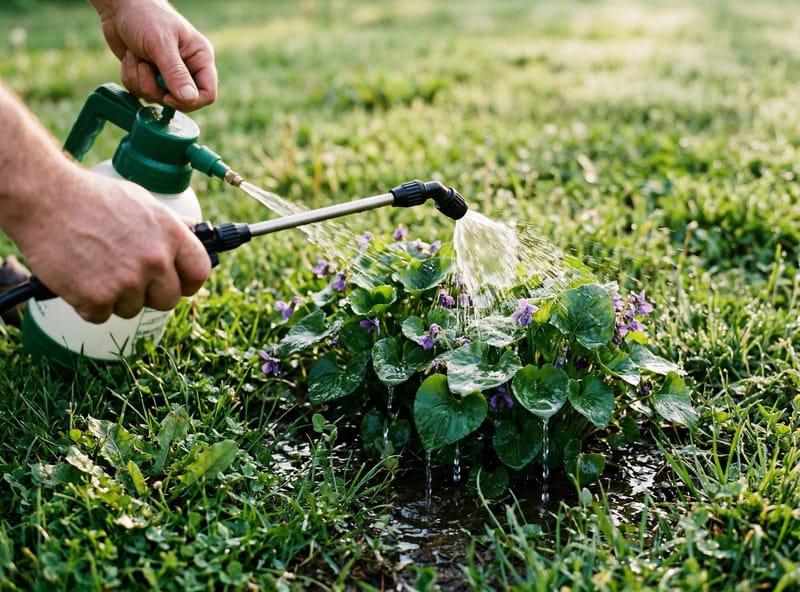
This is the most important step for wild violet. Do not mist lightly. Do not spray and move on quickly. Wild violet's waxy leaves require generous, thorough application until the spray runs off the leaf surface. You need enough volume to overwhelm the wax barrier and ensure the product makes sustained contact with the leaf tissue.
Think of it this way: with most weeds, you wet the leaves. With wild violet, you drench them. The runoff that pools around the base of the plant is actually working in your favor — it contacts the crown and lower stems where the wax layer is thinner.
Step 4: Choose the Right Conditions
Apply on a warm, dry morning when temperatures are between 60 and 80 degrees Fahrenheit with calm winds. Warm conditions accelerate the dehydration process. Avoid spraying before rain — you need the product to remain on the foliage long enough to work. Target wild violet during active growth (spring and early fall) for the best results.
Step 5: Follow Up as Needed
Wild violet typically requires 1 to 2 applications with follow-ups. After the first treatment, watch for new growth emerging from the rhizome network or seed bank. A follow-up application handles regrowth. This is normal for perennial weeds with established root systems — it does not indicate product failure.
For more on application timing across seasons and climates, read our timing and application best practices guide.
See the Results
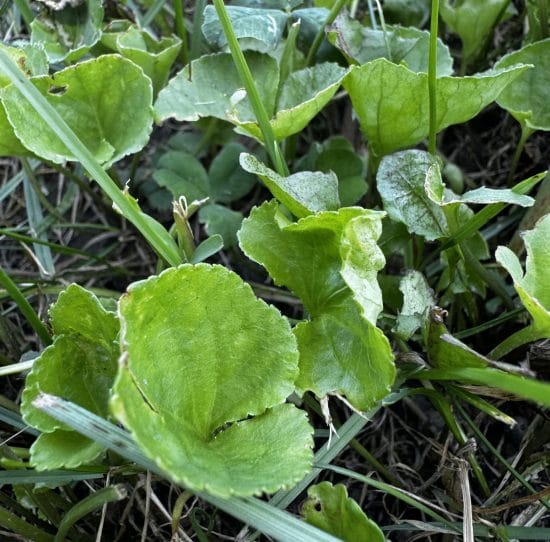
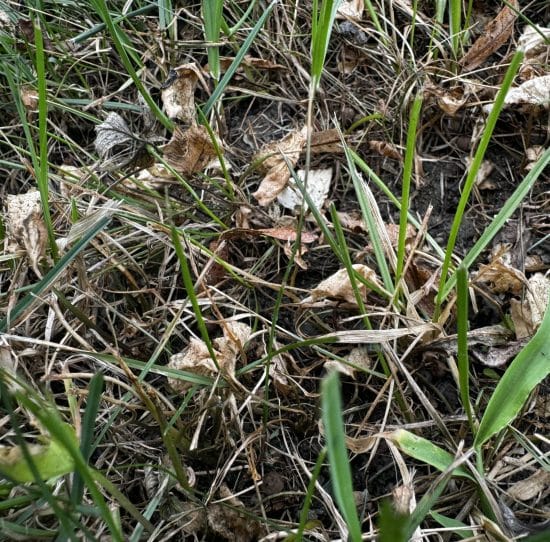
Real results on real lawns — wild violet eliminated, grass preserved.
Ready to Take Back Your Lawn?
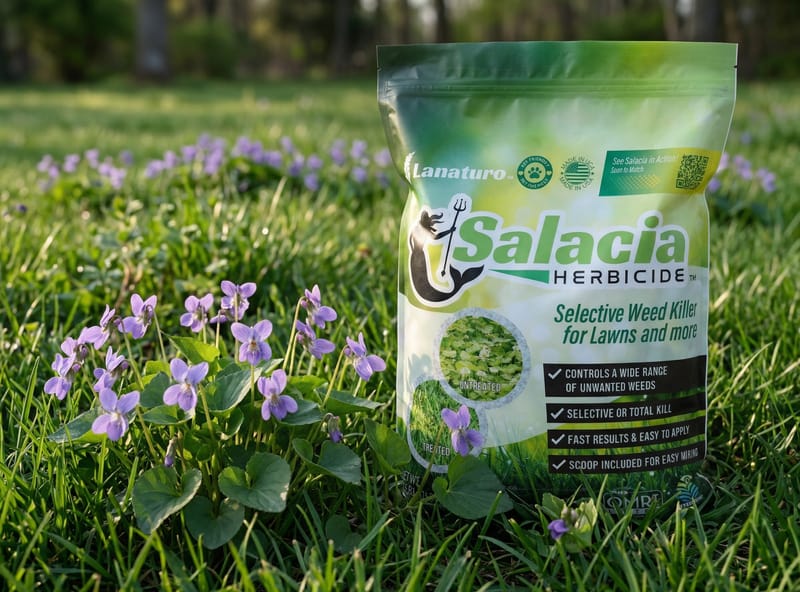
Salacia™ is the first OMRI-certified selective organic herbicide — kills weeds, not grass. Choose your lawn size:
How to Prevent Wild Violet From Coming Back
Killing existing wild violet is the first step. Keeping it gone requires addressing the conditions that invited it in the first place. Wild violet is an indicator weed — it tells you something about your lawn.
Reduce Shade Where Possible
Wild violet thrives in shade and partial shade. If you have trees creating heavy canopy cover, selective pruning to increase sunlight reaching the lawn will make the environment less favorable for wild violet and more favorable for grass. You cannot always eliminate shade, but even modest improvements help shift the competitive balance.
Improve Lawn Density
Wild violet exploits thin and bare areas. After treatment, overseed those spots with grass varieties suited to your region and shade conditions. Dense, healthy turf is the single best long-term defense against broadleaf weed invasion. For cool-season lawns, overseed in early fall. For warm-season lawns, overseed in late spring.
Improve Drainage
Wild violet prefers moist soil. If you have areas with persistent dampness — poor drainage, low spots, compacted soil retaining water — addressing these conditions makes the environment less hospitable. Core aeration in fall helps compacted soil drain better and encourages deeper grass root growth.
Mow at the Right Height
Raise your mowing height to 3 to 4 inches for cool-season grasses. Taller grass shades the soil surface, making it harder for wild violet seeds to germinate and new plants to establish. Short mowing weakens grass and opens the door for weed invasion.
Monitor and Treat Early
Wild violet is much easier to control when caught early. A few small plants in spring can become dense patches by fall if ignored. Walk your lawn periodically and treat new wild violet growth before it has time to establish deep rhizome networks. Early intervention means fewer applications and faster results.
For more on building a weed-resistant lawn, visit our Weed Control Guide. And to understand why organic selective treatment outperforms DIY methods on tough weeds like wild violet, read Does Organic Weed Killer Work?
Need Help? Ask Lanaturo Intelligence
Not sure if what you have is wild violet? Dealing with multiple weed types at once? Our Lanaturo Intelligence chatbot can identify your weed from a photo, recommend the right mixing rate, and walk you through the application process step by step. Look for the chat icon in the bottom-right corner of any page on our site.
Comparing your options?
Our full breakdown of what to look for — and what to avoid — is in the organic weed killer guide. Four criteria, real comparison, no marketing fluff. If keeping your grass is the worry, see the best weed killer that won't kill grass.
Salacia is the first OMRI-certified selective organic herbicide, made by Lanaturo: it removes broadleaf lawn weeds while keeping your grass unharmed.

Lanaturo
Intelligence
Not sure which weed you're looking at? Show Sal.
Sal is the lawn-care brain behind Lanaturo Intelligence. He doesn't just name the weed — he builds your exact treatment plan and checks whether today is the right day to spray.
Where Wild Violet Grows Most
Wild violet is an eastern-half weed with a strong preference for shade and moisture. It runs heaviest from the Great Lakes and the Ohio Valley through the Northeast and down the Appalachians — Michigan, Ohio, Indiana, Illinois, Wisconsin, Pennsylvania, New York, New Jersey and New England — and follows tree lines, north-facing slopes and anywhere the lawn stays damp.
That habitat preference is the tell. If violet is taking a specific part of your lawn rather than the whole thing, look up: it is almost always the shaded, slower-draining side. Grass thins there first, and violet fills what the grass gave up. It spreads by underground rhizomes as well as seed, which is why hand-digging a patch so often returns it thicker the following year.
Violet also carries a waxy leaf that sheds a light pass, so coverage matters more here than on most broadleaf weeds. Drench the leaf surface until it runs, and expect to return for regrowth from rhizomes the spray never reached. At the selective lawn rate Salacia targets it while being designed to spare grass; temporary paling or yellowing of nearby turf is possible and recovers. Always test a small area of your lawn first. Not sure what you are looking at? Sal will identify it from a photo.
Ready to Take Back Your Lawn?
Salacia™ is the first OMRI-certified selective organic herbicide — kills weeds, not grass. Choose your lawn size:
Stop Fighting Wild Violet With the Wrong Tools
Wild violet resists most herbicides because of its waxy leaves — not because it is invincible. The right product, applied generously until runoff, breaks through that barrier and eliminates the weed while preserving your grass.
You do not need stronger chemicals. You do not need to tear up your lawn and start over. You need a selective approach that works on contact — one that was designed for exactly this kind of tough, waxy broadleaf weed.
Pet Friendly. OMRI certified organic. The first selective organic herbicide — built for the weeds others cannot touch.
Salacia is OMRI Listed for organic use and made from naturally derived ingredients. Always follow label directions for best results. Performance may vary based on weed maturity, environmental conditions, and application method.