
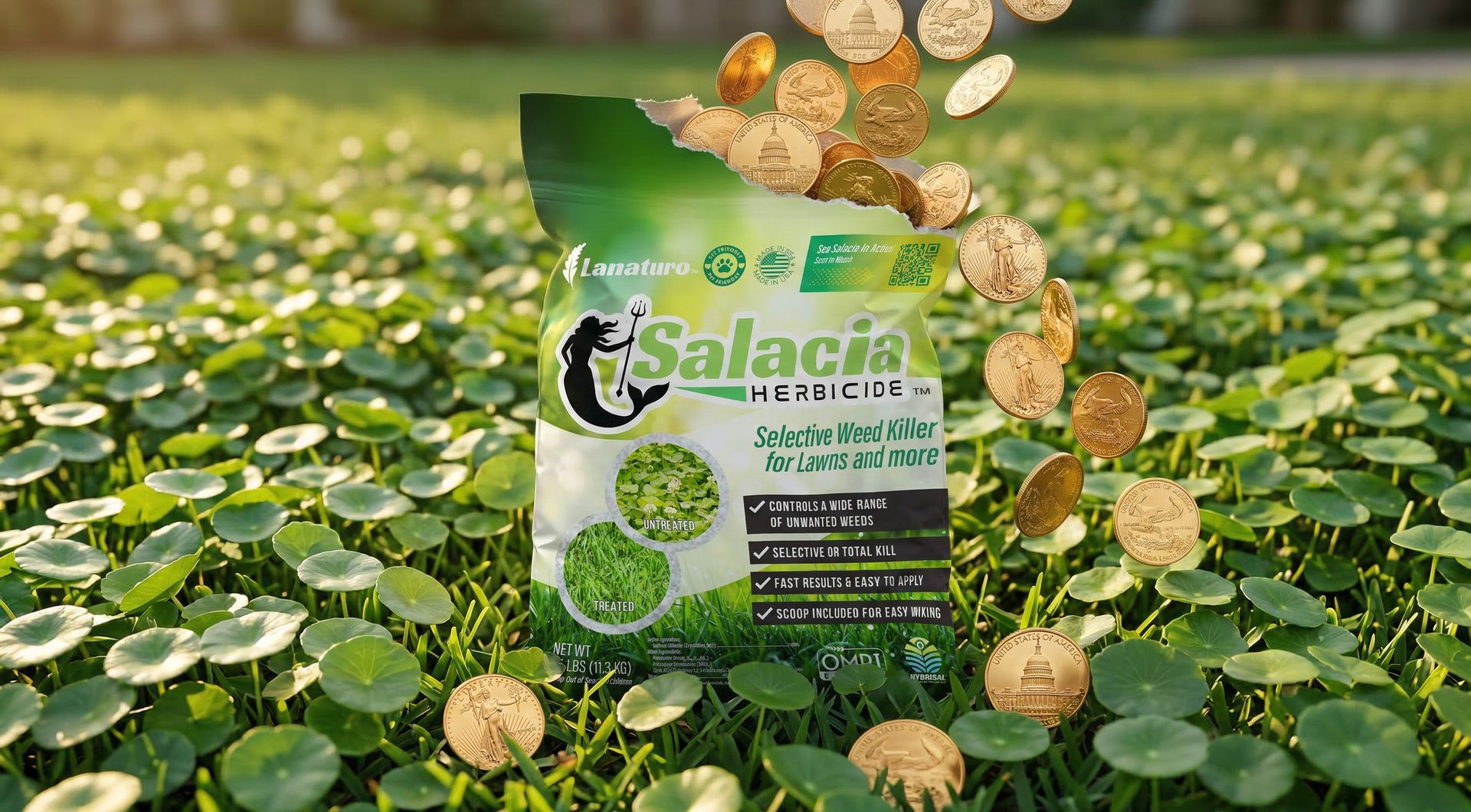
 By Pat Kelly
 If your lawn looks like it's growing lily pads, you've got dollarweed. And if you're reading this, you've probably already tried pulling it — only to watch it creep right back from roots you never saw. Dollarweed (Hydrocotyle umbellata) is one of the most stubborn lawn weeds in the American Southeast, and it thrives in exactly the conditions most homeowners accidentally create.
The good news: you don't need to nuke your lawn to kill it. Salacia — the first OMRI-certified selective herbicide — kills dollarweed through contact dehydration while keeping your St. Augustine, Bermuda, and other warm-season grasses alive. No synthetic chemicals. No scorched earth. Just dead dollarweed.
This guide covers everything: what dollarweed is, why it invaded your lawn, why hand-pulling doesn't work, and the exact treatment protocol to eliminate it organically.
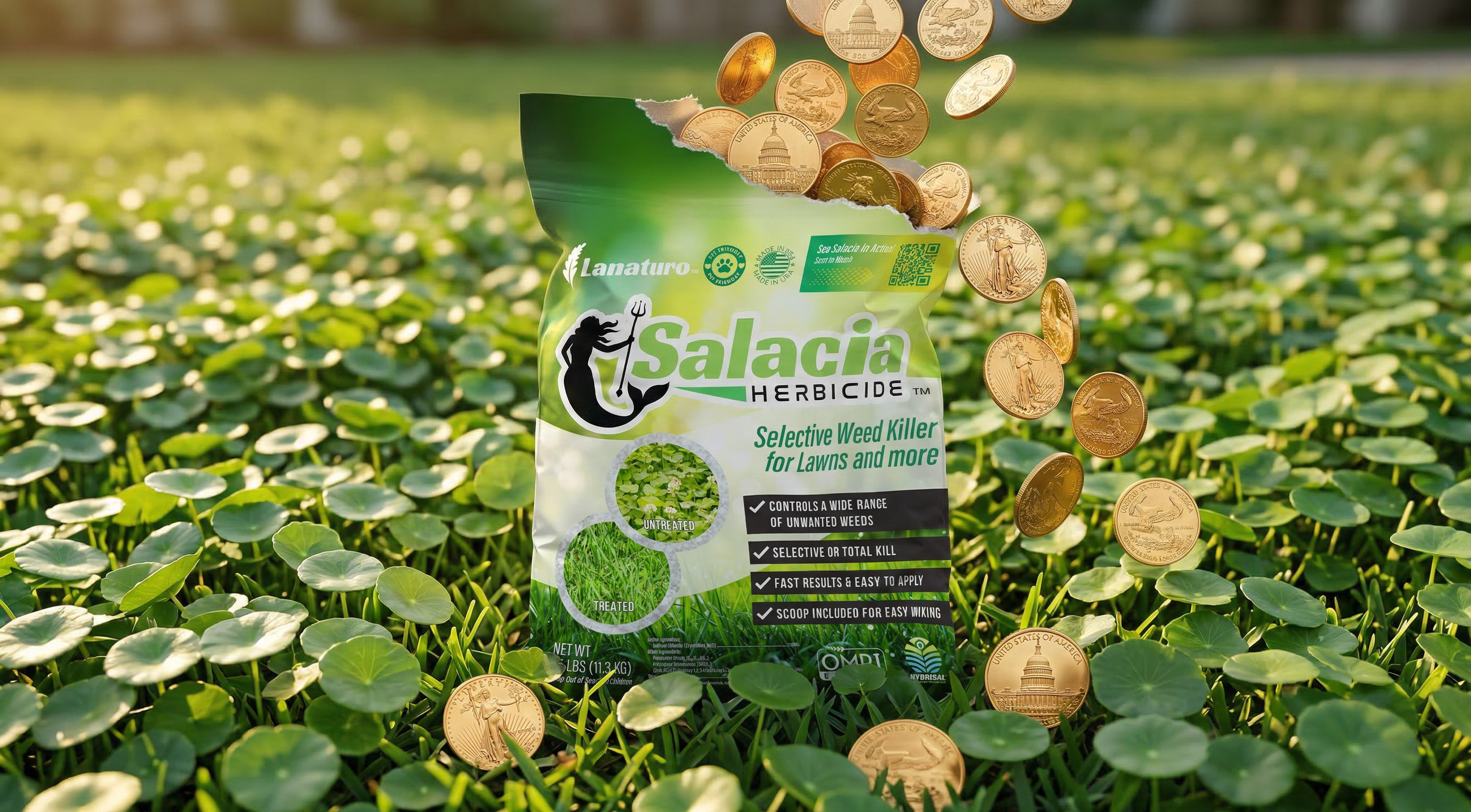
What Is Dollarweed?
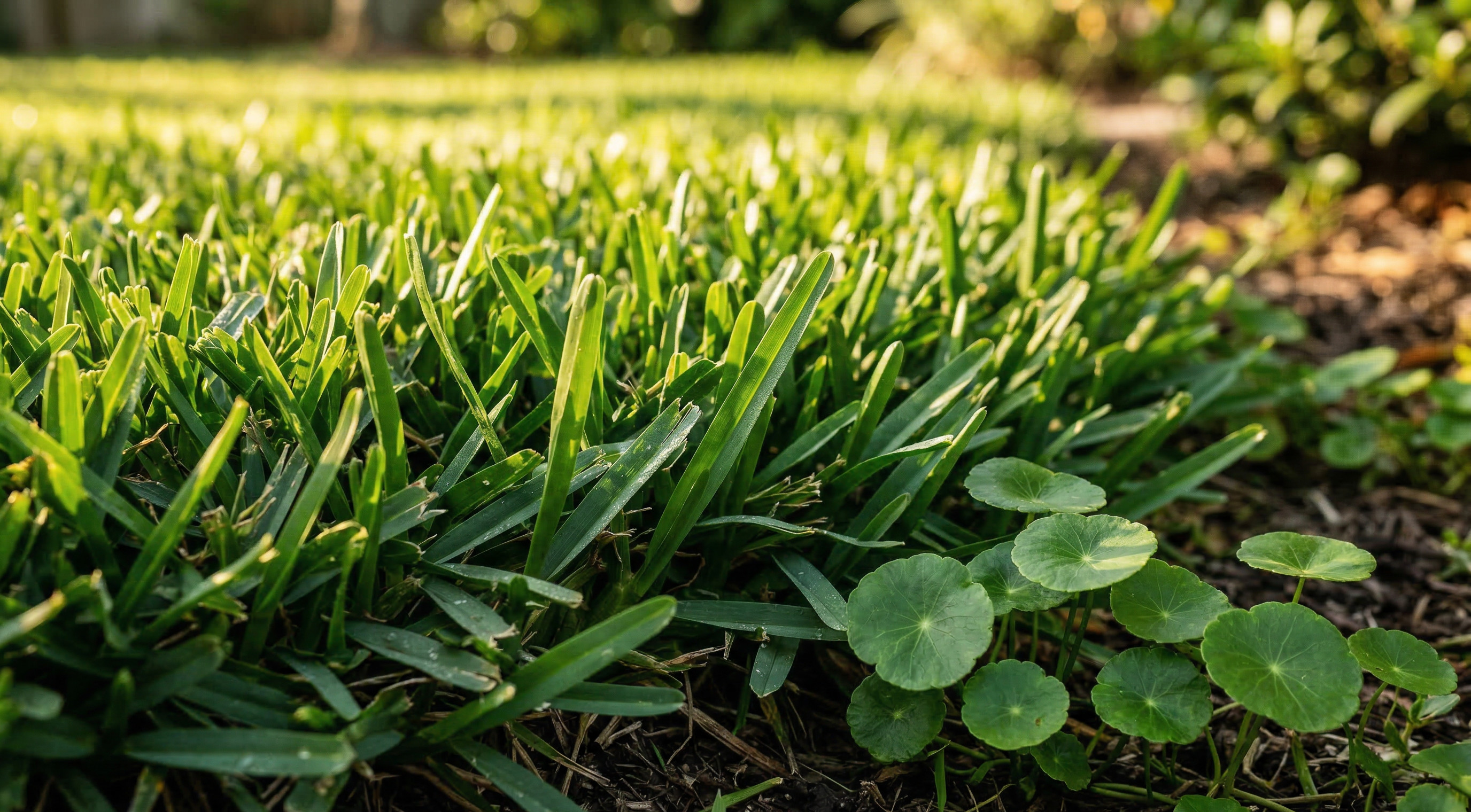
Dollarweed is a creeping perennial weed with round, coin-shaped leaves and shallow roots. It's part of the Araliaceae family, scientifically known as Hydrocotyle umbellata. You'll also hear it called pennywort or marsh pennywort — same weed, different names.
Here's how to identify it:
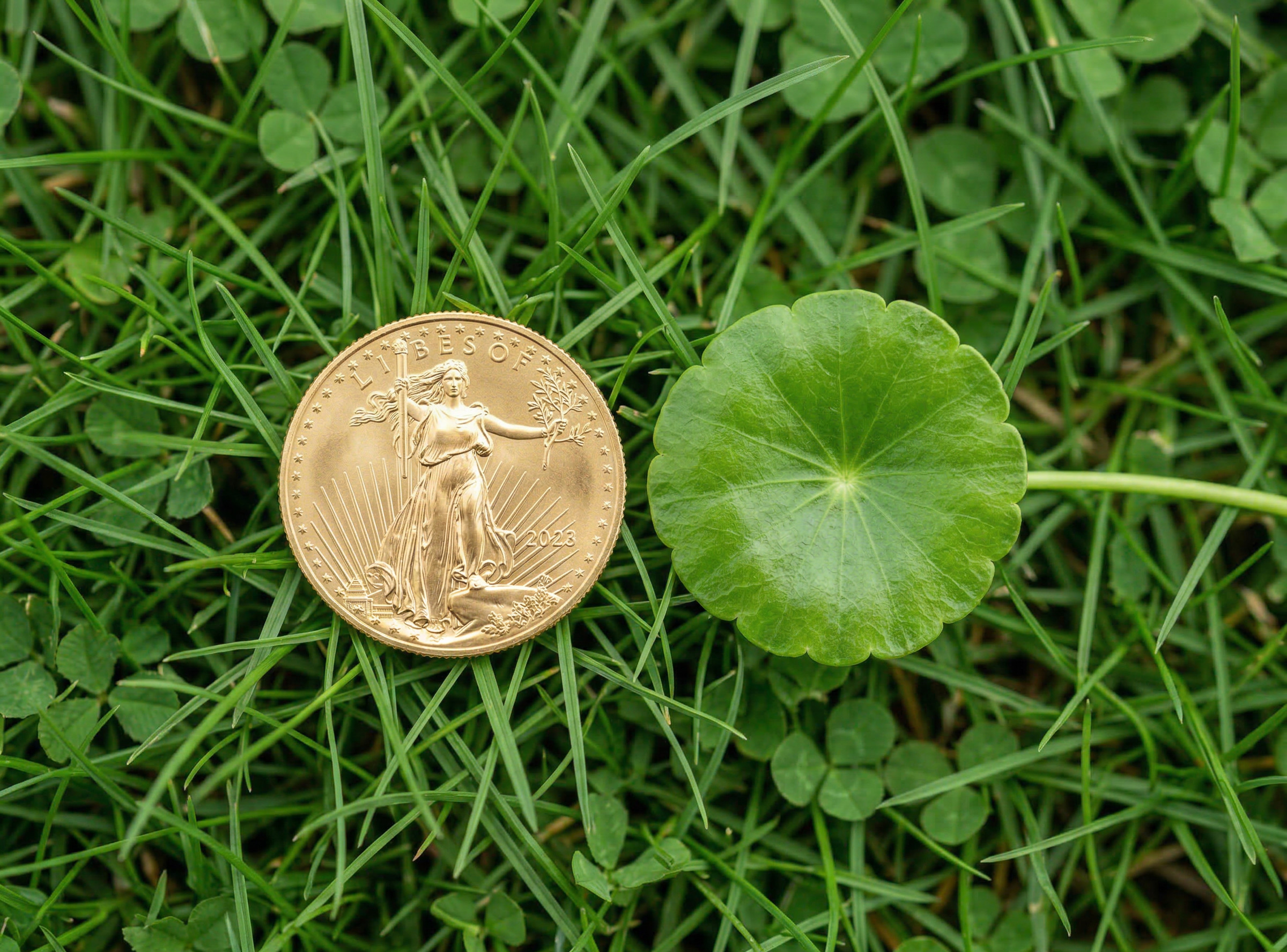
- Leaves: Round, bright green, about the size of a silver dollar coin. The stem attaches to the center of the leaf (like an umbrella), not the edge.
- Stems: Thin, fleshy, light green. They creep along the soil surface and root at every node.
- Flowers: Small, white, and inconspicuous — clustered on short stalks. You'll barely notice them.
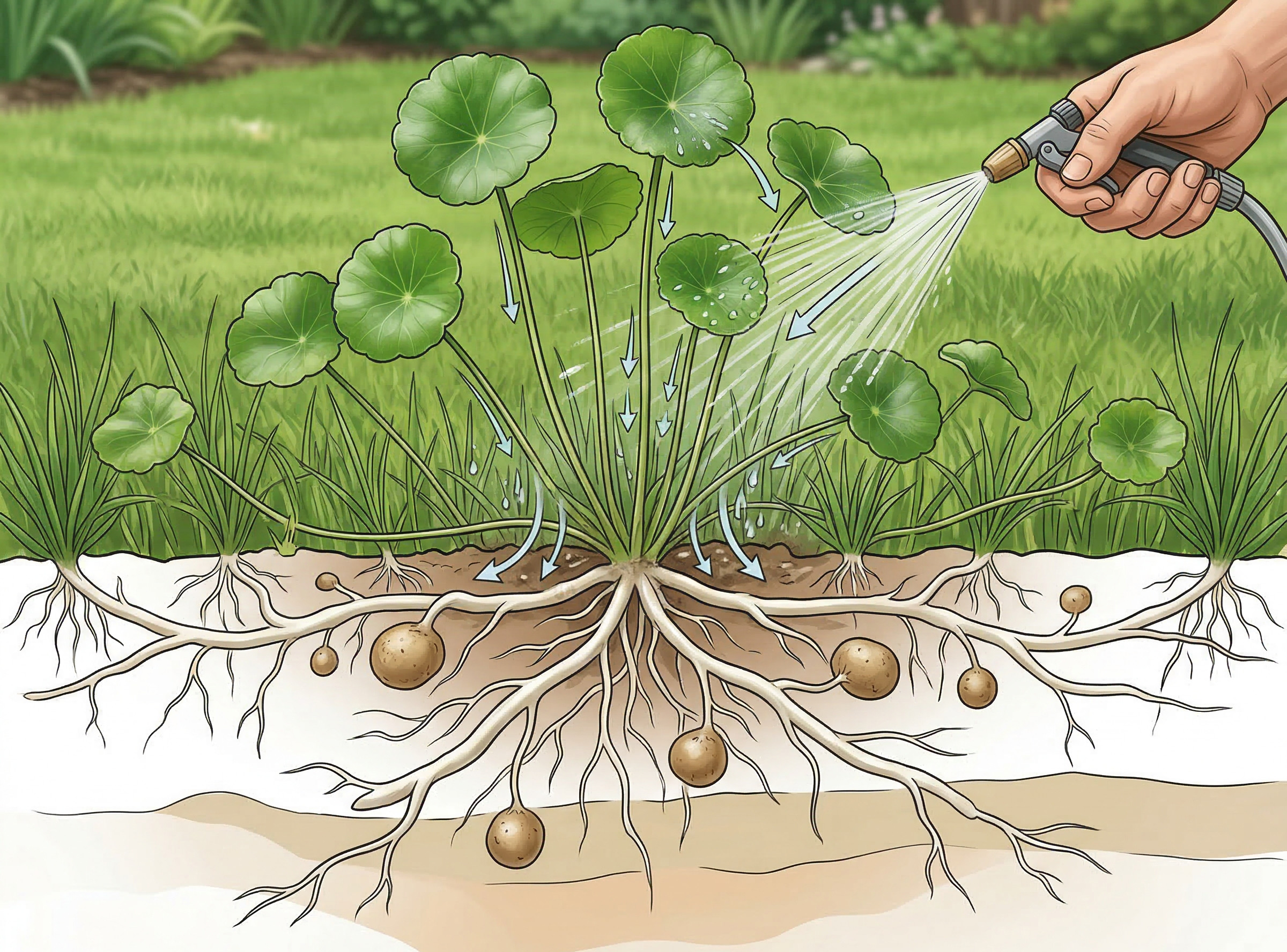
- Roots: This is where the trouble lives. Dollarweed spreads three ways — underground rhizomes, tubers, and seeds. Pull the leaves and the underground network stays intact.
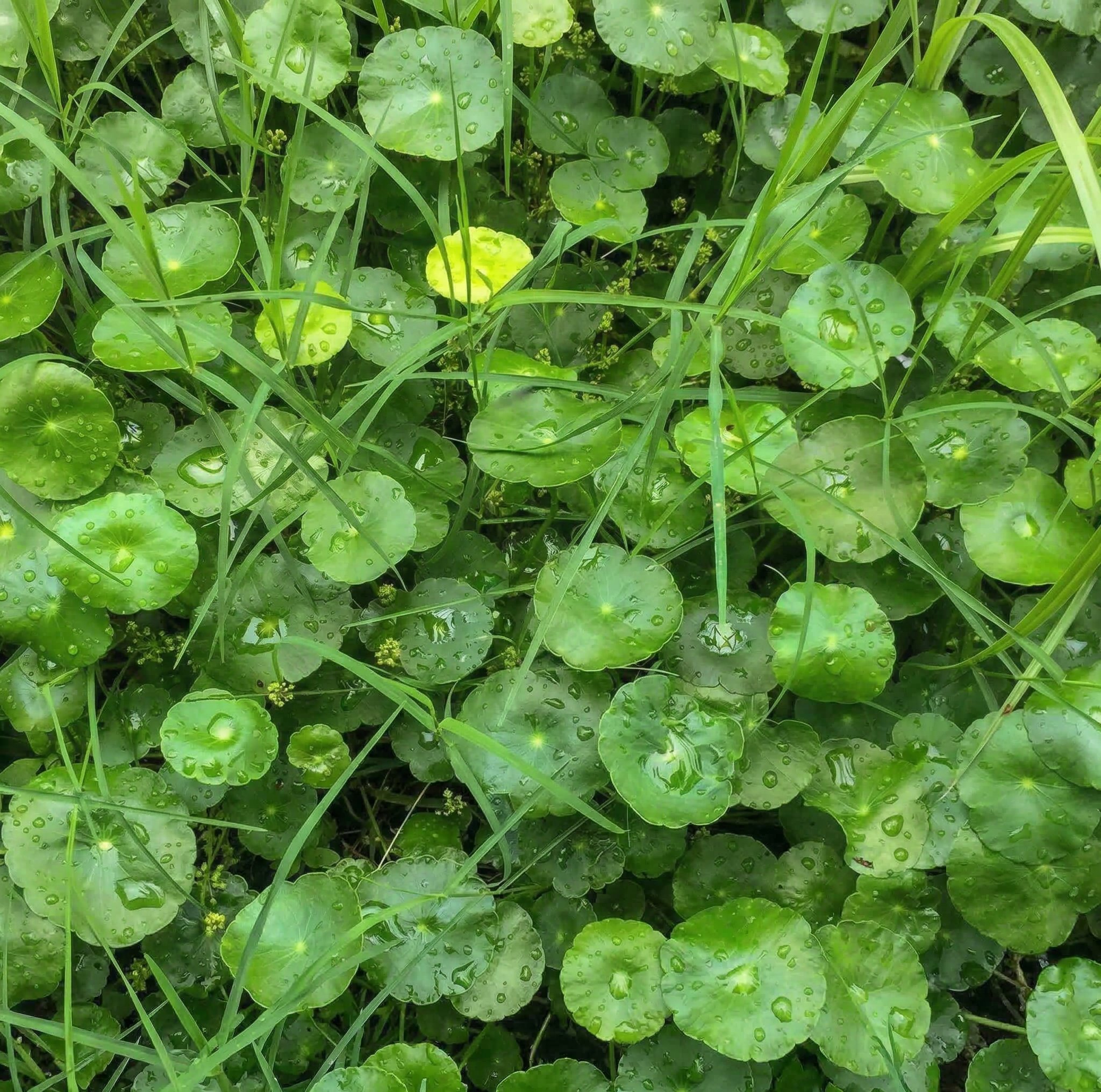
Don't confuse dollarweed with clover — clover has three-lobed leaves, while dollarweed has single round leaves with scalloped edges. And unlike ground ivy (creeping charlie), dollarweed leaves are smooth and glossy, not fuzzy.
Why Is It Called Dollarweed?
The name is pure American: its round, flat leaves look like old silver dollar coins. The alternate name — pennywort — comes from the Old English word "wort," meaning plant. Literally "penny plant," named for the European species Hydrocotyle vulgaris, whose smaller leaves resembled an English penny.
Both names are about money. And ironically, dollarweed will cost you plenty if left unchecked — in lawn care products, wasted weekends, and declining property value.
Where Dollarweed Grows Worst
Dollarweed is overwhelmingly a Southeastern United States problem. Over 93% of search demand for dollarweed control comes from U.S. homeowners — this is an American lawn crisis.
The University of Florida's Extension Service has called dollarweed "the number one weed problem in Florida." That's not hyperbole — it's the most-asked-about weed at UF/IFAS offices statewide.
The worst states:
- Florida — Ground zero. High water tables, year-round irrigation, and warm temperatures create a dollarweed paradise.
- Texas — Especially coastal cities like Houston, Galveston, Corpus Christi, and Beaumont. Sandy soils + Gulf humidity = dollarweed heaven.
- Georgia & South Carolina — Savannah, Charleston, Hilton Head — anywhere with warm-season turf and regular rainfall.
- North Carolina — Coastal Plain from Wilmington to the Outer Banks.
- Alabama, Mississippi, Louisiana — The entire Gulf Coast corridor. Mobile, Biloxi, Baton Rouge, New Orleans.
Dollarweed can survive in USDA zones 5–10, so it occasionally appears in Great Lakes and Pacific Northwest states — but the Southeast is where it dominates.
The grass types most affected? St. Augustine and Bermuda — the dominant turf varieties across the South. If you have St. Augustine and you water frequently, dollarweed is watching.
What Causes Dollarweed Infestations?
One word: water.
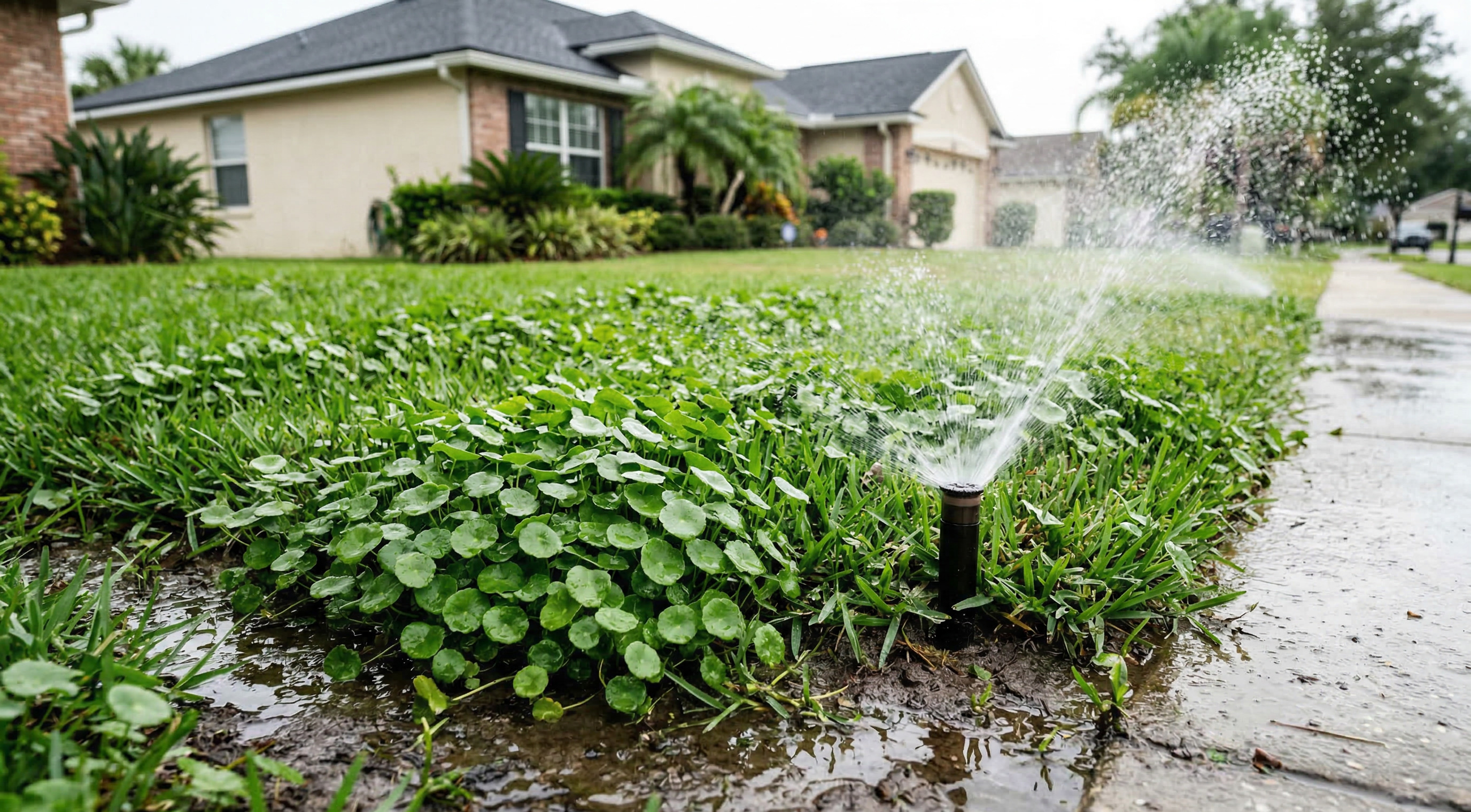
Dollarweed is a moisture indicator plant. If it's thriving in your lawn, your soil is staying too wet for too long. This usually means one of three things:
- Overwatering — The most common cause. Irrigation systems set to run daily, sprinklers hitting the same spots, or simply watering too frequently. Dollarweed doesn't just tolerate wet conditions — it requires them.
- Poor drainage — Compacted soil, low spots in the yard, or clay-heavy soil that holds water. You might not be overwatering, but the water has nowhere to go.
- High water tables — Common in coastal Florida, the Gulf Coast, and low-lying areas. The ground stays moist no matter what you do. This is why dollarweed feels unbeatable in places like Tampa, Jacksonville, and Houston.
Here's what makes dollarweed particularly aggressive: it spreads three ways.
- Rhizomes — Underground horizontal stems that snake through the soil, popping up new plants inches or feet from the original.
- Tubers — Small, potato-like storage organs that sit underground and can regrow entire plants. This is why dollarweed comes back after you think you've killed it — the tubers survive.
- Seeds — Less common but still a factor, especially in untreated stands that flower.
Clemson University's Home & Garden Information Center puts it bluntly: "Controlling dollarweed can be time-consuming and frustrating." They call it a triple threat — and they're right.
Why Most Methods Fail
If you've already tried to kill dollarweed and it came back, you're not alone. Here's why the most common approaches don't work:
Hand-pulling: You're Fighting a Network
Pulling dollarweed feels productive — the leaves come up easily. But the rhizome network stays underground. Every node you leave behind regrows. And tubers can sit dormant for months, regrowing when conditions are right. You'd have to excavate every square inch of soil to get the whole network. That's not weeding — that's landscaping demolition.
Non-Selective Sprays: They Kill Your Grass Too
Many homeowners reach for a burn-down spray and blast the dollarweed — only to end up with brown, dead patches of St. Augustine alongside the dead weeds. Non-selective products kill everything they touch. If you're treating dollarweed in your lawn, you need something that targets the weed and spares the grass. Most organic options on the market can't do that. That's the core problem — and the reason selective vs. non-selective matters here.
"Just Reduce Watering": Necessary But Not Sufficient
Every extension service will tell you to reduce irrigation. And they're not wrong — dollarweed does weaken in drier conditions. But reducing water alone won't kill an established infestation. The tubers survive dry spells and regrow when rain returns. Clemson even admits: "Complete eradication from the landscape is not practical" using cultural methods alone. You need to attack the plant directly AND change the environment.
Synthetic Selective Herbicides: They Work, But at What Cost?
Traditional selective herbicides containing 2,4-D, dicamba, or atrazine can kill dollarweed while preserving grass. But they get absorbed into the plant and the soil — they're designed to move through the plant's vascular system. For homeowners with children, pets, or gardens nearby, that's a tradeoff many aren't willing to make. According to Mississippi State Extension, these products also require precise application timing and often need 2-3 follow-up treatments.
How to Kill Dollarweed With Salacia
Salacia is the first OMRI-certified selective herbicide — meaning it's certified for organic use and can target broadleaf weeds like dollarweed without killing your grass. It works through contact dehydration: the formula strips moisture from the weed's leaf tissue on contact, causing it to dry out and die. It's physical, not chemical — it doesn't get absorbed into your soil or root system.
Here's the exact treatment protocol from our Weed Control Guide:
Dollarweed Treatment Protocol
Mix rate (in lawns): Selective Rate — 3 cups per gallon of water (measured from dry granules and dissolved)
Mix rate (non-lawn areas): Non-Selective Rate — 4 cups per gallon
Applications: 1–2 applications. Follow up as new growth appears from underground runners and tubers.
The key to maximum results:
Salacia works on contact. If the product doesn't touch it, it doesn't kill it. That means you can't mist dollarweed from a distance and expect results. You need full coverage:
- Spray generously on all round leaves — tops and undersides
- Coat the stems where they connect to the soil
- Drench the soil area around the base until runoff
- Trace the runners — dollarweed spreads via creeping stems. Follow them across your lawn and spray the entire network, not just the visible cluster
Important: Always test a small area of your lawn first before full application. Some grass varieties may experience temporary paling — this is cosmetic and recovers naturally.
Because Salacia is Pet Friendly, you don't have to evacuate the yard. Just let the treated area dry before allowing pets back — not because of safety concerns, but because animals may be attracted to lick it, which could affect results.
Ready to Take Back Your Lawn?
Salacia™ is the first OMRI-certified selective organic herbicide — kills weeds, not grass. Choose your lawn size:
See the Results
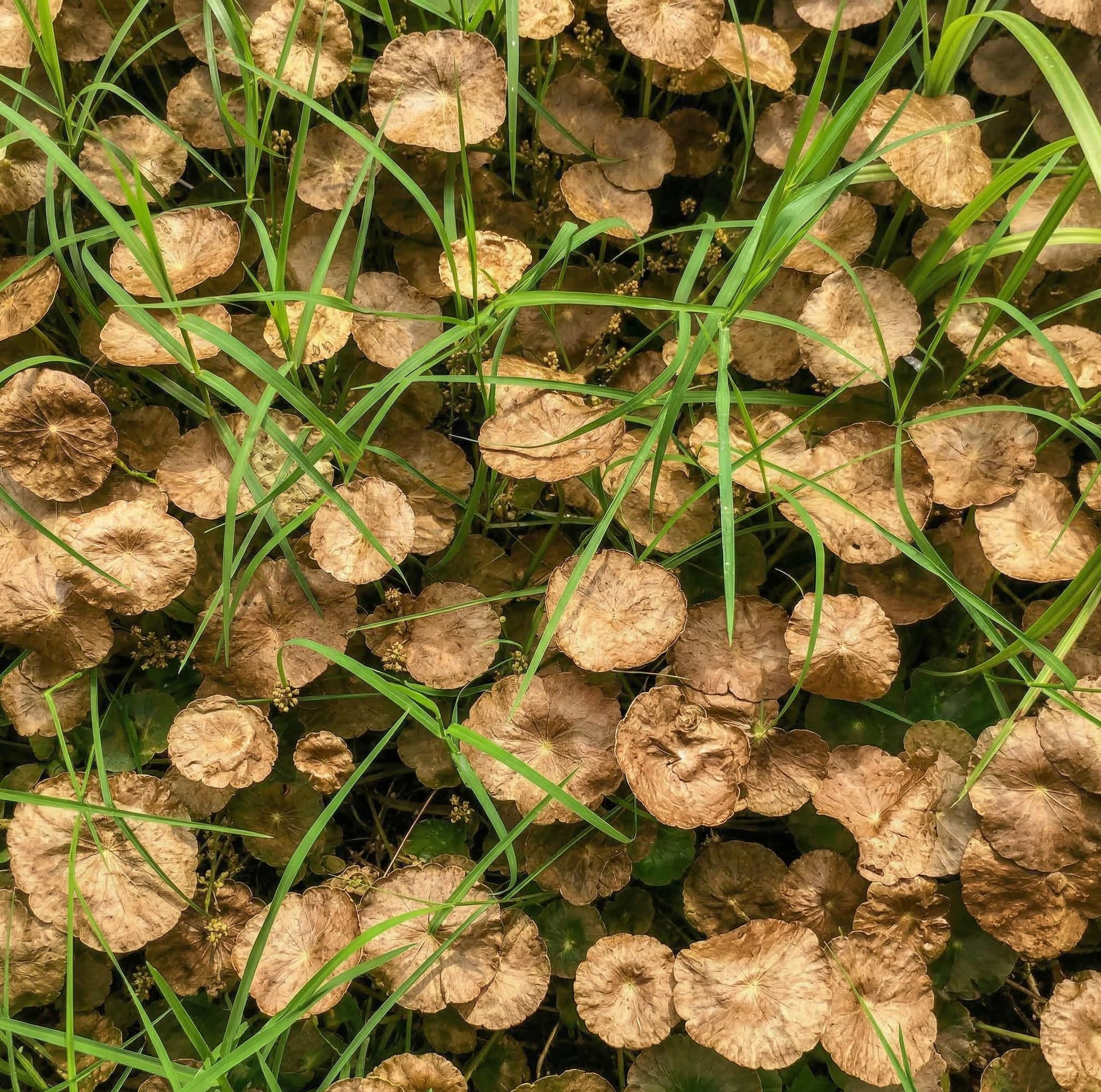
Here's what dollarweed looks like before and after treatment with Salacia:
Not sure what's in your lawn?
Our Weed Control Guide covers 46 weeds with before-and-after photos, mixing rates, treatment techniques, and full guides.
Explore the Weed Control Guide →How to Prevent Dollarweed From Coming Back
Killing the visible dollarweed is step one. Keeping it gone requires changing the conditions that invited it in the first place.
Fix Your Irrigation
This is the single most impactful change you can make. Dollarweed requires consistently moist soil. Switch from daily shallow watering to deep, infrequent irrigation — typically twice per week for most Southeastern lawns. Water early in the morning so the soil surface dries during the day. If you have zones in your irrigation system, audit them: overlap areas often stay saturated and become dollarweed nurseries.
Improve Drainage
If low spots in your yard collect water, address them. Core aeration helps compacted soil absorb water instead of pooling. In severe cases, regrading or adding a French drain may be necessary — especially in low-lying coastal properties.
Mow Higher
Dense, tall turf shades the soil and outcompetes dollarweed. For St. Augustine grass, maintain a mowing height of 3.5–4 inches. For Bermuda, 1.5–2 inches. A thick canopy of grass makes it harder for dollarweed to get the light and moisture access it needs.
Monitor and Retreat
Dollarweed tubers can survive underground even after the visible plants die. Watch for regrowth — especially after rain events or seasonal shifts. Hit new sprouts early with a follow-up Salacia application before they re-establish a runner network. For more on timing, see our guide on the best time to apply weed killer.
Dollarweed FAQ
What is the best killer for dollarweed?
For homeowners who want to kill dollarweed without killing their grass or using synthetic chemicals, Salacia is the first OMRI-certified selective herbicide available. It kills dollarweed through contact dehydration at the selective rate (3 cups per gallon) while preserving warm-season grasses like St. Augustine and Bermuda. For a complete breakdown, see our best organic weed killer guide.
Does dollarweed mean my soil is bad?
Not necessarily bad — but definitely too wet. Dollarweed is a moisture indicator. Its presence tells you the soil is staying saturated for too long, whether from overwatering, poor drainage, or a high water table. It's not a soil health problem — it's a soil moisture problem.
Is dollarweed the same as pennywort?
Yes. Dollarweed and pennywort are common names for the same plant — Hydrocotyle umbellata. "Dollarweed" is the more common term in the U.S. (named for its silver-dollar-shaped leaves), while "pennywort" is older and comes from Old English. If you're searching for how to kill pennywort in your lawn, you're looking for this same guide.
Is it better to pull dollarweed or spray it?
Spraying is far more effective. Hand-pulling removes the leaves and surface stems but leaves the underground rhizome network and tubers intact. Those tubers can stay dormant and regrow weeks or months later. A targeted spray that reaches the leaves, stems, runners, and soil area delivers consistent results that hand-pulling can't match.
Is dollarweed difficult to control completely?
It can be persistent, but it's not invincible. The key is combining direct treatment (spray the plant and its runner network) with environmental changes (reduce watering, improve drainage). Extension services have historically said "complete eradication is not practical" — but they were writing before organic selective herbicides existed. With the right product and proper follow-up for regrowth from tubers, you can take back your lawn.
Fighting more than one weed?
Most lawns battling one broadleaf weed have others growing alongside it. Our ranked guide to the best weed killer that won't kill grass covers the full lineup a selective treatment clears in the same pass.

Lanaturo
Intelligence
Not sure which weed you're looking at? Show Sal.
Sal is the lawn-care brain behind Lanaturo Intelligence. He doesn't just name the weed — he builds your exact treatment plan and checks whether today is the right day to spray.
Ready to Take Back Your Lawn?
Salacia™ is the first OMRI-certified selective organic herbicide — kills weeds, not grass. Choose your lawn size:
Your lawn shouldn't cost you weekends.
Dollarweed got its name from money. Don't let it keep costing you yours. Treat it once, fix your water, and move on with your life.
This guide is for educational purposes. Always read and follow the product label before application. Results may vary based on weed maturity, application coverage, temperature, and environmental conditions. If you have specific concerns about your lawn type, consult your local extension service or contact our team.