
 By Pat Kelly
 Clover is the most common broadleaf weed in American lawns. Those small, three-lobed leaves might look harmless at first — even charming — but left alone, a few patches become a dense mat that crowds out your grass within a single growing season. White clover (Trifolium repens) spreads through both stolons and seeds, which means it advances underground and airborne at the same time.
The frustrating part: clover actually thrives where lawns struggle. It fixes its own nitrogen from the air, so it does not need fertile soil the way your grass does. Low-nitrogen lawns are an open invitation. And because clover stays green through drought while surrounding grass browns out, it can look like your lawn is the weed and clover is the desired plant.
The good news is that clover is a broadleaf weed — and broadleaf weeds are vulnerable to selective herbicides that target them without harming grass. This guide covers every method to eliminate clover, from organic selective treatment to cultural prevention, so you can take your lawn back without collateral damage.
What Will Kill Clover But Not Grass?
The short answer: a selective broadleaf herbicide kills clover but not grass. Salacia — the first OMRI-certified selective organic herbicide, labeled Pet Friendly — dehydrates clover on contact at the lawn rate while your grass is preserved.
What Is Clover and Why Is It in Your Lawn?
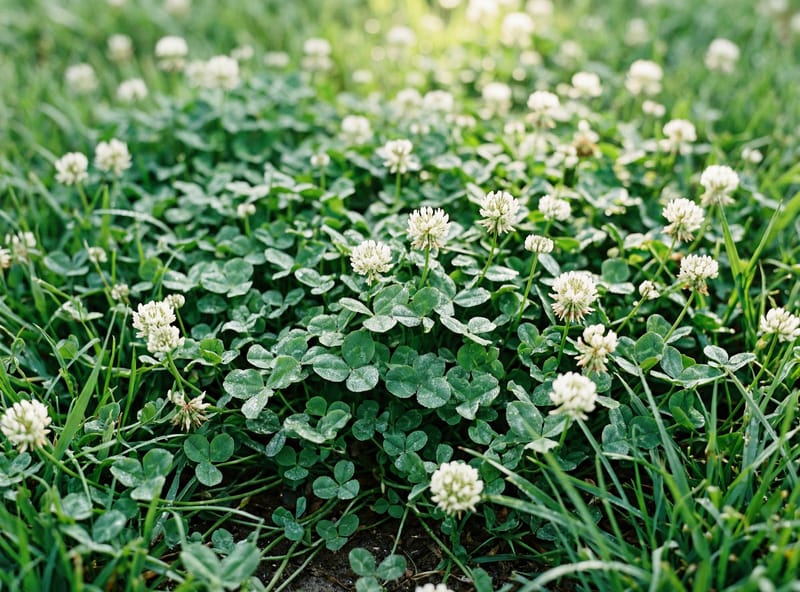
Clover belongs to the genus Trifolium and includes over 300 species worldwide. The two types most commonly found in American lawns are:
White Clover (Trifolium repens)
White clover is the variety you almost certainly have. It is a low-growing perennial with distinctive three-part leaves and round white flower heads. It spreads primarily through stolons — horizontal stems that root at the nodes — allowing a single plant to colonize large areas without producing seed. White clover stays low to the ground, often below mowing height, which means mowing alone will not control it. Not sure the white blooms in your lawn are clover at all? Our photo guide to weeds with white flowers covers clover and its common look-alikes.
Red Clover (Trifolium pratense)
Red clover is taller, with larger leaves and purple-pink flower heads. It is more common in fields and roadsides than manicured lawns, but it can invade yards adjacent to naturalized areas. Red clover is a short-lived perennial that relies more on seed production than stolons.
Why Clover Moves In
Clover is not random. It shows up for specific reasons, and understanding them is the key to long-term control:
- Low soil nitrogen. Clover fixes atmospheric nitrogen through a symbiotic relationship with Rhizobium bacteria in its root nodules. Where grass is nitrogen-starved, clover has a competitive advantage because it manufactures its own supply.
- Compacted soil. Clover tolerates compaction better than most grass species. If your soil is hard and your grass is struggling, clover fills the gap.
- Thin turf. Any bare or sparse area is an invitation. Clover seeds are tiny, abundant, and germinate quickly in exposed soil.
- Low mowing height. Mowing too short weakens grass and gives clover — which naturally grows low — an advantage.
Why Clover Spreads So Fast
Clover is one of the most efficient colonizers in the weed world. Understanding its spread mechanisms explains why small patches become lawn-wide problems if you wait:
- Stolon network. White clover sends out horizontal runners that root at every node. One plant can produce a network covering several square feet within a single season. Pull up a mat of clover and you will see the connected underground highway.
- Seed production. Each white clover flower head produces dozens of seeds. A single plant can generate thousands of seeds per season, and those seeds remain viable in the soil for up to 20 years.
- Self-fertilizing. Because clover fixes its own nitrogen, it does not depend on your fertilization schedule. Even in neglected soil, clover feeds itself.
- Mowing resistance. White clover grows below typical mowing heights. Each time you mow, you cut your grass but barely touch the clover. Over time, the grass weakens from repeated cutting while clover remains untouched.
This is why timing matters. A handful of clover plants in April can become a dominant ground cover by August. Early intervention saves you from a much larger problem later.
Methods to Kill Clover in Your Lawn
Multiple approaches exist for clover control. The right one depends on the size of your infestation, whether you need to preserve surrounding grass, and your tolerance for synthetic chemicals.
| Method | Kills Clover? | Saves Grass? | Organic? | Best For |
|---|---|---|---|---|
| Selective organic herbicide | Yes | Yes | Yes | Lawns of any size |
| Synthetic broadleaf herbicide | Yes | Yes | No | Conventional lawn care |
| DIY burn-down sprays | Partially | No | Yes | Non-lawn areas only |
| Hand pulling | Yes (if roots removed) | Yes | Yes | Tiny patches only |
| Pre-emergent (organic) | No (prevents germination only) | Yes | Yes | Prevention, not cure |
The critical distinction is selective vs non-selective. Most organic weed killers are non-selective — they burn everything they contact, including your grass. To learn the difference, read our guide on what a selective weed killer is and why it matters for lawns.
How to Kill Clover Organically Without Killing Grass
This is the question most homeowners are really asking: what kills clover but not grass?
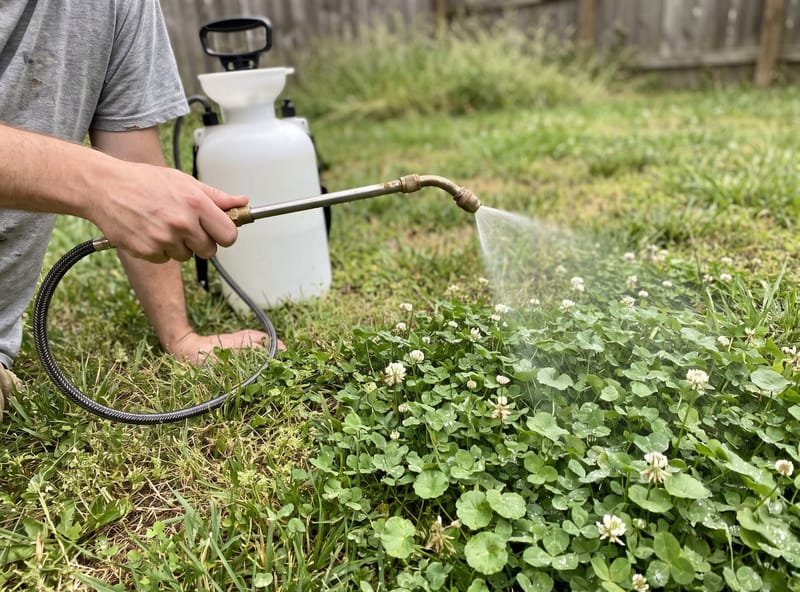
The direct answer: a selective herbicide kills clover but not grass. Selective formulas target broadleaf weeds like clover while sparing grass blades. Salacia — the first OMRI-certified selective organic herbicide — dehydrates clover from the root up while your grass is preserved: mix at the selective lawn rate and wet the clover to the point of runoff.
The challenge with most organic weed control methods is that they are non-selective — they kill everything they contact. Non-selective sprays burn your grass along with the clover. That is fine for driveways and patios, but it defeats the purpose if you are trying to improve your lawn.
Selective organic herbicides solve this problem. They target broadleaf weeds like clover based on the biological differences between broadleaf plants and grasses. Clover absorbs the treatment and dehydrates from the root up. Your grass — with its different leaf structure and physiology — stays untouched.
Salacia: The First OMRI-Certified Selective Herbicide
Salacia by Lanaturo is the first OMRI-certified selective herbicide. It uses Hybrisal Technology — a dual-action system that works as a selective herbicide at the lawn rate and a non-selective herbicide at the higher rate. The naturally derived formula works through dehydration, not poisoning, drawing moisture out of broadleaf weed tissue until the plant collapses.
Because the formula is naturally derived — not synthetic — there is no chemical residue accumulating in your soil. And because it is selective, your grass is preserved throughout the process. Clover is one of the most responsive weeds to Salacia treatment, with visible results typically appearing within hours of application.
What the field trials measured on clover
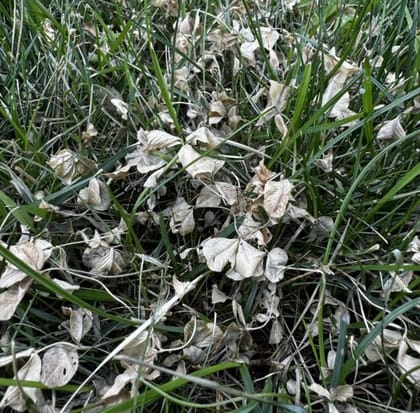
White clover averaged 82.9% leaf mortality across multi-site field trials, and 87.1% at the sites where the spray actually reached the full leaf. The gap between those two numbers is the whole lesson: this is a contact treatment, so it only acts where it lands.
That is why coverage decides the result more than volume does. Those trials found at least 200 millilitres per square metre was needed to wet the leaf properly — below that, clover's low, layered growth habit shelters the leaves underneath and they simply survive.
Clover is also the case that shows the selectivity is real rather than lucky. Across 65 species tested at 28 field sites, every perennial lawn grass survived treatment while mortality concentrated in broadleaf species — clover among them. Test a small area first.
Step-by-Step Application Guide
Getting clover control right comes down to preparation and technique. Follow these steps for the best results:
- Mow first. Cut your lawn to normal height before treating. This ensures the herbicide contacts clover foliage directly without excess grass blade interference.
- Mix at the selective rate. For Salacia, that is 1 lb (3 cups) per 1 gallon of water. This concentration targets broadleaf weeds while preserving grass. Do not exceed the selective rate for lawn applications. Salacia is a granular weed killer you dissolve in water — the dry concentrate is why one bag offers both mixing rates.
- Spray on a warm, dry day. Ideal conditions are 60 to 80°F with calm winds and no rain expected for at least 4 hours. Warm temperatures accelerate the dehydration process.
- Wet the clover thoroughly. Spray clover foliage until the leaves are wet to the point of runoff. Full coverage is essential — the product works on contact, so every leaf it touches is a leaf it kills.
- For large patches, use blanket application. Clover infestations covering large areas respond well to blanket spraying. The selective rate will not harm surrounding grass.
- Wait and watch. Wilting begins within hours. Full browning and collapse occurs within 1 to 2 weeks. Do not water the treated area for 24 hours.
- Follow up as needed. New clover may germinate from the seed bank in the soil — this is normal. A second application handles new growth. Typically 1 to 2 applications are sufficient.
For detailed timing guidance across seasons and climates, see our timing and application best practices.
See the Results
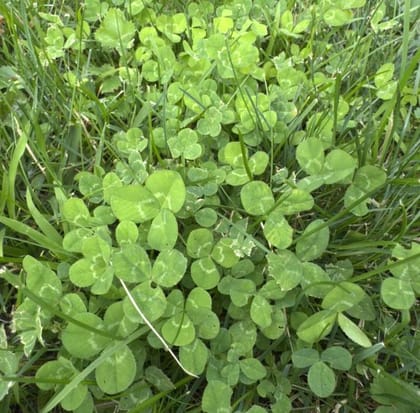
Real results, real lawns — Salacia eliminates clover while your grass stays perfectly untouched.
Ready to Take Back Your Lawn?
Salacia™ is the first OMRI-certified selective organic herbicide — kills weeds, not grass. Choose your lawn size:
Chemical Clover Killers: What to Know
Synthetic broadleaf herbicides are the conventional approach to clover control. The most common active ingredients used against clover are:
- 2,4-D — the most widely used broadleaf herbicide in the world. Effective on clover when applied during active growth.
- Dicamba — often combined with 2,4-D for broader broadleaf coverage. Effective on clover and many other lawn weeds.
- Triclopyr — particularly effective on tougher broadleaf weeds and sometimes used for stubborn clover patches.
- Fluroxypyr + MCPP — found in combination broadleaf herbicide products that target multiple broadleaf weeds including clover.
These chemicals kill clover effectively. But they come with documented tradeoffs. A 2012 Tufts University study found a significant association between lawn chemical exposure and canine malignant lymphoma. The Purdue comparative oncology study detected herbicide metabolites in the urine of dogs from treated lawns — even days after application.
If you have pets, children, or simply prefer to avoid synthetic chemicals in your soil, read our full breakdown of the hidden costs of synthetic herbicides. For pet-friendly weed killer options, see our complete guide.
Do DIY Weed Killers Work on Clover?
The internet is full of homemade weed killer recipes for clover. The problem with all of them is the same: they are non-selective. Every DIY spray you can mix at home will kill your grass right alongside the clover. That is fine for driveways and sidewalk cracks. It defeats the purpose if you are trying to improve your lawn.
DIY burn-down sprays may brown clover foliage on contact, but the root system and stolon network typically survive. Regrowth appears within days to weeks. You end up with damaged grass and clover that comes back — the worst of both outcomes.
The bottom line: For clover growing in your lawn, a selective herbicide is the only approach that eliminates the weed without destroying what you are trying to protect. Non-selective methods belong on hardscapes, not turf.
For a deeper comparison of organic weed control methods, see our guide: Does Organic Weed Killer Work?
The Best Clover Killer for Lawns: 4 Criteria That Matter
Search "clover killer" and you'll find dozens of products promising results. Filter them through the four criteria that actually determine what happens in a lawn, and the field collapses fast:
- Selective action. If it kills grass along with the clover, it isn't a lawn product — it's a driveway product. Most organic options fail right here.
- Root-level control, not surface burn. Clover's stolon network survives surface-only burns and regrows within weeks. The treatment has to collapse the plant down to the root system.
- Safe around the household. Clover patches are exactly where dogs roll and kids play. Look for Pet Friendly on the label and OMRI certification behind it.
- Verifiable organic credentials. "Natural" is marketing copy. OMRI listing is an independent review of every ingredient.
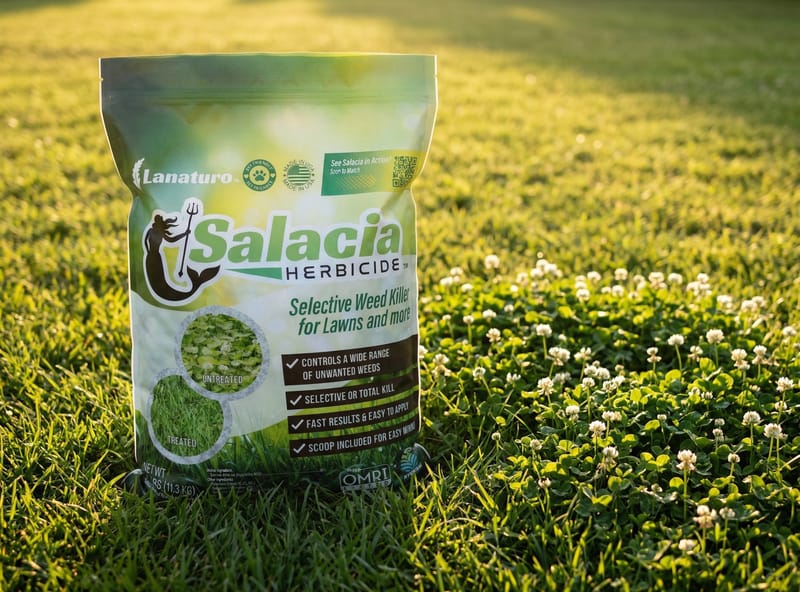
The product built to clear all four is Salacia — the first OMRI-certified selective organic herbicide. Clover is one of the most responsive weeds on its label, and the same bag handles the rest of the broadleaf lineup at the same selective rate.
Salacia is designed to be selective at the lawn mixing rate, but temporary paling or yellowing of grass is possible depending on lawn health, irrigation, application rate, and conditions. Test a small area first.
Is Clover Treatment Safe for Pets?
This is one of the most common questions from homeowners with dogs — especially since clover patches are exactly where dogs love to roll and play.
Salacia carries Pet Friendly right on the label and is OMRI certified organic. The product works through physical dehydration of weed tissue — not synthetic chemical action — which means there is no toxic residue accumulating in your lawn after treatment.
Salacia is saline-based, and dogs are naturally attracted to salt. Let the treated area dry before allowing pets back — not because of safety concerns, but because animals may be attracted to lick the product, which could affect results on the weeds. Always follow label directions.
Compare this to synthetic broadleaf herbicides: researchers have detected chemical residues on grass for days after application, with some studies finding herbicide metabolites in dog urine even from lawns treated days earlier.
For the complete research on herbicide safety and pets, read our in-depth guide: Is Organic Weed Killer Safe for Pets? Dog owners specifically should see Weed Killer Safe for Dogs: What the Research Says.
Where Clover Grows Most
White clover is a cool-season perennial, so it runs heaviest across the Upper Midwest, the Great Lakes, the Northeast and the Pacific Northwest — Minnesota, Wisconsin, Michigan, Illinois, Ohio, Indiana, Iowa, New York, Pennsylvania, New Jersey and New England. Mild summers and reliable moisture suit it, and it holds through a cold winter on roots that are already established.
It is not absent further south, but its behaviour changes. In warm-season lawns through the mid-Atlantic and the South it tends to arrive in spring and fade under real summer heat, which is why a Southern lawn often reads as a spring clover problem while a Minnesota lawn reads as a permanent one. Treating on that basis matters more than the map does: catch it while it is actively growing, wherever you are.
Why clover concentrates where it does
Clover fixes its own nitrogen. That is the whole story in one sentence — it can feed itself in ground that will not support thick grass, which is why it takes over thin, hungry, compacted lawns and why it so often appears in the same patch every year. The regions above are simply where the climate suits it best; the patch is wherever your turf gave it room. Thicker grass is the long-term answer, and a lawn fed and mown well enough to close its own gaps gives clover far less to work with.
If you are in the Upper Midwest or the Northeast and the clover comes back in the same spot each year, you are not doing anything wrong — you are in its best range, treating a perennial that regrows from what is left underground. Treat it while it is growing, cover it thoroughly, and expect to return for regrowth. At the selective lawn rate Salacia targets clover while being designed to spare the grass around it; temporary paling or yellowing of nearby turf is possible and recovers. Always test a small area of your lawn first.
How to Prevent Clover from Coming Back
Killing existing clover is only half the battle. Clover seeds can remain viable in the soil for decades, and the conditions that invited clover in the first place will invite it again unless you fix them. Long-term prevention means building a lawn that clover cannot compete with.
Feed Your Lawn Nitrogen
This is the single most important clover prevention step. Clover thrives in nitrogen-depleted soil because it fixes its own nitrogen while your grass starves. A well-fertilized lawn — 2 to 4 pounds of nitrogen per 1,000 square feet annually, spread across 3 to 4 applications — eliminates clover's competitive advantage. When grass has adequate nitrogen, it outcompetes clover for sunlight and space.
Mow Higher
Raise your mowing height to 3 to 4 inches for cool-season grasses. Taller grass shades the soil surface, making it harder for clover seeds to germinate. It also strengthens grass root systems. Every time you scalp your lawn, you are opening the door for clover.
Overseed Thin Areas
Clover colonizes bare and sparse spots. After killing existing clover, overseed those areas in early fall (cool-season) or late spring (warm-season) to establish dense grass coverage. Thick turf is the best long-term weed suppression you can have.
Aerate Compacted Soil
Clover tolerates compacted soil better than grass. Annual core aeration in fall opens up the soil for grass root growth and tips the competitive balance back toward your turf.
Address the Root Cause
Clover is an indicator weed — it tells you something about your lawn. If clover keeps returning to the same spots, those areas likely have low nitrogen, compacted soil, or insufficient grass density. Fix the underlying condition and clover loses its foothold permanently.
For a broader look at broadleaf weed management, visit our Weed Control Guide. And to understand the difference between products that kill everything versus products that kill only weeds, read Selective vs Non-Selective Herbicide: The Third Option.
Comparing your options?
Our full breakdown of what to look for — and what to avoid — is in the best organic weed killer. Four criteria, real comparison, no marketing fluff. If keeping your grass is the worry, see the best weed killer that won't kill grass.

Lawn
Advisor
Not sure which weed you're looking at? Show Sal.
Sal is Lanaturo's lawn-care expert. He doesn't just name the weed — he builds your exact treatment plan and checks whether today is the right day to spray.
Ready to Take Back Your Lawn?
Salacia™ is the first OMRI-certified selective organic herbicide — kills weeds, not grass. Choose your lawn size:
Your Lawn Is Worth More Than Clover
Clover is persistent, low-growing, and self-fertilizing — one of the most resilient broadleaf weeds you will face. But it is also one of the most responsive to selective treatment. The right product, applied correctly, eliminates clover while your grass is preserved.
You do not have to choose between effective weed control and an organic lawn. You do not have to accept synthetic residues building up where your kids and pets play. And you do not have to watch clover take over another square foot of grass you worked hard to grow.
Pet Friendly. OMRI certified. The first selective organic herbicide — built for exactly this.
Horse owners share similar concerns about herbicide safety in grazing areas. See our guide on horse pasture weed control for equine-specific organic treatment strategies.
Salacia is OMRI Listed for organic use and made from naturally derived ingredients. Always follow label directions for best results. Performance may vary based on weed maturity, environmental conditions, and application method.