
 By Pat Kelly
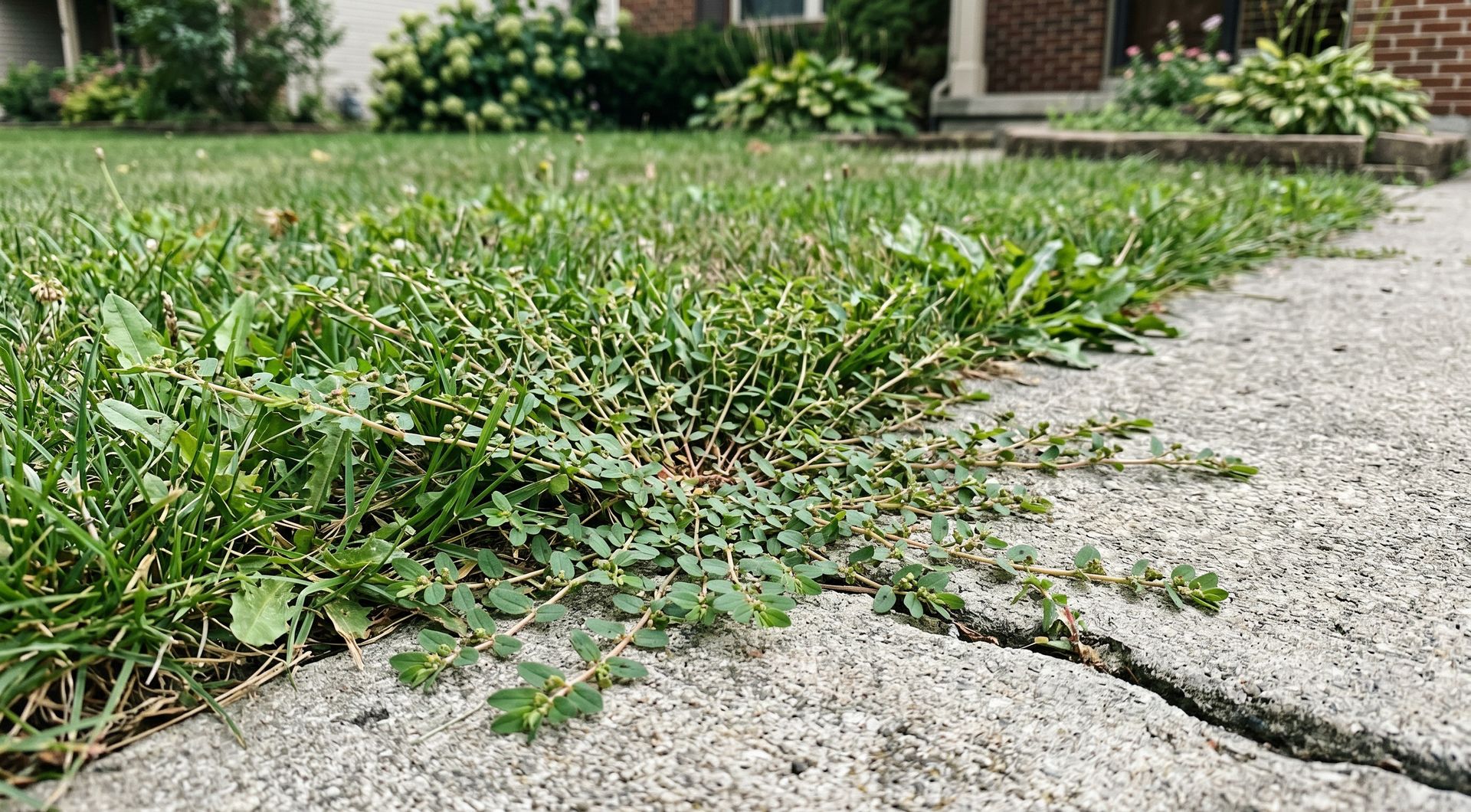
 You spot it first in the gap between two sidewalk slabs — a flat green starburst lying so close to the ground your mower sailed right over it. Then another in the thin strip by the driveway. Snap a stem and it bleeds white. That milky sap is the tell: this is spurge, and a single plant you ignore this week can drop thousands of seeds before fall.
Spurge is beatable — but not the way most people try. It hugs the soil, so a quick spray over the top never touches the stems and crown hiding underneath, and it grows right back. Worse, nearly every "natural" weed killer is a non-selective burn-down: hit the spurge and you scorch the grass around it too, opening the exact bare patch next year's spurge seeds are waiting for. Salacia is built for this — the first OMRI-certified selective organic herbicide, so it takes out the spurge and leaves your lawn standing.
What is spurge?
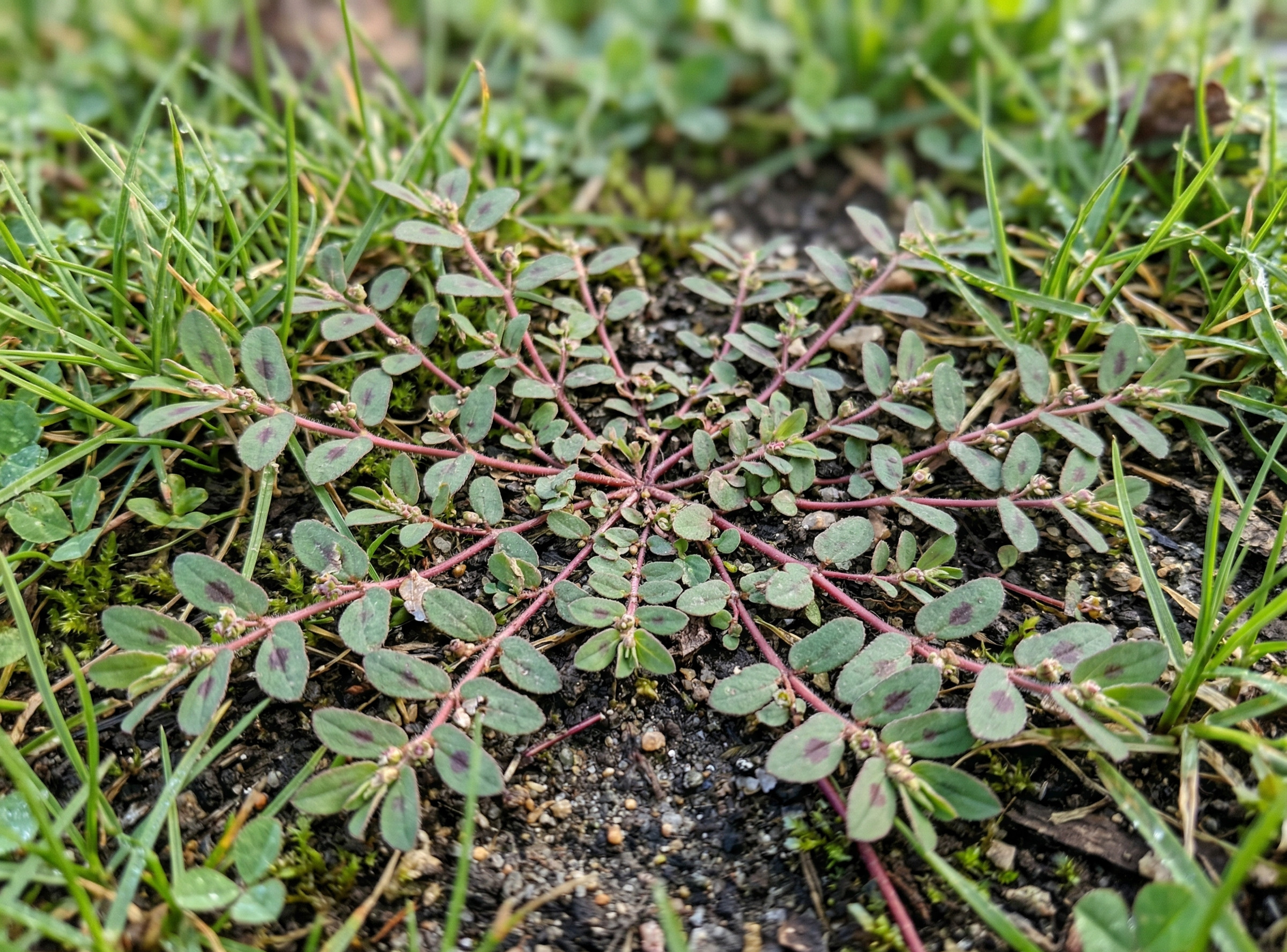
Spurge is a fast-growing summer annual broadleaf weed. The two you will meet in a lawn are spotted spurge (Euphorbia maculata) and its near-twin prostrate spurge — both sprawl flat, both ooze a milky white sap when broken, and both germinate once the soil heats up. Many leaves carry a small reddish-purple spot down the middle, and the stems often blush pink.
It is a true opportunist. Spurge colonizes the spots your grass has given up on: thin turf, compacted soil, driveway and sidewalk edges, and the bare seams between pavers where nothing else will grow.
How to identify spurge in your lawn
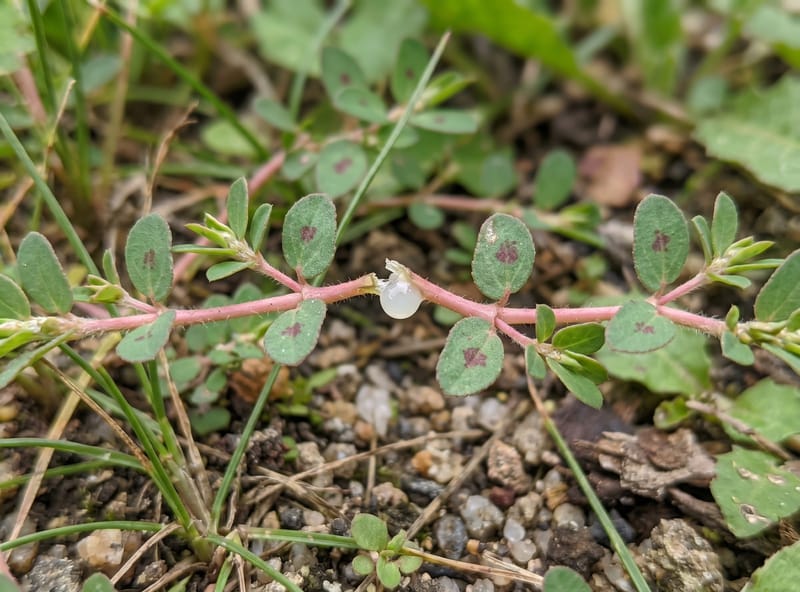
Three signs together confirm spurge:
- The flat mat. Stems radiate from one central point like spokes on a wheel, pressed tight to the ground — usually only a few inches tall but spreading a foot or more across.
- The milky sap. Snap a stem and a white, latex-like liquid beads up immediately. Almost no other lawn weed does this — it is the single most reliable ID. (That sap can irritate skin and eyes, so wear gloves if you are handling it.)
- Small paired leaves with a red mark. Tiny oval leaves grow in opposite pairs along the stems, many with a maroon spot near the center.
Not sure? That is exactly what the Lanaturo Intelligence assistant is for — snap a close-up and it tells you the species and the treatment in seconds. More on that below.
Spurge or knotweed? How to tell the lookalikes apart
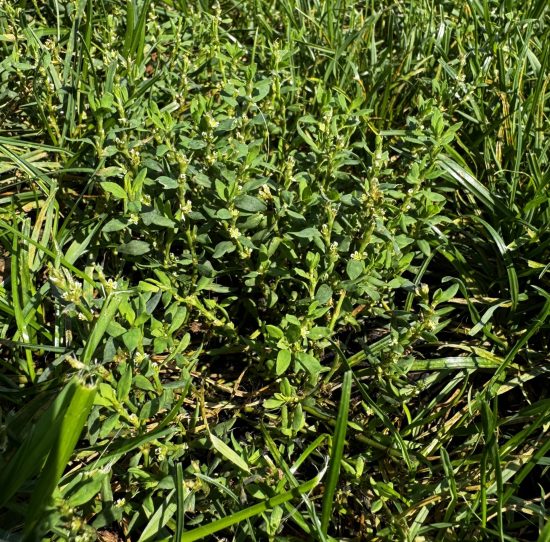
If your flat green mat does not bleed milky sap when you snap it, you are probably not looking at spurge at all — you are looking at prostrate knotweed (Polygonum aviculare), spurge's most-confused twin. They share the exact same habit — low mats radiating from a central taproot, tiny oval leaves, and the same hard, bare, compacted ground along driveways, walkways, and thin turf — so people mix them up constantly. Up close, they are easy to separate.
| Tell | Spotted spurge | Prostrate knotweed |
|---|---|---|
| Snap the stem | Milky white sap beads up instantly | No milky sap — stems are dry and wiry |
| Leaves | Grow in opposite pairs, often with a red-purple spot in the center | Stagger one at a time (alternate), solid blue-green, no spot |
| Stem nodes | Smooth | Slightly swollen and wrapped in a thin papery sheath — the "knot" that names it |
| When it shows up | Waits for summer heat to germinate | One of the very first weeds up in spring — sprouts while the soil is still cold, weeks ahead of spurge |
The fastest field test: break a stem. Milky sap means spurge. A dry, wiry stem with papery sheaths at the joints means knotweed. Either way, both are broadleaf weeds growing in your turf, and the same selective approach handles them.
One important clarification. "Knotweed" also refers to Japanese knotweed — a tall, bamboo-like invasive shrub that is a completely different plant, not a lawn weed. If what you have is a flat mat hugging the ground in the lawn, it is prostrate knotweed, and everything below is built for it. The towering woody invader is a separate fight this guide does not cover.
How to kill knotweed in your lawn
Knotweed is controlled the same way as spurge, with one extra piece that most guides skip. Nearly every organic weed killer on the shelf is a non-selective burn-down that would scorch your grass alongside the knotweed — so in the lawn you want a selective answer. Salacia, at the selective rate (3 cups per gallon), takes down the broadleaf knotweed mat while sparing your turf. Knotweed grows in tough, wiry mats pressed to the soil, so the whole game is coverage: push the spray under the mat to wet the stems, leaf undersides, and the soil right around the crown — a pass over the top misses the growth that regrows. Catch it young; mature mats turn wiry and stubborn. For cracks, driveways, and gravel where you want everything gone, step up to the non-selective rate (4 cups per gallon).
Salacia is designed to be selective, but temporary paling or yellowing of lawn grass is possible depending on irrigation, lawn health, application rate, and conditions. Always test a small area first.
The part nobody tells you: prostrate knotweed is the classic signal of compacted soil. Its fine roots mine hard, worn ground where grass has been squeezed out — which is exactly why it lines your paths and driveway edges. Killing the mat is only half the job. If you do not relieve the compaction, next spring's seeds sprout right back into the same bare, hard ground. Core-aerate the area, redirect foot traffic off the worn strip, and overseed so grass can close the opening for good. University turf programs — UC IPM, Penn State Extension, and NC State TurfFiles — all point to relieving compaction as the real long-term control.
Why spurge keeps coming back
Three things make spurge stubborn, and understanding them is how you finally win:
| What spurge does | Why it beats most people |
|---|---|
| Grows flat against the soil | A mower rides over it and a light spray lands on top of the mat, never reaching the stems, crown, and soil underneath — so it regrows from below. |
| Reseeds explosively | One plant can produce thousands of seeds in a single summer, and they can sprout the same season. Miss a few weeks and you have reseeded the whole area. |
| Anchors with a taproot | Yank the top and the mat shreds, leaving the central root to push out a fresh rosette. |
The takeaway: surface treatment fails. Whatever you use has to reach under the canopy and hit the whole plant at once — before it goes to seed. (The same under-the-canopy rule applies to other mat-formers like clover.)
How to kill spurge without killing your grass
Here is the trap with organic spurge control. Nearly every "natural" or organic weed killer on the shelf is a non-selective contact burner — it dehydrates any green tissue it lands on. Spray it across a spurge mat in your lawn and you also kill a saucer-sized ring of grass, opening the bare soil spurge seeds need to come back stronger. (We break down that whole category in our guide to the best organic weed killer, and the selectivity problem in how to kill weeds without killing grass.)
Salacia is the way out. It is the first OMRI-certified selective organic herbicide — it works by rapid osmotic dehydration (drawing the water out of the weed), not by poisoning, and at the selective lawn rate it is designed to take down broadleaf weeds like spurge while sparing your turf. Its dual-action Hybrisal Technology means one bag does two jobs: a selective rate for in-lawn spot treatment, and a stronger non-selective rate for cracks, driveways, and bed edges where you want everything gone. It is OMRI Listed and naturally derived.
Salacia is designed to be selective, but temporary paling or yellowing of lawn grass is possible depending on irrigation, lawn health, application rate, and conditions. Always test a small area first before treating the whole lawn.
Ready to Take Back Your Lawn?
Salacia™ is the first OMRI-certified selective organic herbicide — kills weeds, not grass. Choose your lawn size:
How to apply Salacia to spurge — step by step
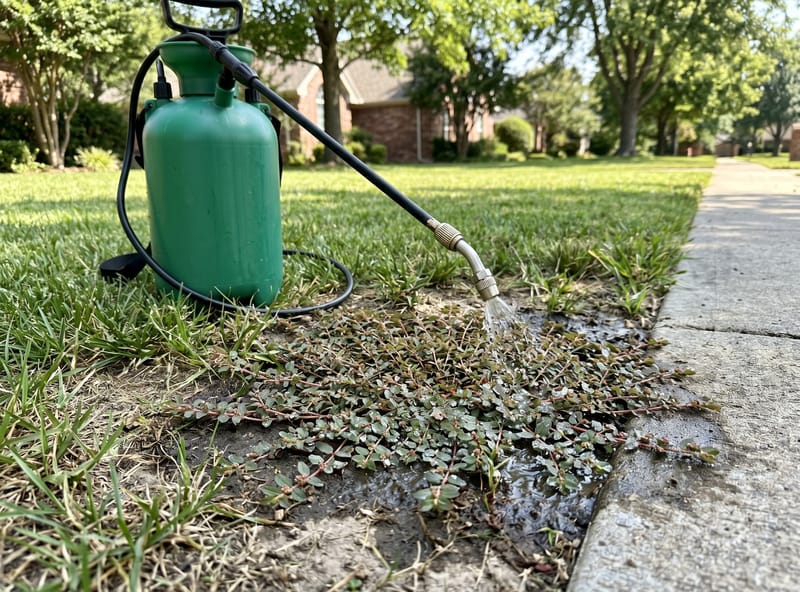
Spurge rewards thorough coverage. The product works on contact: if it does not touch the plant, it does not kill it. Your results are directly proportional to your coverage.
- Pick your rate. In the lawn, mix the selective rate (3 cups per gallon) to spare the grass. For spurge in driveways, sidewalks, gravel, or bed edges where nothing should survive, use the non-selective rate (4 cups per gallon).
- Get under the mat. This is the whole game with spurge. Do not mist the top — push the spray into the mat so it coats the stems, the leaf undersides, the central crown, and the soil right around the base. The hidden growth underneath is what regrows if you only wet the surface.
- Drench to runoff. Treat until the plant is thoroughly wet. One good drenching application typically takes care of what it touches — spurge is best controlled while it is young, before it spreads into large mats and sets seed.
- Wear gloves. The milky sap can irritate skin, so glove up while you work in it.
- Time it right. Mow first, treat on a calm morning at 60–80°F with the foliage dry, and hold off on watering afterward so you do not rinse it off.
See the results
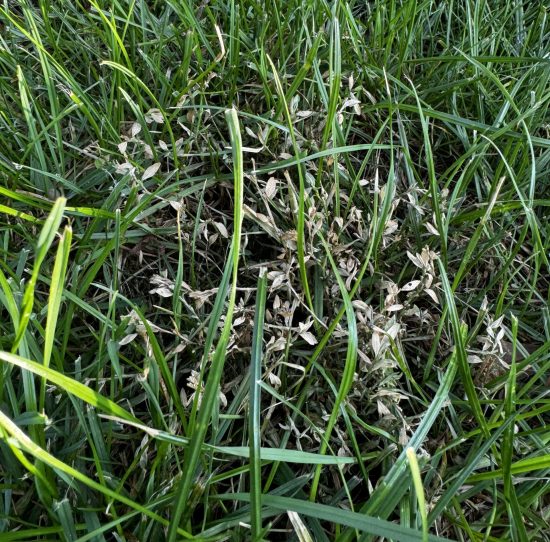
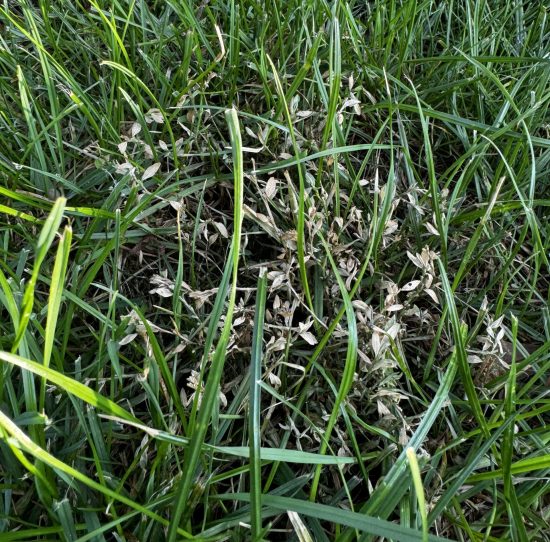
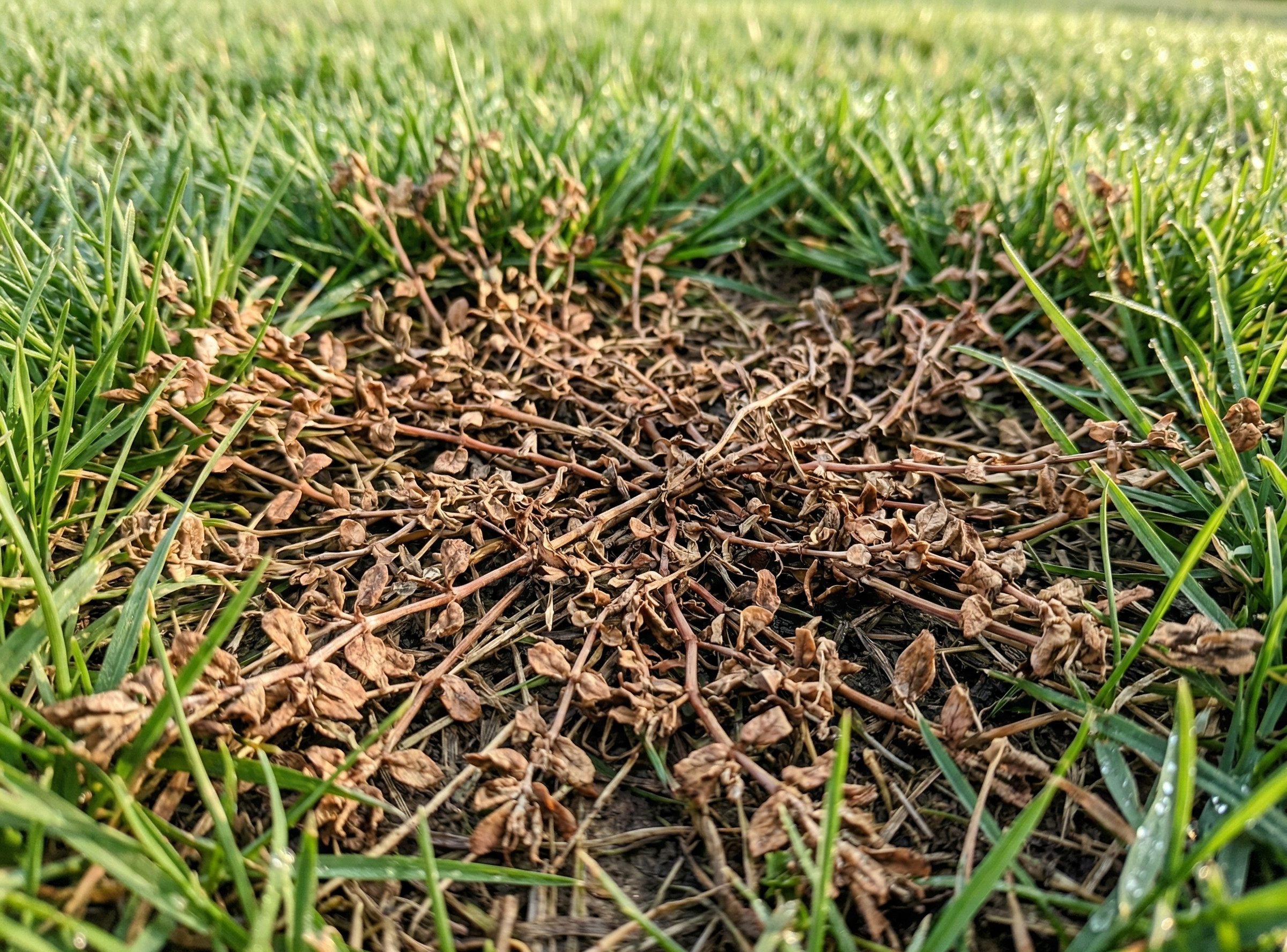
Spotted spurge, treated at the selective rate and drenched under the canopy — drag the slider:
Not sure what is in your lawn?
Our Weed Control Guide covers 46 weeds with before-and-after photos, mixing rates, and full treatment techniques.
Explore the Weed Control Guide →How to stop spurge from coming back
Spurge is a symptom of an opening in your lawn. Close the openings and you starve it out:
- Thicken the turf. A dense, healthy stand of grass shades the soil surface, and spurge seeds need warm, bare soil to germinate. Overseed thin areas.
- Mow a little higher. Taller grass shades out low-growing spurge seedlings before they establish.
- Fix the bare spots. Compacted, worn strips along driveways and paths are spurge's favorite real estate — aerate, topdress, and reseed them.
- Mulch the beds. A few inches of mulch blocks the light spurge seeds need.
- Do not let it seed. Treat or remove plants while young. Every plant you stop before it seeds is thousands of next-year sprouts you never have to fight.
Where spurge is worst
Spurge thrives on heat and stress, so it is heaviest across the South and the transition zone, and through the hot core of summer everywhere else — but anyone with a thin lawn, a compacted strip, or a paver path can find it. It shows up first along driveways, sidewalks, garden edges, and any sun-baked patch where the grass has thinned out.
Fighting more than one weed?
Most lawns battling one broadleaf weed have others growing alongside it. Our ranked guide to the best weed killer that won't kill grass covers the full lineup a selective treatment clears in the same pass.

Lanaturo
Intelligence
Not sure which weed you're looking at? Show Sal.
Sal is the lawn-care brain behind Lanaturo Intelligence. He doesn't just name the weed — he builds your exact treatment plan and checks whether today is the right day to spray.
Where Spurge Grows Most
Spurge is a summer annual and grows in every state, but it is worst where summers are hot and lawns run thin — the South, the Southwest, the lower Midwest and the interior valleys of California. It germinates in warm soil, so it arrives exactly when cool-season grass is under the most stress.
The place to look is the hot, hard, open ground: driveway and sidewalk edges, the strip along a south-facing wall, compacted paths across the lawn, and any patch that bakes. Spurge does not out-compete healthy turf so much as it colonises what heat and traffic have already opened up, spreading flat and fast from a single central taproot.
It sets seed within weeks of germinating, so timing beats thoroughness here. A mat treated in June is one plant; the same mat left to August has already seeded the ground around it for next year. At the selective lawn rate Salacia targets it while being designed to spare grass; temporary paling or yellowing of nearby turf is possible and recovers. Always test a small area of your lawn first. Not sure what you are looking at? Sal will identify it from a photo.
Ready to Take Back Your Lawn?
Salacia™ is the first OMRI-certified selective organic herbicide — kills weeds, not grass. Choose your lawn size:
This guide is for general lawn-care information. Always read and follow the product label. Salacia is designed to be selective; test a small area before full application, as temporary paling of lawn grass is possible depending on conditions.