
 By Pat Kelly
 The way to kill dandelions without killing your grass is a selective herbicide. Salacia is an OMRI-certified organic selective weed killer: the granules dissolve in water and are spot-sprayed on the dandelion, which it targets while the lawn around it stays green. Below: when to spray, the crown technique that reaches the root, and what to expect.
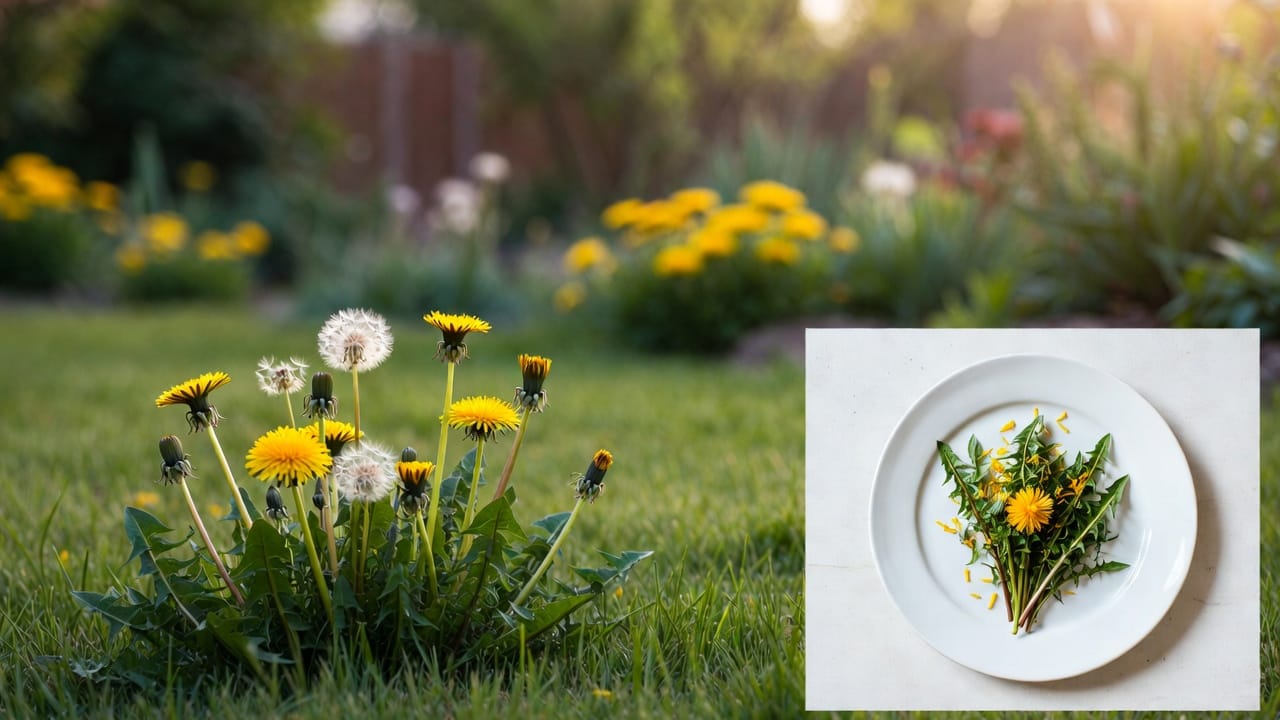
The weed you have been pulling, spraying, and cursing at for years might be one of the most nutritious plants growing on your property. Italians have been cooking with dandelion greens for centuries. You can make wine from the flowers, brew a caffeine-free coffee from the roasted roots, and toss the raw leaves into a salad that has more vitamin A than carrots.
But when dandelions carpet your lawn and every breeze sends another thousand seeds into the yard, appreciation has its limits. They need to go. And if some of the yellow blooms in your grass do not look quite like dandelions, our photo guide to weeds with yellow flowers sorts out the look-alikes.
This guide covers both sides of the dandelion story. How to kill them effectively using methods that actually reach the root, how to prevent them from returning, and why you might want to keep a patch growing somewhere else on your property. If you are looking for a naturally derived solution that removes dandelions from your lawn without synthetic chemicals, Salacia Organic Weed Control is the first OMRI-certified selective herbicide on the market — powerful on weeds, gentle on your grass and the ecosystem around it.
Why Dandelions Keep Coming Back (No Matter What You Do)
If it feels like dandelions are impossible to get rid of, there is a biological reason for that. The common dandelion (Taraxacum officinale) is a perennial — not an annual that dies at the end of the season. The same plant comes back year after year, and it is built to survive almost anything you throw at it.
The secret is the taproot. A mature dandelion drives a thick central root 10 to 12 inches straight down into the soil. That root stores enough energy to regenerate the entire plant even if every leaf is removed from the surface. Break the root during pulling and any fragment left behind can sprout a brand new plant.
Then there is the reproduction problem. A single dandelion plant can produce more than 2,000 seeds per season. Each seed is attached to a parachute-like structure called a pappus that carries it on wind currents across entire neighborhoods. Seeds do not require pollination — dandelions reproduce asexually through a process called apomixis, meaning every plant is a clone factory that does not need a partner to spread.
This combination — deep perennial roots, regeneration from root fragments, massive seed output, and wind dispersal — is why mowing alone, hand pulling without getting the entire root, and contact-only herbicides that burn leaves but leave the taproot intact all fail to provide lasting control.
To actually kill a dandelion, you have to reach the root.
When to Kill Dandelions (Timing Is Everything)
Dandelions can be treated in both spring and fall, but the two windows work differently. Understanding the biology behind each season helps you choose the right strategy.
Spring Treatment
Spring is when dandelions are most visible. Bright yellow flowers appear across the lawn and the instinct is to attack immediately. Spring treatment knocks down active growth and prevents seed production if you act before the puffballs form. The limitation: dandelions in spring are pushing energy upward from the root into new growth. The plant is in expansion mode, which means less energy is being pulled back down into the taproot.
Fall Treatment
Fall is the more strategic window. As temperatures drop and days shorten, dandelions reverse their energy flow. Instead of pushing resources up into leaves and flowers, the plant pulls sugars and nutrients downward into the root system to stockpile for winter. When you apply a treatment during this period, it rides that same downward pathway straight to the taproot. This is why fall treatment tends to deliver deeper, more lasting results.
Best Approach: Treat Both Seasons
Spring takes out the visible population and stops seed production. Fall reaches the roots that survived. A two-season approach breaks the cycle from both directions.
60-85 F
Ideal Temperature Range
Dry Leaves
Apply When Foliage Is Dry
No Rain 4 hrs
Check the Forecast First
Avoid Heat
Skip Days Above 90 F
What Kills Dandelions? Control Methods That Work
Not all dandelion control methods are equal. Some remove the visible plant but leave the root intact. Others are effective but come with tradeoffs you may not want in your yard. Here is an honest breakdown.
Hand Pulling
If you get the entire taproot, hand pulling works. The problem is that dandelion taproots are long, brittle, and deeply anchored. Even with a specialized weeding tool, fragments break off underground and regenerate. For a handful of dandelions this is a reasonable option. For a lawn with dozens or hundreds, it is not practical.
Mowing
Mowing does not control dandelions. The plant grows from a basal rosette — a flat cluster of leaves pressed tight to the ground, well below the height of any mower blade. You can mow over a dandelion every week and the crown remains untouched, ready to send up new flowers.
Conventional Synthetic Herbicides
Synthetic chemical formulations can be effective against dandelions. Some are selective, meaning they target broadleaf weeds without damaging grass. The tradeoff is that these are synthetic compounds — some persist in soil, some have documented concerns about long-term environmental and health effects. For homeowners looking to avoid synthetic chemicals on their lawns, these are not the answer.
Organic Post-Emergent Herbicides
Most organic herbicides on the market are contact-only: they burn the foliage they touch, and the dandelion looks dead for a few days. But because the taproot is untouched, the plant sends up new leaves and the cycle starts again. These products are also typically non-selective — they damage grass just as much as weeds. For a product-by-product look at what actually passes the lawn test, see our guide to the best weed killer that won't kill grass.
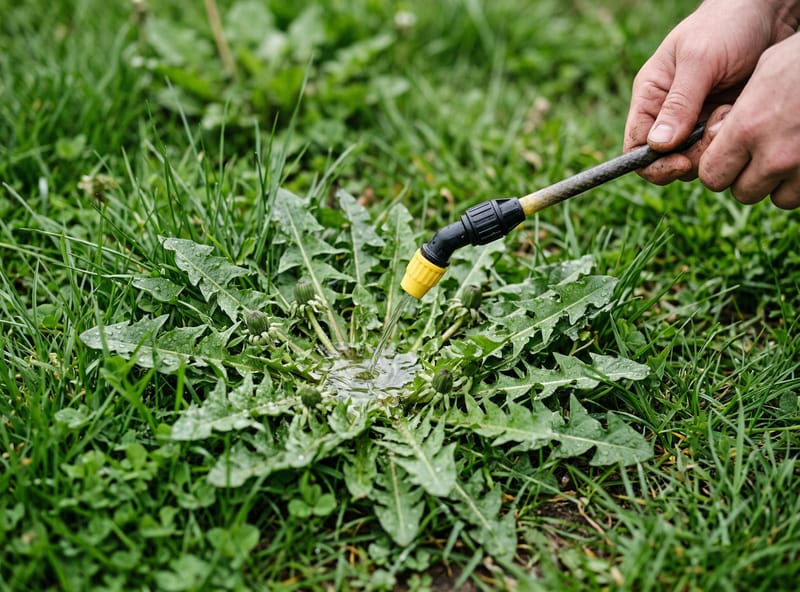
This is where Salacia breaks the pattern. Salacia is the first OMRI-certified selective herbicide — meaning it is certified organic and can target broadleaf weeds like dandelions while preserving your grass. The key is application technique: instead of spraying leaves from above, you direct the spray into the crown of the dandelion, flooding the point where all leaves meet the root. The product pools in the crown and travels down into the taproot, dehydrating the weed from the inside out.
Salacia uses Hybrisal Technology — a dual-action system that operates in selective mode at the standard mix rate (kills weeds, preserves grass) or non-selective mode at a higher concentration (clears all vegetation). For dandelion control in lawns, the selective rate is what you want. Learn how selective weed killers work. Salacia comes as a granular formula you dissolve before spraying — one bag, both rates.
The Crown Technique — How to Actually Kill a Dandelion to the Root
What Is the Crown?
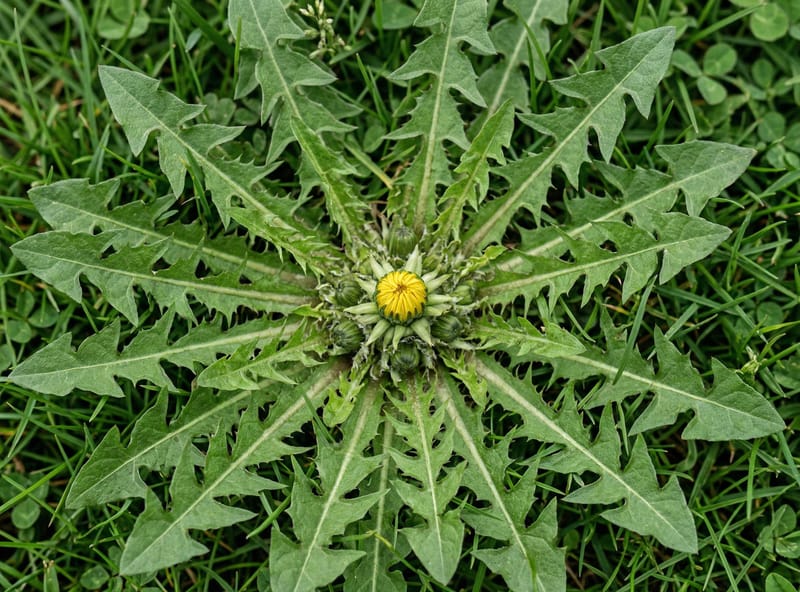
The crown is the compact hub at ground level where all of a dandelion's leaves converge into a single point. Directly beneath it sits the top of the taproot. This is the gateway — the most vulnerable spot on the entire plant.
The technique: Position your sprayer nozzle close to the center of the dandelion rosette and spray directly into the crown for 3 to 5 seconds. You want the product to pool in that central point, saturating the junction between leaf bases and flooding the entry point to the root system. The product travels downward from the crown, dehydrating the taproot from the top down.
This is what separates lasting control from temporary leaf burn. Surface spraying hits foliage. Crown spraying hits the root.
Read Our Step-by-Step Crown Technique Guide
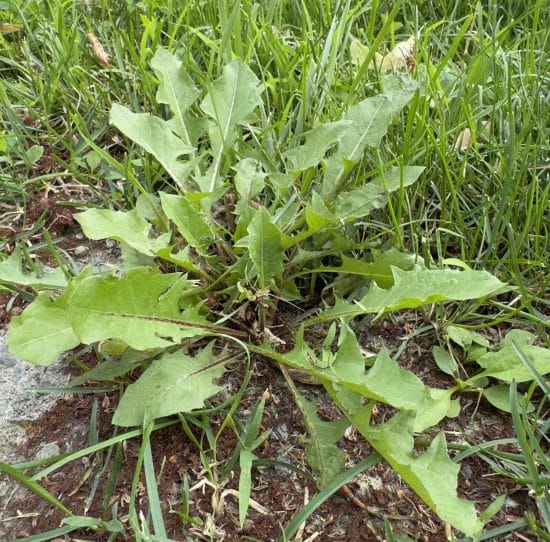
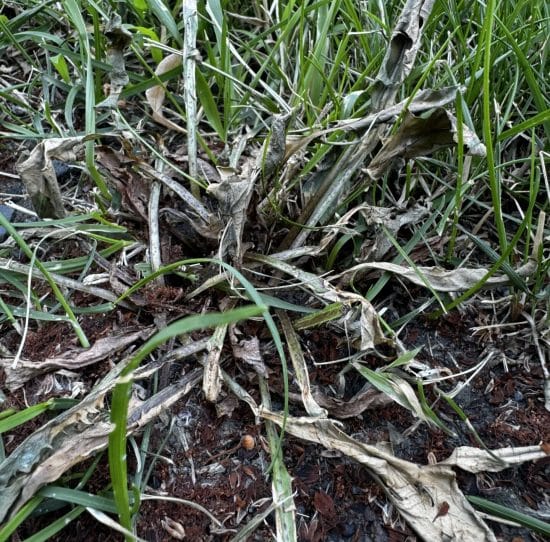
See the Results
Real results, real lawns — watch Salacia eliminate tough weeds while your grass stays perfectly untouched.
Application Tips at a Glance
- Mow first: Cut your lawn 1 to 2 days before application. This exposes the dandelion crowns and gives the spray a clear path to the target.
- Temperature: Apply when air temperature is between 60 and 85 F. Avoid treating during extreme heat.
- Dry foliage: Wait until leaves are dry. Morning dew should be gone before you start.
- No rain: Check the forecast — you need at least 4 hours without rain after application.
- After treating: Don't water or mow. Let the product absorb undisturbed.
- Heavy infestations: Plan a second application 2 to 3 weeks after the first. Some deeply established taproots take more than one treatment to fully exhaust.
- Bare spots: After dandelions are gone, overseed the bare areas. Thick, healthy turf is the best long-term defense against reinfestation.
- Pet Friendly note: Salacia is saline-based and dogs are naturally attracted to salt. Let treated areas dry and absorb fully so pets do not lick treated foliage and disrupt the application.
Related: The Best Selective Weed Killer — And the First That Does Both →
Ready to Take Back Your Lawn?
Salacia™ is the first OMRI-certified selective organic herbicide — kills weeds, not grass. Choose your lawn size:
Dandelion Control: How to Keep Them from Coming Back
Killing existing dandelions is only half the job. Preventing new ones from establishing is what keeps your lawn clear long-term. Every prevention strategy comes back to the same principle: thick, healthy grass leaves no room for dandelion seeds to germinate.
Grow Thicker Grass
Dandelions are opportunists. They exploit thin spots, bare patches, and compacted soil where grass struggles. Overseeding thin areas with grass varieties suited to your region fills those gaps and creates a dense canopy that blocks sunlight from reaching the soil surface — and dandelion seeds need light to germinate.
Mow Higher
Raise your mower deck to 3 to 3.5 inches. Taller grass shades the soil surface, reducing germination opportunities for dandelion seeds. It also develops deeper root systems that compete more effectively for water and nutrients. Scalping your lawn short is one of the fastest ways to invite dandelions in. The same thin, stressed turf also opens the door to crabgrass — if grassy invaders are part of your problem, see how to get rid of crabgrass naturally.
Aerate Compacted Soil
Dandelions thrive in compacted soil — their taproots are powerful enough to penetrate dense ground that grass roots cannot. Core aeration in early fall loosens compacted soil, improves drainage, and gives grass roots the space they need to compete.
Stop the Seeds
Mow dandelions before the flower heads turn into seed puffs. Once the white puffball forms, a single gust of wind scatters seeds across your lawn and your neighbors' lawns. Timing matters: the transition from yellow flower to puffball can happen quickly after the flower closes. Stay ahead of it. For a comprehensive look at all the weeds Salacia controls, visit the Weed Control Guide. If you are also dealing with clover, see our guide on how to kill clover in your lawn.
Are Dandelions Good for You? Why You Might Want to Keep Some
Here is where the dandelion story takes an unexpected turn. The plant you have been trying to kill is one of the most nutrient-dense edible plants in North America. Every part of a dandelion — leaves, flowers, and roots — is edible, and the nutritional profile is remarkable.
112%
Daily Vitamin A
per 1 cup raw greens
357%
Daily Vitamin K
per 1 cup raw greens
32%
Daily Vitamin C
per 1 cup raw greens
Cup for cup, dandelion greens contain more vitamin A than carrots and more calcium than milk. They are more nutrient-dense than kale. The USDA FoodData Central database lists dandelion greens as one of the most nutritionally complete leafy greens available.
The Italian Connection
In Italy, dandelion greens are not weeds — they are groceries. Markets in Rome sell bundles of cicoria selvatica alongside arugula and radicchio. Dandelion greens have been a staple of Italian cuisine for centuries, prized for their slightly bitter flavor that pairs naturally with olive oil, garlic, and aged cheese.
Two classic preparations:
- Cicoria alla Romana — Roman-style sauteed dandelion greens with garlic and chili flakes, finished with a squeeze of lemon
- Orecchiette con Radicchiella — ear-shaped pasta tossed with blanched dandelion greens, anchovy, garlic, olive oil, and toasted breadcrumbs
Cicoria alla Romana
Roman-Style Sauteed Dandelion Greens — serves 2 as a side
Ingredients:
- 1 large bunch of dandelion greens (about 6 cups), washed and trimmed
- 3 tablespoons extra-virgin olive oil
- 3 cloves garlic, thinly sliced
- 1/2 teaspoon red pepper flakes
- Juice of half a lemon
- Sea salt to taste
- Shaved Pecorino Romano for finishing (optional)
Method:
- Bring a large pot of salted water to a boil. Blanch the dandelion greens for 2 minutes to remove excess bitterness. Drain and squeeze out water.
- Heat olive oil in a wide skillet over medium heat. Add sliced garlic and red pepper flakes, stirring until the garlic is fragrant and just golden — about 90 seconds.
- Add the blanched greens to the skillet. Toss to coat in the oil and garlic. Cook for 3 to 4 minutes, turning occasionally.
- Finish with a squeeze of lemon juice and a pinch of sea salt. Plate and top with shaved Pecorino if desired.
Beyond the Kitchen
Dandelion Wine: Made from the flower petals, dandelion wine is a centuries-old tradition across Europe and rural America. The petals are steeped with citrus, sugar, and yeast and fermented into a light, floral wine. Ray Bradbury named an entire novel after it.
Dandelion Coffee: The roots are cleaned, dried, chopped, and roasted until dark brown. Brewed the same way as coffee, the result is a rich, earthy, caffeine-free drink that has been used as a coffee substitute since at least the Civil War era. Today it is sold commercially in health food stores as a functional beverage.
Understanding what a selective weed killer is helps explain why you can remove dandelions from your lawn and still keep them growing in a garden bed — selective herbicides target specific plant types, giving you control over where weeds stay and where they go.
Dandelion Health Benefits: What the Research Shows
Beyond nutrition, dandelion compounds have attracted serious attention from medical researchers. This section summarizes what the science says — and what it does not.
Cancer Research
The most cited study comes from the University of Windsor in Ontario, Canada, led by Dr. Siyaram Pandey. His research team found that dandelion root extract induced apoptosis (programmed cell death) in up to 95% of colon cancer cells in laboratory conditions — while leaving healthy cells unharmed. The work was published in peer-reviewed journals and received funding from a Canadian cancer research foundation to move toward clinical trials.
Additional studies have explored dandelion compounds against melanoma, leukemia, and pancreatic cancer cells in laboratory settings. A 2023 review of dandelion pharmacology summarized the accumulated evidence. Memorial Sloan Kettering Cancer Center acknowledges dandelion in their integrative medicine database.
Important context: These findings come from laboratory and animal studies — not human clinical trials. No medical claim can be made. But the research is real, ongoing, and supported by credible institutions. The compounds generating the most interest include taraxasterol, taraxacin, chicoric acid, and luteolin.
Digestive Health
Dandelion root is a natural source of inulin, a prebiotic fiber that supports beneficial gut bacteria. Inulin passes through the upper digestive tract undigested and feeds probiotic organisms in the colon. This is not folk medicine — inulin is commercially extracted and used in food science as a validated prebiotic. Dandelion root happens to be one of nature's richest sources of it.
Traditional and Emerging Uses
Dandelion has been used in traditional medicine systems across Europe, Asia, and the Americas for centuries — primarily as a liver tonic, digestive aid, and mild diuretic (the French name pissenlit literally references this). Modern research is working to separate validated pharmacological effects from traditional lore. The picture is incomplete but increasingly interesting.
Dandelions and Pollinators — Let's Be Honest About This
We sell a product that kills dandelions. We also believe pollinators matter. So let us be straightforward about both sides.
Dandelion flowers are visited by more than 100 insect species, including honey bees, native bees, butterflies, hoverflies, and beetles. Over 30 bird species eat dandelion seeds. The plant provides a broadly accessible nectar and pollen source that supports a wide range of organisms.
You will sometimes see dandelions described as "the first food for bees in spring." This is not entirely accurate — tree pollen from willows, maples, and other early-blooming species typically arrives before dandelion flowers open. But dandelions are among the first abundant, ground-level nectar sources available, and they bloom prolifically over a long season. In a landscape where pollinator populations are declining and habitat is shrinking, that reliability matters.
The research supports a nuanced position. A 2023 study in the British Ecological Society's journal found that urban lawns with dandelions supported significantly more pollinator visits than manicured lawns without them. The question is not whether dandelions benefit pollinators — they clearly do. The question is how you balance lawn management with ecological responsibility.
Our answer: remove dandelions from the lawn where you need them gone, and use organic methods that do not leave synthetic residues. Keep a patch growing in a garden corner, a meadow strip, or an unmowed border. You can have both.
Don't Eradicate — Relocate
A Different Way to Think About Dandelions
Remove them from the lawn. Cultivate them in the garden. One patch of dandelions gives you everything — nectar for pollinators, fresh greens for the kitchen, flowers for wine, roots for coffee, and a biology lesson for your kids.
This is the position of a company that makes an herbicide: we believe in controlling weeds where they do not belong, and respecting plants where they do. Dandelions belong somewhere on your property. Just not everywhere.
No synthetic herbicide company can offer this framing — their products persist in soil, leach into groundwater, and contaminate the very plants you might otherwise eat. When you control dandelions with a naturally derived, OMRI-certified product, what is left behind is clean soil and healthy grass. Nothing more.
Waste nothing.
One Important Thing — This Only Works If Your Lawn Is Chemical-Free
Everything in the sections above — the recipes, the nutrition, the cancer research, the pollinator value — only applies to dandelions growing in soil that has not been treated with synthetic chemicals.
If your lawn has been sprayed with conventional synthetic herbicides, fungicides, or insecticides, those compounds can be absorbed by dandelion roots and stored in the leaves and flowers. You should not eat dandelions from a chemically treated lawn. You should not assume they are safe for pollinators feeding on them either.
This is one of the practical reasons to choose an OMRI-certified, naturally derived herbicide. When you use Salacia to control dandelions on your lawn, the product does its job and breaks down. It does not leave synthetic residues accumulating in the soil. The dandelions growing in your designated garden patch — 20 feet away from where you treated the lawn — are growing in clean ground.
That is the difference between a weed control product and a weed control philosophy. One removes unwanted plants. The other lets you decide which plants are unwanted and which ones are dinner.
What People Are Saying
"I had dandelions taking over my entire front yard. I used the crown technique with Salacia and the difference was dramatic. The dandelions collapsed and my grass filled right back in. My neighbor asked what service I used — he could not believe I did it myself with an organic product."
— Mike R., Columbus, OH
"We have two dogs and a toddler who all live on the lawn. I was not comfortable spraying conventional stuff but the dandelions were out of control. Salacia solved it. Pet Friendly, OMRI certified, and it actually worked. The crowns dried out completely and most of them never came back."
— Sarah T., Portland, OR
"I treated in fall like the guide suggested and the results were even better than my spring application. The second round finished off the holdouts. This spring my lawn came back thick and I have maybe three dandelions total where there used to be hundreds. I am keeping a few in the garden bed now — my wife makes a salad from the greens."
— David L., Raleigh, NC
Comparing your options?
Our full breakdown of what to look for — and what to avoid — is in the best organic weed killer. Four criteria, real comparison, no marketing fluff.

Lawn
Advisor
Not sure which weed you're looking at? Show Sal.
Sal is Lanaturo's lawn-care expert. He doesn't just name the weed — he builds your exact treatment plan and checks whether today is the right day to spray.
Where Dandelions Grow Most
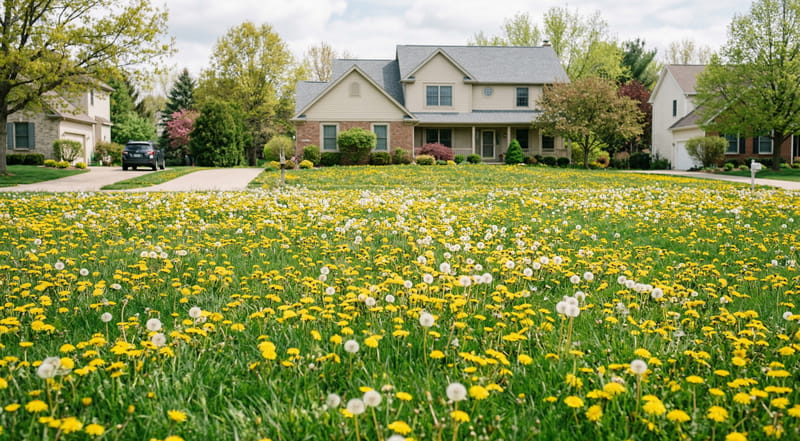
Dandelions grow in every state, which is exactly why the useful question is not where but when. They are heaviest in cool-season lawns across the Upper Midwest, Great Lakes, Northeast and Pacific Northwest — Minnesota, Wisconsin, Michigan, Illinois, Ohio, Indiana, Iowa, New York, Pennsylvania and New England — where the taproot survives winter and the same plant returns bigger each spring.
Further south the plant behaves as a cool-season visitor rather than a fixture: it flushes in spring and autumn and retreats through summer heat. That changes the calendar more than the method. In the north you are fighting an established perennial; in the south you get two clean windows a year and the plants are younger when you catch them.
Wherever you are, the crown is the target. A dandelion regrows from the top of its taproot, so a pass that only wets the leaves leaves the part that matters untouched — pool the solution into the centre of the rosette until it runs down the crown. At the selective lawn rate Salacia targets it while being designed to spare grass; temporary paling or yellowing of nearby turf is possible and recovers. Always test a small area of your lawn first. Not sure what you are looking at? Sal will identify it from a photo.
Ready to Take Back Your Lawn?
Salacia™ is the first OMRI-certified selective organic herbicide — kills weeds, not grass. Choose your lawn size:
Your Lawn. Your Rules. Your Dandelions.
Somewhere between "nuke everything" and "let it all grow" is a lawn where your kids play barefoot, your dogs roll around without worry, and you can walk 20 feet to the garden and pick dinner from the same plant you just removed from the turf. That is not a compromise. That is the whole point.
An OMRI-certified, naturally derived herbicide makes it possible to have a clean lawn and a productive garden on the same property — no synthetic residues, no contaminated soil, no trade-off between control and conscience.
Pet Friendly — everything else second.
This article is for general educational and informational purposes only. It is not intended as medical, nutritional, or agricultural advice. Always follow product label instructions. Research cited reflects published studies and does not constitute clinical recommendations. Individual results may vary based on application conditions, turf type, and environmental factors.