 By Pat Kelly
 This page is informational, current to June 2026, and is not legal advice. Local ordinances change — always verify with your city or county before applying any product.
Is Glyphosate Banned in the US? (Federal Status)
No. At the federal level, glyphosate is registered and legal. It remains one of the most widely used herbicides in American agriculture and landscaping, and no federal ban is in effect or scheduled as of June 2026.
One change homeowners often miss: the leading consumer brand of glyphosate weed killer reformulated its residential lawn-and-garden products in the US to remove glyphosate — so the bottle at the big-box store today may no longer contain it, even though the chemical itself is legal. The shift away from glyphosate in home lawn care is happening through the market as much as through the law.
State-Level Restrictions
- New York — the clearest state action: a law passed in 2020 prohibits glyphosate use on state property (with narrow exceptions). It does not ban homeowner use.
- Other states — no state has banned glyphosate outright for private use. Several states have seen bills introduced to restrict various herbicides, but as of June 2026 none has enacted a general glyphosate ban.
Cities and Counties That Restrict Glyphosate
This is where most US restrictions actually live. Dozens of municipalities limit or prohibit glyphosate — most commonly on public property like parks, playgrounds, and schoolyards. A representative (not exhaustive) sample:
- Maryland — Montgomery County and Takoma Park go furthest: their lawn-pesticide laws reach private lawns, not just public land, while specifically allowing minimum-risk products.
- Florida — Miami, Miami Beach, North Miami, Key West, Fort Myers, Stuart, and Satellite Beach restrict municipal use.
- Connecticut — a growing list of towns (Branford, Cheshire, Granby, Greenwich, Manchester, Plainville, Watertown, and others) restrict use on town property.
- Elsewhere — municipalities in California, Illinois, Iowa, Massachusetts, New Mexico, and Washington have adopted limits, and New York City has worked to phase pesticides out of its parks.
If you live in one of these places, the practical question is not politics — it is "what am I allowed to put on my lawn?" That answer is usually in your city or county code under "pesticide" or "lawn care," and it is the reason the minimum-risk exemption below matters.
Ready to Take Back Your Lawn?
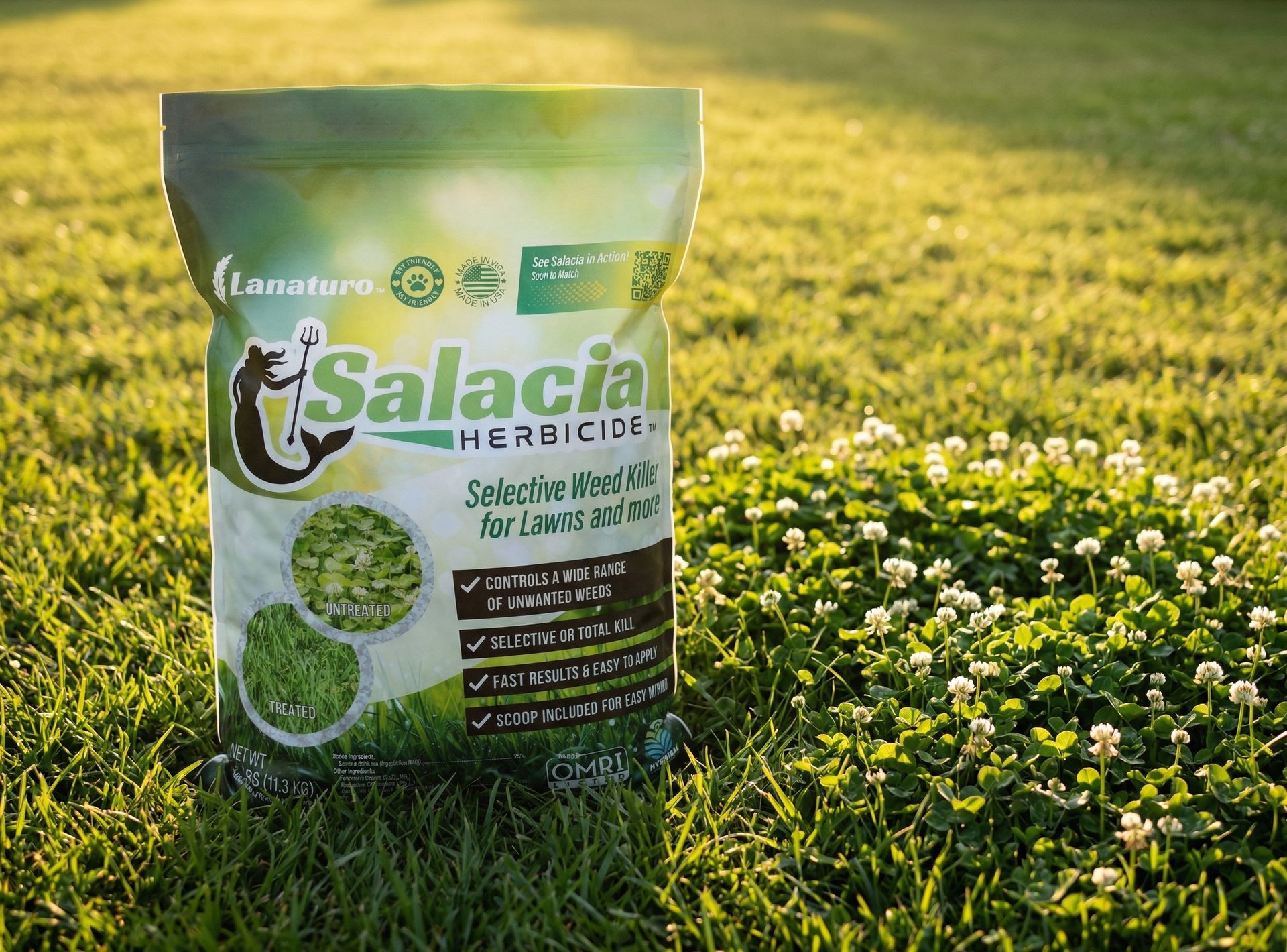
Salacia™ is the first OMRI-certified selective organic herbicide — kills weeds, not grass. Choose your lawn size:
Why Your Town Might Not Be Allowed to Ban It
Here is the nuance most pages on this topic skip: roughly 43 states have preemption laws that block cities and counties from regulating pesticides more strictly than the state does. In those states, a town that wants to restrict glyphosate on private lawns generally cannot — which is why the municipal bans cluster in the handful of states (like Maryland) where courts upheld local authority. So whether glyphosate is restricted where you live depends less on your town's preference and more on your state's preemption rule.
What Is Changing in 2026
Herbicide regulation is in active motion this year. Vermont became the first state to ban the herbicide paraquat (a different, restricted-use chemical) in May 2026, and similar bills are pending in about a dozen state legislatures. None of these directly ban glyphosate — but they signal where state-level lawn and farm chemical policy is heading, and each new milestone sends another wave of homeowners looking for organic alternatives before the law requires it. For the health and environmental context driving this, see our reads on the hidden costs of synthetic herbicides and pesticides in North America's waterways.
Update — the two biggest glyphosate legal questions of 2026 are now decided. In March, a court granted preliminary approval to a roughly $7.25 billion settlement resolving current and future U.S. cancer claims against glyphosate’s primary manufacturer. And on June 25, the U.S. Supreme Court ruled 7-2 that federal pesticide law preempts state failure-to-warn claims — no state court can hold a manufacturer liable for not adding cancer warnings beyond the EPA-approved label (the decision). Neither event bans or restricts glyphosate anywhere. Together they do the opposite of what many homeowners expect: they make it less likely that courts or label changes will ever push glyphosate off shelves — so going glyphosate-free stays a personal decision, not a legal default.
What Homeowners in Restricted Areas Use Instead
Whether your area restricts glyphosate or you are simply done with it, the question is the same: what actually works on weeds without it?
This is where the regulatory map connects to product reality. Lawn-pesticide ordinances almost always carve out minimum-risk products — herbicides exempt from federal pesticide registration under FIFRA 25(b) because their ingredients are recognized as minimum-risk. Salacia is in that category: the first OMRI-certified selective organic herbicide, FIFRA 25(b) minimum-risk exempt, made from naturally derived ingredients with no glyphosate, no 2,4-D, and no dicamba. At the 1 lb-per-gallon lawn rate it kills clover, dandelion, creeping charlie and 100+ broadleaf weeds while sparing the grass — the job homeowners actually bought glyphosate alternatives to do. Pet Friendly.
Deciding how to switch? Start with our guide to glyphosate-free weed killers (why and how to pick one), then the best organic weed killer rundown and the broadleaf weed killer explainer for what selective organic control looks like in practice.

Lawn
Advisor
Not sure which weed you're looking at? Show Sal.
Sal is Lanaturo's lawn-care expert. He doesn't just name the weed — he builds your exact treatment plan and checks whether today is the right day to spray.
Ready to Take Back Your Lawn?
Salacia™ is the first OMRI-certified selective organic herbicide — kills weeds, not grass. Choose your lawn size:
The law is moving one town at a time. Your lawn doesn't have to wait.
Wherever the glyphosate map lands next, a selective organic option that already works means the answer to "what do I use instead?" is settled before your city council ever votes.