

 By Pat Kelly
 When you turn on the tap, you expect clean water. But for millions of Americans and Canadians, that water carries something else: trace amounts of synthetic pesticides. This is not speculation — it is documented in decades of monitoring data from the US Geological Survey and Environment and Climate Change Canada. From suburban lawns to agricultural fields, the synthetic herbicides we spray do not stay where we put them. They flow downstream, leach into groundwater, and enter the water systems that supply our homes.
Understanding how this cycle works — and how your lawn care choices contribute to it — is the first step toward breaking it. Organic alternatives that work through natural mechanisms rather than persistent synthetic chemistry offer a way to control weeds without feeding the contamination cycle.

What the Data Says: Pesticides in North American Water
The most comprehensive dataset comes from the USGS National Water-Quality Assessment Program (NAWQA), which has monitored pesticide levels in US water systems for decades. The findings:
United States (USGS)
- Pesticide residues in over 90% of tested streams in agricultural areas
- Roughly 50% of shallow wells show contamination
- Urban waterways contain glyphosate, atrazine, and 2,4-D from residential use
- Concentrations spike after spring and summer rain events
Canada (ECCC)
- Environment and Climate Change Canada reports widespread pesticide contamination in surface water across southern Ontario and Quebec
- Spring melt and rainfall events spike concentrations, especially in the Great Lakes region
- Agricultural runoff is the primary source, but urban contributions are growing
How Lawn Chemicals Reach Your Tap
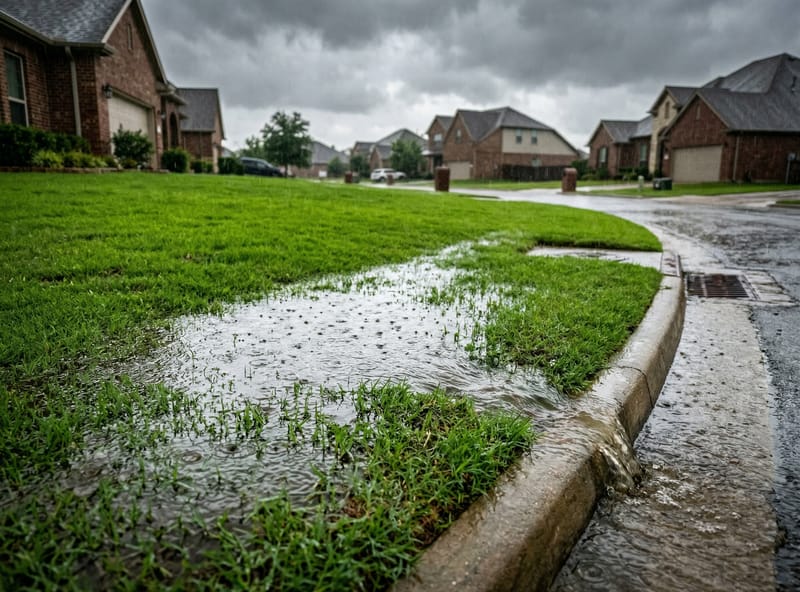
Synthetic herbicides are designed to persist — that persistence is what makes them effective against weeds, but it is also what allows them to travel from your lawn into the broader water system. Three pathways drive this contamination:
Surface Runoff
Rain washes herbicide residues off lawns, driveways, and sidewalks into storm drains, ditches, and streams. Storm water systems in most municipalities flow directly to waterways without treatment. A single rain event after application can carry significant herbicide loads into local watersheds.
Soil Leaching
Persistent synthetic compounds seep through the soil profile over time, eventually reaching groundwater aquifers. Atrazine, one of the most persistent lawn and agricultural herbicides, has been detected in groundwater years after the last application. These aquifers supply drinking water wells for millions of homes.
Volatilization and Drift
Some synthetic herbicides — dicamba in particular — evaporate after application and are carried by wind. These airborne particles can travel significant distances before settling on soil, vegetation, and water surfaces far from the original application site.
The Most Common Compounds in Your Water
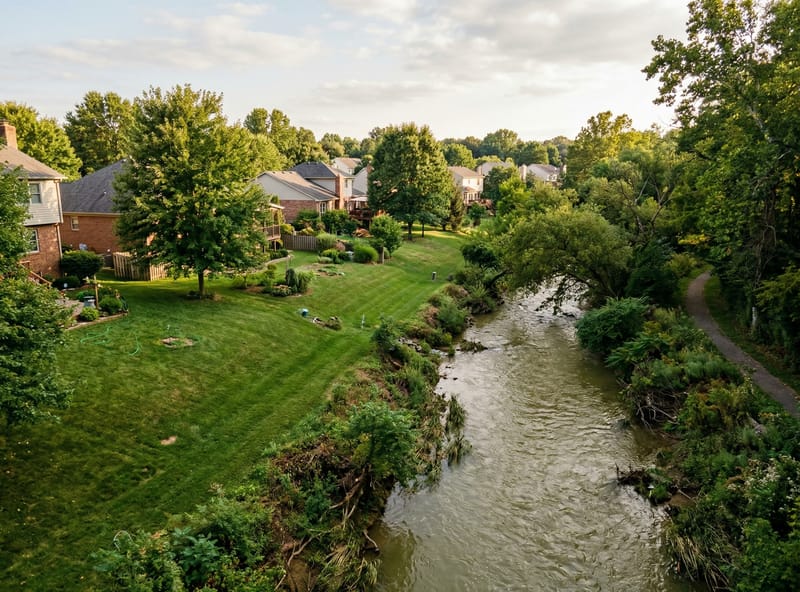
USGS monitoring identifies these synthetic herbicides as the most frequently detected in US water supplies:
| Compound | Primary Use | Soil Half-Life | Health Concern |
|---|---|---|---|
| Atrazine | Corn, lawns | 60-100 days | Endocrine disruption |
| Glyphosate | Broad-spectrum | Days to months | IARC Group 2A carcinogen |
| 2,4-D | Lawns, agriculture | 1-4 weeks | NHL association |
| Dicamba | Lawns, soybeans | 1-4 weeks | Liver cancer links, volatile drift |
What Chronic Exposure Means
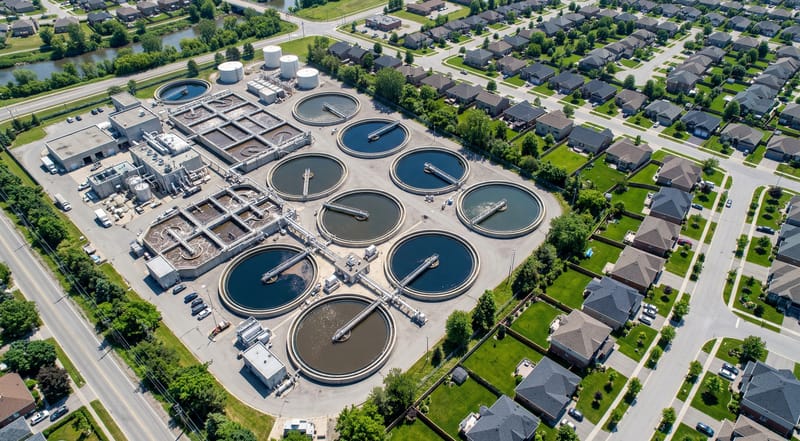
The concern with pesticides in drinking water is not acute poisoning — it is chronic, low-level exposure over years and decades. Research institutions have documented several categories of concern:
- Endocrine disruption: Atrazine has been documented as an endocrine disruptor at extremely low concentrations — below the levels currently permitted in drinking water
- Cancer risk: The IARC classification of glyphosate as "probably carcinogenic" was based on epidemiological evidence of non-Hodgkin lymphoma in exposed populations
- Reproductive effects: Multiple synthetic herbicides have shown reproductive toxicity in laboratory studies, raising questions about chronic exposure through contaminated water
- Ecosystem collapse: The National Wildlife Federation documents how pesticide runoff harms pollinators, amphibians, fish, and aquatic ecosystems that depend on clean waterways
The Residential Lawn Connection
Pesticide contamination is not solely an agricultural problem. A significant and growing share comes from residential lawn care in urban and suburban neighborhoods. Research shows that some suburban areas apply more pesticide per acre than most agricultural operations — concentrated on a fraction of the land area, draining into the same local watersheds.
Every lawn treated with synthetic herbicide contributes to the runoff cycle. When it rains, the compounds wash from treated grass into storm drains that flow directly to streams, rivers, and lakes — often without any treatment. This is not a distant, industrial problem. It starts on residential lawns and ends in the water supply that serves those same communities.
For a detailed compound-by-compound breakdown of the health and environmental costs, see our guide on the hidden costs of synthetic herbicides. For the impact on pets specifically, read the Pet Friendly weed killer guide.
Ready to Take Back Your Lawn?
Salacia™ is the first OMRI-certified selective organic herbicide — kills weeds, not grass. Choose your lawn size:
Breaking the Contamination Cycle
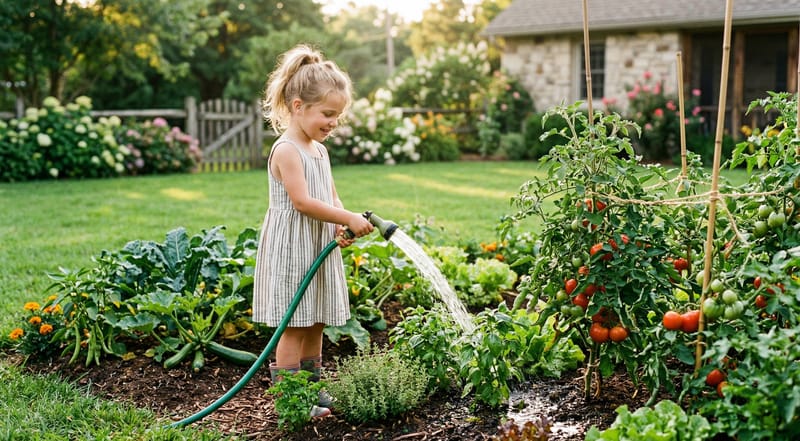
The contamination cycle has a simple entry point: the products homeowners choose to spray on their lawns. Switching from synthetic herbicides to OMRI-certified organic alternatives removes the persistent synthetic compounds from the equation entirely.
Salacia works through osmotic dehydration — a physical mechanism using naturally derived ingredients. There is no synthetic compound that persists in soil, leaches into groundwater, or washes into waterways. The product breaks down naturally after application, leaving no persistent residue. It is OMRI certified organic and labeled Pet Friendly.
And unlike every other organic herbicide on the market, Salacia is selective — it kills broadleaf weeds like dandelions, clover, and ground ivy while leaving your grass unharmed. Salacia is designed to be selective, but always test a small area first — temporary paling or yellowing is possible depending on lawn health and conditions. You do not have to choose between a weed-free lawn and clean waterways. For the first time, you can have both.
To understand how organic farming standards translate to lawn care, read do organic farmers use herbicides. For beneficial soil organisms that synthetic herbicides harm, see are ants beneficial for soil.
Not sure what's in your lawn?
Our Weed Control Guide covers 46 weeds with before-and-after photos, mixing rates, treatment techniques, and full guides.
Explore the Weed Control Guide →Salacia is the first OMRI-certified selective organic herbicide, made by Lanaturo: it removes broadleaf lawn weeds while keeping your grass unharmed.

Lawn
Advisor
Not sure which weed you're looking at? Show Sal.
Sal is Lanaturo's lawn-care expert. He doesn't just name the weed — he builds your exact treatment plan and checks whether today is the right day to spray.
Ready to Take Back Your Lawn?
Salacia™ is the first OMRI-certified selective organic herbicide — kills weeds, not grass. Choose your lawn size:
What You Spray Today Reaches the Water Tomorrow
Ninety percent of tested US streams contain pesticide residues. The data comes from decades of USGS monitoring — not marketing material. Every lawn treated with synthetic herbicide feeds this cycle. Every homeowner who switches to OMRI-certified organic breaks it. The choice is measurable, documented, and available right now.
Pet Friendly — everything else second.
This article is for informational purposes. Always follow product label directions for application rates, timing, and use. Salacia is OMRI certified organic and labeled Pet Friendly.