
 By Pat Kelly
 Synthetic herbicides promise a quick fix for lawn weeds — but the costs they impose on human health, pet welfare, soil biology, and waterways are documented in peer-reviewed research from the International Agency for Research on Cancer, the US Geological Survey, and university veterinary programs. These are not theoretical risks. They are measured, published, and replicated findings that every homeowner applying weed killer should understand before choosing a product.
This guide covers the documented costs of synthetic herbicides — compound by compound — and what the research says about organic alternatives. If you are looking for an OMRI-certified organic option, Salacia is the first selective herbicide that delivers targeted weed control from naturally derived ingredients.
Related: If you've already decided you're done with the chemistry and want the decision framework — five buying criteria, EPA-vs-WHO context, and what to use instead of glyphosate — our companion guide covers it.
Glyphosate: The IARC Classification
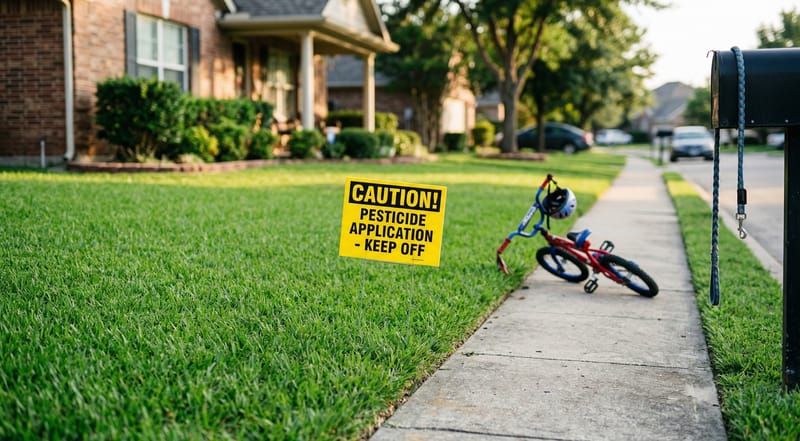
Glyphosate is the most widely used herbicide on Earth — applied to an estimated 298 million acres of US cropland annually, plus millions of residential lawns and commercial properties. In 2015, the International Agency for Research on Cancer (IARC), a specialized agency of the World Health Organization, classified glyphosate as a Group 2A carcinogen — "probably carcinogenic to humans."
Group 2A is the second-highest classification IARC issues, below only Group 1 (confirmed carcinogen). The classification was based on three lines of evidence:
- Limited evidence of cancer in humans — specifically non-Hodgkin lymphoma in epidemiological studies of agricultural workers
- Sufficient evidence of cancer in experimental animals
- Strong evidence of genotoxicity (DNA damage) and oxidative stress in cell studies
Beyond cancer classification, peer-reviewed research published in major toxicology journals has documented glyphosate's potential neurotoxic effects across multiple studies. These findings span multiple species and exposure levels, raising questions about chronic low-level exposure — the kind that occurs when homeowners apply glyphosate-based products to their lawns season after season.
2,4-D: The Lawn Chemical in Your Bloodstream
2,4-Dichlorophenoxyacetic acid (2,4-D) is one of the most common active ingredients in residential selective herbicides. It was first developed as an agricultural herbicide in the 1940s and later became one of the two active ingredients in the military's Agent Orange formulation during the Vietnam War. It has been in continuous agricultural and residential use since its introduction.
Epidemiological research has found associations between 2,4-D exposure and non-Hodgkin lymphoma, particularly in agricultural workers with frequent exposure. The compound has been detected in urine samples of individuals who did not apply the product themselves — indicating secondary exposure from treated environments, including lawns.
Children are particularly vulnerable. They play on the ground, put their hands in their mouths, and have developing immune and endocrine systems. Research has documented higher pesticide metabolite levels in children from households that use lawn chemicals compared to those that do not. This is not about fear — it is about measured exposure data.
Dicamba: Drift Damage and Cancer Links
Dicamba is a volatile synthetic herbicide that has become notorious for off-target drift — the compound evaporates and moves to neighboring properties, damaging crops and vegetation that were never intended to be treated. Beyond drift damage, epidemiological research has linked dicamba exposure to elevated risks of liver and intrahepatic bile duct cancers, as well as associations with chronic lymphocytic leukemia (CLL).
The volatility issue is significant for residential use: when a homeowner applies a dicamba-containing product, the compound can drift to neighboring yards, gardens, and landscapes — affecting vegetation the neighbor never chose to treat.
What Synthetic Herbicides Do to Pets
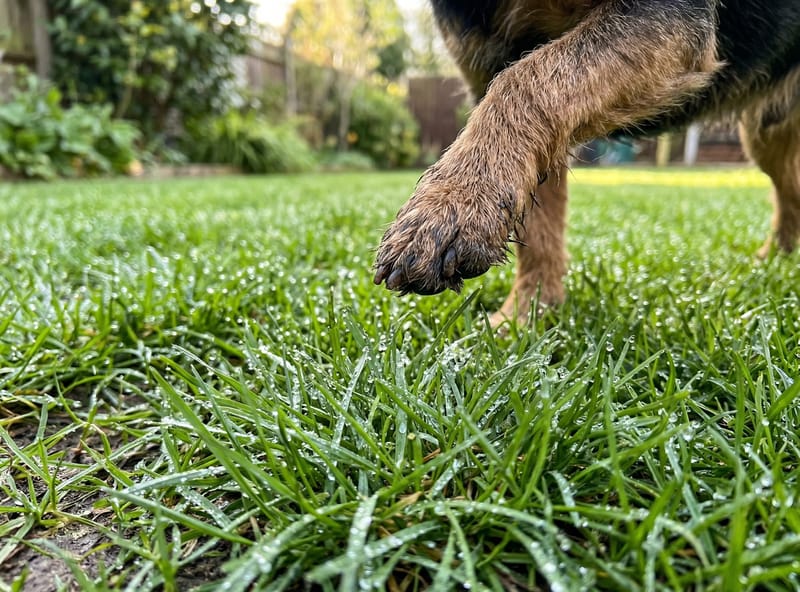
Pets face heightened exposure because they live at ground level. They walk on treated grass, lie on treated surfaces, and groom their paws and fur — ingesting whatever was applied to the lawn. Research from Tufts University's veterinary program has examined associations between lawn chemical exposure and cancer rates in dogs.
Ground-Level Exposure
Dogs walk, roll, and lie on treated grass. Chemical residues transfer to fur, paws, and skin. Small dogs and puppies have the highest surface-area-to-body-weight ratio — and the highest proportional exposure.
Grooming Ingestion
When dogs lick their paws or cats groom their fur, they ingest whatever chemicals are on those surfaces. This oral exposure route is unique to pets and not accounted for in many product safety assessments.
Chronic Accumulation
Repeated seasonal applications mean pets are exposed to synthetic residues year after year. The cumulative effect of chronic low-level exposure is the focus of ongoing veterinary research.
The alternative is an herbicide that does not pose these risks in the first place. Salacia works through osmotic dehydration — a physical mechanism that targets plant biology, not animal biology. The product is labeled Pet Friendly because its naturally derived formula is devastating to a weed and completely benign to a dog running through the same lawn once the application has dried. For the complete research review on pets and lawn chemicals, read the Pet Friendly weed killer guide.
The Waterway Problem
The USGS National Water-Quality Assessment Program (NAWQA) provides the most comprehensive data on herbicide contamination in US waterways. The findings are sobering:
- Synthetic herbicide residues detected in over 90% of tested US streams and rivers
- Atrazine, 2,4-D, and glyphosate among the most frequently detected compounds
- Residential lawn applications are a significant contributor to urban watershed contamination
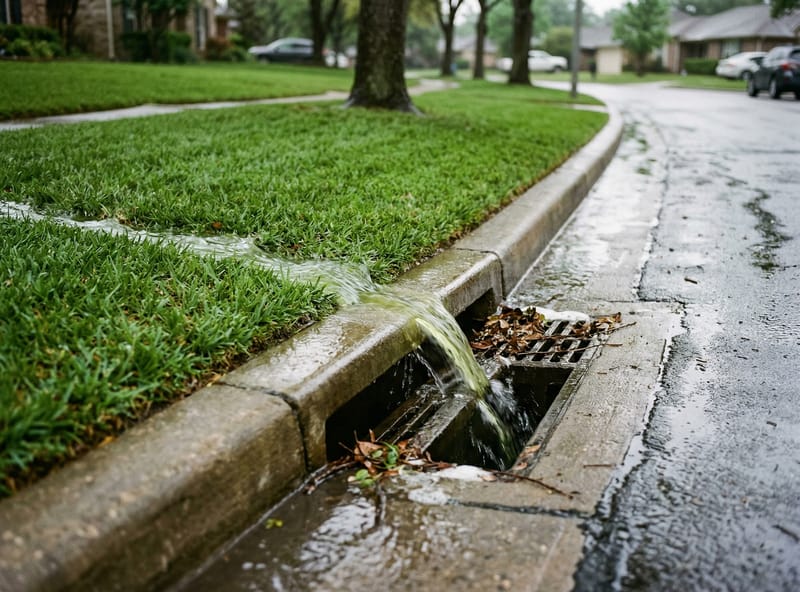
- Herbicide concentrations spike after rain events following spring and summer applications
- Some compounds persist in groundwater for years after the last application
This is not an agricultural-only problem. Every lawn treated with synthetic herbicide contributes to the runoff cycle. When it rains, the compounds that were applied to grass wash into storm drains, streams, and ultimately drinking water sources. For the full scope of this issue, read our guide on pesticides in North America's waterways.
Soil Biology Under Siege
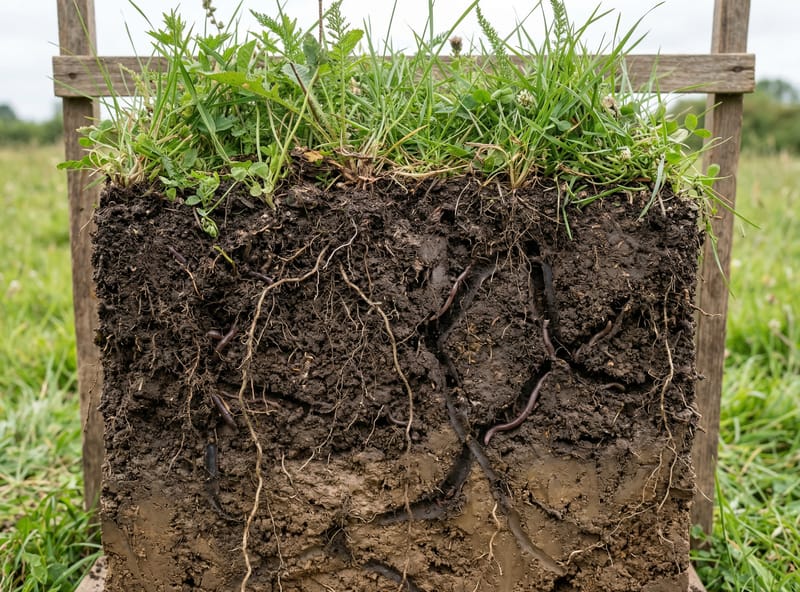
Healthy soil is a living ecosystem — billions of microorganisms, fungi, and invertebrates that cycle nutrients, decompose organic matter, and maintain soil structure. Synthetic herbicides disrupt this ecosystem in documented ways:
- Microbial disruption: Glyphosate has been shown to reduce beneficial soil microorganism populations, weakening the natural nutrient cycling process
- Mycorrhizal damage: Fungal networks that help plants absorb water and nutrients are suppressed by repeated synthetic herbicide applications
- Earthworm and invertebrate harm: Beneficial soil organisms like ants, earthworms, and ground beetles — all critical to soil aeration and decomposition — are affected by persistent chemical residues
- Dependency cycle: Damaged soil produces weaker turf, which is more vulnerable to weeds, which leads to more herbicide use — a compounding cycle
Organic herbicides that work through physical dehydration do not create this cycle. There is no synthetic compound persisting in the soil, no microbial disruption, and no accumulation over seasons of use.
Ready to Take Back Your Lawn?
Salacia™ is the first OMRI-certified selective organic herbicide — kills weeds, not grass. Choose your lawn size:
The Organic Alternative
The documented costs of synthetic herbicides — cancer classifications, pet exposure risks, waterway contamination, soil degradation — are not reasons to accept a weed-covered lawn. They are reasons to choose a different product.
Salacia is OMRI certified organic, made from naturally derived ingredients, and works through osmotic dehydration — a physical mechanism, not a synthetic chemical one. It is the first OMRI-certified selective herbicide, meaning it kills broadleaf weeds like dandelions, clover, and wild violet while preserving grass. No synthetic residue in the soil. No contribution to waterway contamination. Labeled Pet Friendly.
To understand how selective herbicides differentiate between weeds and grass, read how selective weed killers work. To learn whether organic weed killers match synthetic performance, see does organic weed killer work. For a comparison of selective vs. non-selective herbicides, see selective vs. non-selective herbicide.
Not sure what's in your lawn?
Our Weed Control Guide covers 46 weeds with before-and-after photos, mixing rates, treatment techniques, and full guides.
Explore the Weed Control Guide →
Lawn
Advisor
Not sure which weed you're looking at? Show Sal.
Sal is Lanaturo's lawn-care expert. He doesn't just name the weed — he builds your exact treatment plan and checks whether today is the right day to spray.
Ready to Take Back Your Lawn?
Salacia™ is the first OMRI-certified selective organic herbicide — kills weeds, not grass. Choose your lawn size:
The Data Is Clear. The Choice Is Yours.
IARC classified glyphosate as probably carcinogenic. USGS found synthetic herbicides in 90% of US streams. University veterinary programs are studying links between lawn chemicals and canine cancer. These are documented findings from credible institutions. A beautiful lawn should not come at these costs — and with OMRI-certified organic selective herbicides, it does not have to.
Pet Friendly — everything else second.
This article is for informational purposes and does not constitute medical or veterinary advice. Always follow product label directions for application rates, timing, and use. Salacia is OMRI certified organic and labeled Pet Friendly.