
 By Pat Kelly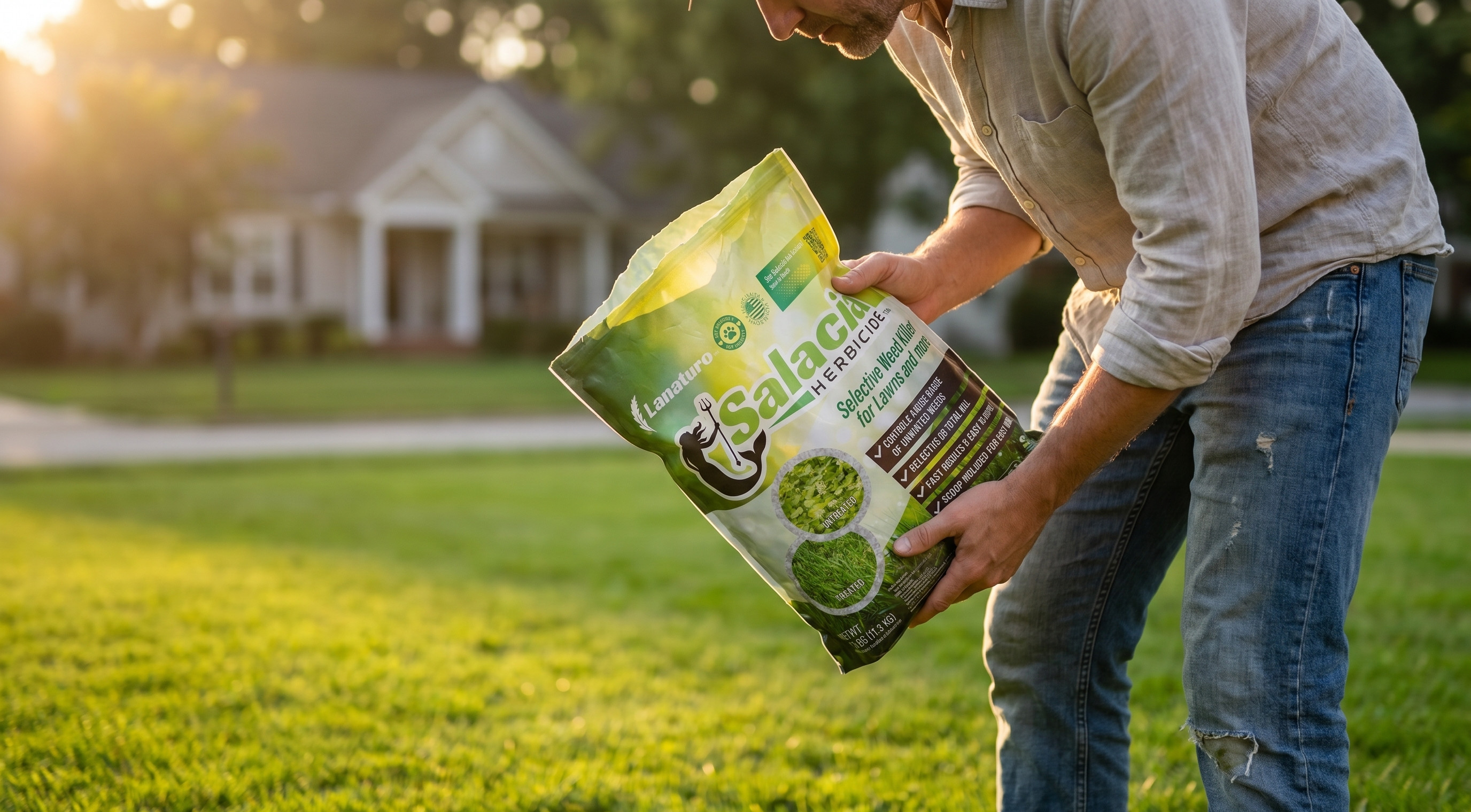
You're standing in the lawn aisle holding two bottles. One says "natural." The other says "eco-friendly, plant-based, non-toxic." Both look organic. Here's the uncomfortable truth: not one of those words is regulated, audited, or means a single verifiable thing. Anyone can print them on anything.
There's exactly one mark on a lawn or garden product that an independent body actually stands behind — and most people, most retailers, and most blogs get its name wrong. They call it "OMRI certified." That phrase is technically incorrect, and the reason why is the whole game. Once you understand what OMRI really does, you'll never read a "natural" label the same way again.
What this guide covers
- OMRI Listed vs. "OMRI Certified" — the difference that trips everyone up
- What the OMRI seal actually proves
- OMRI Listed vs. USDA Organic vs. "Certified Organic"
- "Natural," "Eco-Friendly," "Non-Toxic" — the words that mean nothing
- How to verify any OMRI claim in 30 seconds
- What's actually on the OMRI list
- Is there a "certified organic weed killer"? What "OMRI Listed" really means
- Red flags: label words to ignore
OMRI Listed vs. "OMRI Certified" — the difference that trips everyone up
Start here, because it's the test of whether a source actually knows what it's talking about. OMRI does not issue certifications. OMRI reviews input materials — the fertilizers, soil amendments, and pest controls that go into growing organic food — and publishes the ones that pass on its public OMRI Listed roster.
So a product is OMRI Listed, never "OMRI certified." When you see a bottle or a blog say "OMRI certified," it's shorthand that's slightly wrong — and it usually signals the writer is repeating a phrase rather than explaining a standard. The distinction matters because "certified organic" is a separate, legally protected term that only applies to finished goods like food and fiber. We'll untangle that in a moment.
Why should you care about a one-word difference? Because the entire value of the seal is precision. A mark that means something exact is worth trusting. A word like "natural" that means whatever the marketing team wants is worth nothing. OMRI lives on the precise end of that spectrum — so it's worth using its real name.
What the OMRI seal actually proves
An OMRI listing isn't a logo a company buys. It's the output of a documented review that, by OMRI's own published figures, 10–15% of applicants don't make it through — they're withdrawn or found non-compliant. Here's what stands behind the seal:
It's an independent, accredited reviewer
OMRI is the only independent, nonprofit organization dedicated to the input materials used in organic production. It's accredited by the USDA's Quality Assessment Division under the ISO 17065 standard — meaning OMRI's own process is audited against an internationally recognized quality benchmark. It isn't a trade group or a self-certification; it's a third party with no stake in any single product passing.
It checks against the federal organic rulebook
OMRI doesn't invent its own definition of "organic." It reviews every product against the United States' federal organic standards (the same USDA rulebook that governs what can wear the organic seal at the grocery store) and the Canadian organic standards. Pass that review, and the product is allowed in certified-organic operations. (See OMRI's description of its own role →)
Certifiers rely on it
This is the part most people miss. The accredited agents who certify organic farms don't re-test every input themselves — they lean on OMRI's roster to know which products are allowed. In other words, OMRI is the reference the professionals use. When a farm's organic status is on the line, the OMRI list is what they check.
What an OMRI listing doesn't promise
Two honest caveats, because the seal gets over-read. First, "OMRI Listed" means allowed in organic production — not "harmless." Some listed materials carry real handling cautions; certain copper-based controls, for example, are allowed with restrictions yet are genuinely hard on soil and aquatic life. The seal certifies organic compliance, not gentleness. Second — and this is the one that burns lawn owners — an OMRI listing says nothing about whether a product will spare your grass. Plenty of OMRI Listed weed killers flatten a lawn right along with the weeds. "Organic" and "lawn-safe" are two different questions. Keep them separate, and you'll never get blindsided.
The takeaway: a "natural" claim is a marketing decision. An OMRI listing is the result of an outside review rigorous enough that 10–15% of applicants never make it through. Those are not the same thing, and no amount of green packaging makes them the same.
OMRI Listed vs. USDA Organic vs. "Certified Organic"
Three terms get used interchangeably and shouldn't be. Here's what each one actually covers:
| The seal | What it applies to | What it tells you |
|---|---|---|
| USDA Organic / "Certified Organic" | Finished food, fiber, and feed — apples, cotton, eggs | The end product was grown and handled under federal organic rules. Does not apply to weed killers or other inputs. |
| OMRI Listed® | Input products — fertilizers, soil amendments, pest and weed controls | This input passed independent review against the federal organic standards and is allowed in organic production. The strongest mark an input can hold. |
| "Natural," "Eco," "Plant-based" | Anything — entirely at the seller's discretion | Nothing verifiable. No required review, no audit, no shared definition. |
Here's the part that clears up years of confusion. The USDA "organic" seal you see on groceries was built for things you grow and eat, not for a bottle of weed control — products like these earn their organic standing through an OMRI listing instead. And plenty of weed killers genuinely carry one. So the honest question was never "can a weed killer be organic" — some are. The real question is which kind of organic control you're holding, and whether the claim is one you can actually check. That's where the meaningful differences live — and it's exactly what the rest of this guide hands you.
"Natural," "Eco-Friendly," "Non-Toxic" — the words that mean nothing
This is where most shoppers get separated from their money. These words feel like assurances. Legally, on a lawn or garden product, they're closer to decoration.
- "Natural" — no enforced definition for lawn products. Arsenic is natural. The word tells you nothing about safety or how it was reviewed.
- "Eco-friendly" / "earth-friendly" — a sentiment, not a standard. No body audits it.
- "Plant-based" — describes an origin, not a result. Plenty of plant-derived compounds are potent and unregulated.
- "Non-toxic" — heavily restricted in how it can legally be used, and almost always vaguer than it sounds in practice.
None of these require a single outside review. That's the whole point of the contrast: a real third-party listing exists precisely so you don't have to take a marketing word on faith. If a product leans entirely on these adjectives and carries no independent listing, treat the silence as the answer.
Ready to Take Back Your Lawn?
Salacia™ is the first OMRI-certified selective organic herbicide — kills weeds, not grass. Choose your lawn size:
How to verify any OMRI claim in 30 seconds
Here's the part that puts the power in your hands — and the part no other guide will show you, because most of them have nothing to verify. Any genuine OMRI listing is public. You can confirm a claim yourself, on your phone, before you buy. Don't trust a seal printed on a bag; trust the live roster.
- Go to omri.org and open the OMRI Products List search.
- Search the product or the company name.
- Match both names on the package — product and manufacturer — against the live listing, and confirm it's currently listed (listings expire and get pulled). A seal printed on a bag isn't proof. The live entry is.
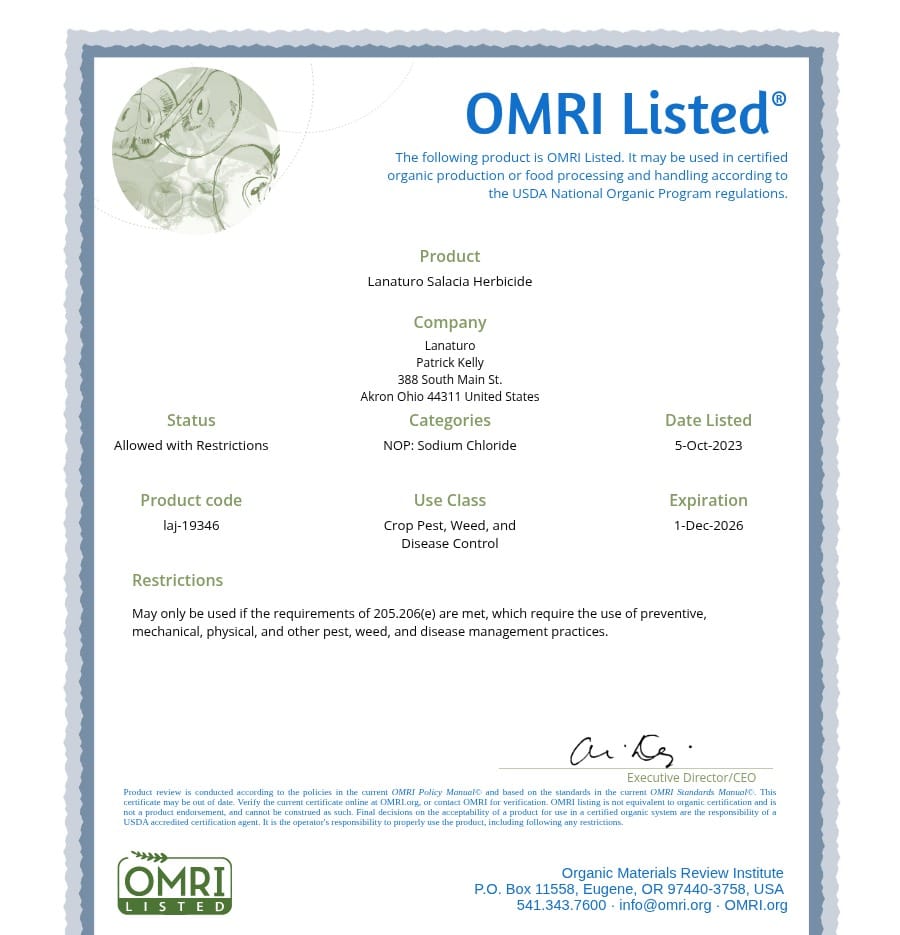
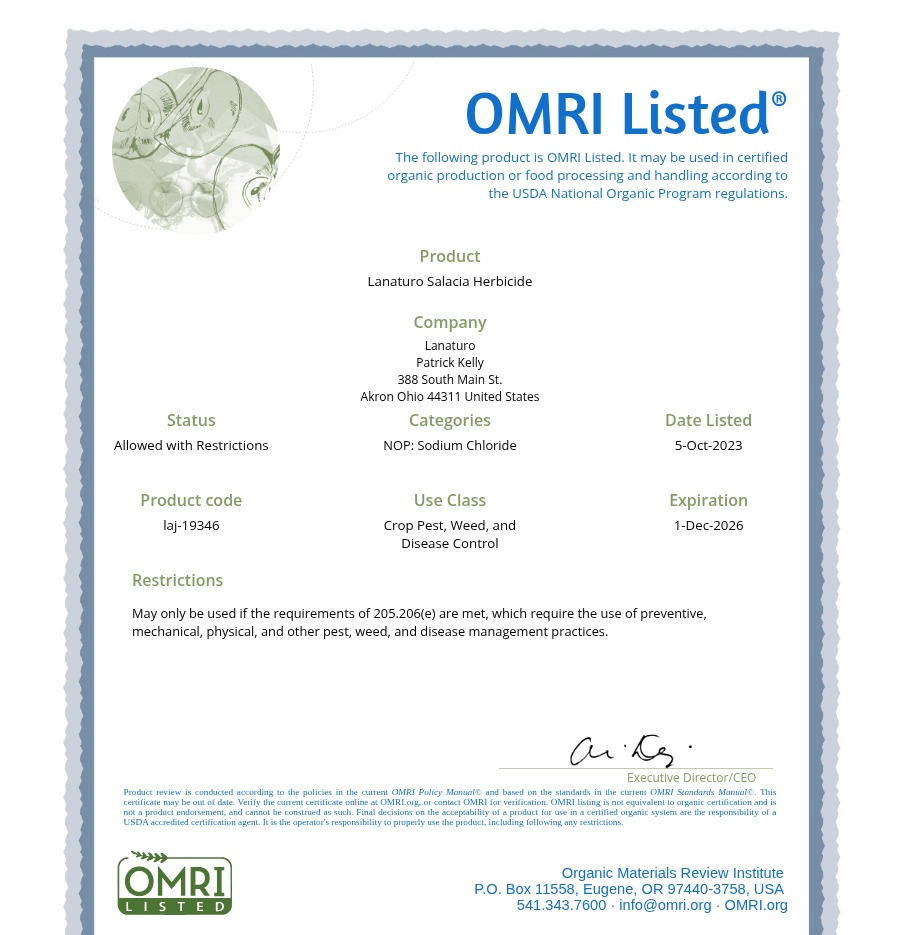
We'll do it with our own product so you can see exactly what a real listing looks like. Salacia's digital certificate lives here: omri.org/mfg/laj/certificate/19346. Open it — you'll find "Lanaturo Salacia Herbicide" on OMRI's own servers, not ours. That's the difference between claiming a standard and standing behind one. Hold every product you consider to that same test.
What's actually on the OMRI list
The OMRI roster spans far more than weed killers — it covers fertilizers, soil amendments, compost inputs, livestock care products, and pest controls. Browsing it is the fastest education in what "allowed in organic" really means. You'll notice the listed products tend to share a profile: ingredients with long, documented histories of safe use, reviewed for how they behave in the soil and the broader system — not just whether they work.
What you won't find is a shortcut. A listing reflects the full formula and how it's made, which is why a company can't simply relabel a generic product and call it organic-approved. The review looks at the whole input, not the marketing. That's also why the list is short relative to the number of products claiming to be "natural."
Is there a "certified organic weed killer"? What "OMRI Listed weed killer" really means
Yes — with one honest caveat. Several weed killers are OMRI Listed, meaning they passed that same independent review and are allowed for use in organic growing. For something you spray rather than eat, that is as close to "certified organic" as it gets. So if you've searched for a "certified organic weed killer" or an "OMRI Listed weed killer," real options do exist — the job is separating the verified ones from the "natural"-label pretenders, and knowing what kind of control you're holding. Three things to check before you buy a weed killer marketed as organic:
- Is it OMRI Listed — and can you confirm it? Search the name on omri.org. No live listing, no claim.
- Selective or non-selective? This decides whether your lawn survives the treatment — most organic options spare nothing green.
- Genuinely reviewed, or just called "natural"? The label word is free. The listing is earned.
Run that filter and a pattern jumps out fast: the OMRI Listed weed and grass controls are almost all non-selective. They burn down everything they touch — weed and grass alike. Useful on a driveway or a fence line, useless if you want to clear weeds out of a lawn without scorching the turf around them. For years, an organic weed killer that spared your grass was a contradiction in terms. It's the complaint you hear over and over: the weeds die, and the lawn dies right along with them.
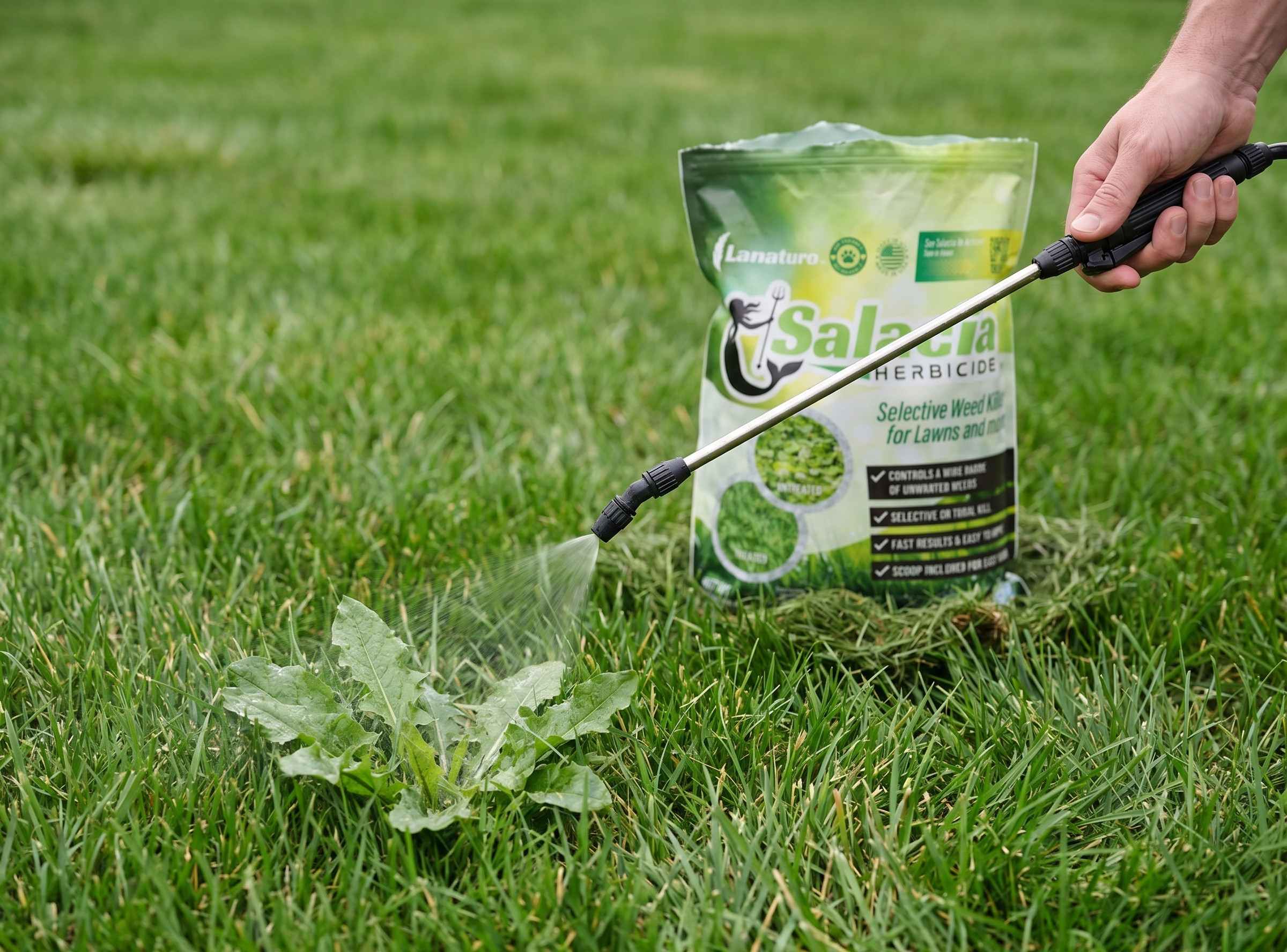
That's the gap Salacia closed. It's an OMRI Listed organic herbicide built to be selective — independently reviewed against the federal organic standards, and formulated to target broadleaf weeds while leaving lawn grass standing. Two modes from one bag: selective at the lawn rate, total knockdown at the higher rate. It works on contact through rapid dehydration, which means coverage is everything — wet the whole weed, leaves, stems, and crown, to the point of runoff. If the spray doesn't touch it, it doesn't work on it.
Want to see where it fits among the organic options, or how it stacks up against the glyphosate you're trying to leave behind? Start with the best organic weed killer breakdown, then read how selective organic control actually works and the case for going glyphosate-free. If you're coming at this from the farming side, here's what organic growers are actually allowed to use.
Red flags: label words to ignore
Print this list on the inside of your eyelids before your next trip down the lawn aisle.
Walk past it if the label leans on these and offers nothing you can verify:
- "Natural" or "all-natural" with no listing to check
- "Eco-friendly" / "earth-friendly" / "green" as the headline claim
- "Plant-based" used as a safety promise
- "Chemical-free" — everything is a chemical, including water
- A green leaf graphic standing in for an actual third-party seal
- The word "certified organic" on a weed killer (impossible — see above)
The fix for all of it is the same 30-second habit: open the OMRI list and search. A real standard survives the search. A marketing word doesn't.
Not sure what's actually in your lawn?
Our Weed Control Guide covers 46 weeds with before-and-after photos, mixing rates, treatment techniques, and full guides.
Explore the Weed Control Guide →
Keep reading: why regulators are restricting glyphosate.
Salacia is the first OMRI-certified selective organic herbicide, made by Lanaturo: it removes broadleaf lawn weeds while keeping your grass unharmed.

Lawn
Advisor
Not sure which weed you're looking at? Show Sal.
Sal is Lanaturo's lawn-care expert. He doesn't just name the weed — he builds your exact treatment plan and checks whether today is the right day to spray.
Ready to Take Back Your Lawn?
Salacia™ is the first OMRI-certified selective organic herbicide — kills weeds, not grass. Choose your lawn size:
The seal on the front of the bottle is a promise. The OMRI list is whether anyone kept it. Now you know which one to trust — and you can prove it in thirty seconds.
This guide explains organic labeling standards for educational purposes. Always read and follow the product label. Salacia is designed to be selective, but test a small area first — temporary paling or yellowing on lawn grass is possible depending on irrigation, general lawn health, application rate, and conditions.