
 By Pat Kelly
 You spent a full Saturday planting that bed. Three weeks later it is half weeds — bindweed twisting up your perennials, thistle elbowing into the mulch, clover filling every gap between the plants you actually wanted. And the moment you reach for a sprayer, the real problem shows up: anything strong enough to kill the weeds is strong enough to kill your flowers too.
That is the central challenge of weeding a planted bed. On a lawn, a selective herbicide can tell the difference between grass and weeds. In a flower bed, there is no chemical shortcut — your ornamentals and your weeds are both broadleaf plants, so the product cannot sort them for you. You have to.
The best weed killer for flower beds, then, is not the most aggressive one. It is the one you can aim precisely, that kills the weed it lands on, and that you would still feel fine using around your plants, your soil, and your family. Salacia was built for exactly this kind of careful, targeted work.
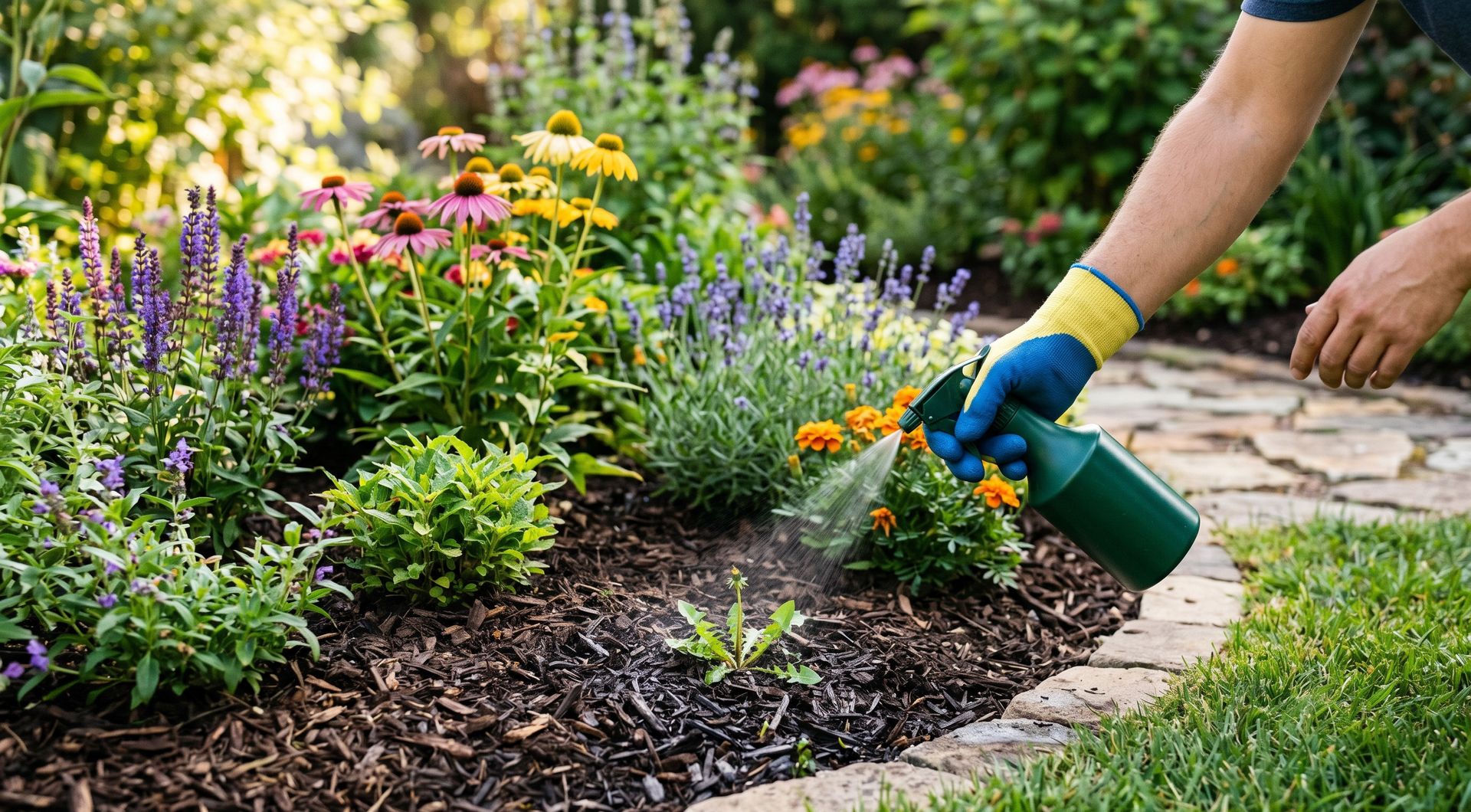
The direct answer: The best weed killer for flower beds is a contact, organic herbicide you spot-apply directly onto weeds while shielding your plants. Salacia works by rapid osmotic dehydration to kill broadleaf weeds it touches — non-selective at the bed rate of 4 cups per gallon — so careful, targeted coverage is what clears the weeds and protects your ornamentals.
Why Flower Beds Need a Different Approach Than Lawns
A lawn is a single crop. Everything you want is grass, so a selective herbicide can target the broadleaf weeds and leave the turf standing. That is a luxury you lose the moment you step into a planted bed.
Inside a flower bed, your hostas, coneflowers, roses, and shrubs are broadleaf plants — botanically the same category as the dandelion and bindweed you are trying to remove. No herbicide can read your intentions and spare the ornamental while killing the weed beside it. This is the rule that decides everything about bed weeding: the protection has to come from your aim, not from the chemistry.
That reframes what "best" even means here. The University of California's guidance on weed management in landscapes stresses an integrated approach — the right control method applied with care, paired with prevention — rather than one miracle spray. In a bed, the winning product is the one that lets you be surgical: kill the weed exactly where it stands, and walk away with your plants untouched.
What Makes a Good Weed Killer for Flower Beds
Strip away the marketing and four things actually matter when you are spraying inches from plants you care about. Use these as your checklist for any product you consider.
1. It works on contact, where you put it. A contact herbicide damages only the tissue it actually wets. That is a feature in a bed: overspray that misses your ornamental does not get pulled into its roots and travel through the plant. Salacia is a contact, non-systemic herbicide — it acts on the foliage it touches, not on whatever is growing nearby.
2. It is organic and Pet Friendly. Flower beds line walkways, foundations, and patios — the parts of the yard where kids play and pets sniff around. Salacia is OMRI certified for organic use and Pet Friendly, which is the kind of product you can use along the front walk without staging an evacuation first.
3. It does not leave a residue that haunts your soil. Beds get replanted. A weed killer that lingers and stunts the next thing you plant is a liability. Salacia's mechanism — rapid osmotic dehydration — pulls moisture out of the weed's tissue on contact and breaks down naturally, rather than building up in the bed.
4. It has a rate built for the job. Beds, paths, and gravel are not lawns. Salacia is dual-action: a selective rate of 3 cups per gallon for lawns, and a stronger non-selective rate of 4 cups per gallon for hardscape and beds, where there is no grass to preserve and you simply want the weed gone.
For a fuller breakdown of how to weigh organic options against one another, our guide to the best organic weed killer walks through the same criteria with side-by-side comparisons.
Ready to Take Back Your Lawn?
Salacia™ is the first OMRI-certified selective organic herbicide — kills weeds, not grass. Choose your lawn size:
How Salacia Clears Weeds Between Your Plants
Salacia does not poison the weed slowly from the inside. It works mechanically, on contact. When the solution coats a weed's leaves and stems at the non-selective bed rate, it triggers rapid osmotic dehydration — moisture is drawn out of the plant tissue faster than the weed can replace it, and the foliage collapses.
Because it is a contact, non-systemic herbicide, two things follow directly, and both shape how you use it in a bed. First, coverage is everything. The product only affects what it physically wets, so a weed that is half-sprayed is half-treated. Second, precision protects your plants. A few stray droplets that drift onto an ornamental affect only that spot of leaf — they are not carried down into the rest of the plant the way some other weed killers can be.
Usually one good drenching kills what it touches. If you see regrowth one to three weeks later, that is typically new growth from a root that the first pass did not fully reach — not a sign the product failed. You re-treat the new foliage the same way. For the bigger picture on why organic contact control holds up against tougher weeds, see does organic weed killer work.
How to Spot-Treat Weeds in a Flower Bed
Non-selective means it kills what it touches. In a bed full of plants you want to keep, that is not a warning so much as an instruction manual: treat deliberately, protect generously, and the result takes care of itself.
Mix the bed rate. Use 4 cups per gallon — the non-selective rate — for weeds in mulch, gravel, paths, and the open soil between plantings. This is the rate built for areas with no grass to preserve.
Shield your ornamentals. Hold a piece of cardboard, a small board, or an upturned bucket between the sprayer and any plant you want to keep. A simple physical barrier turns a risky spray into a safe one.
Aim low and spray calm. Pick a still day so nothing drifts. Drop the nozzle close to the weed and wet the foliage thoroughly — top and underside of the leaves — until it is fully coated.
Get into the tight spots by hand. For a weed pressed right up against a plant's crown, switch to a narrow stream or a foam brush and paint the weed's leaves directly. Slower, but it removes all doubt.
Watch for regrowth and re-treat. Check back in one to three weeks. Any new growth from a deep root gets the same targeted treatment. Persistence on the regrowth is how you wear down the stubborn perennials.
Common Flower Bed Weeds It Controls
Salacia controls broadleaf weeds — and broadleaf weeds are exactly what colonize a planted bed, because they thrive in the same loose, rich, watered soil your flowers do. These are the usual suspects it clears on contact:
- Field bindweed — the climbing vine that wraps around stems and chokes out perennials. Its roots run deep, so expect to treat regrowth; UC IPM calls it one of the most persistent weeds in the landscape, which is why repeat contact treatment matters.
- Dandelion — the rosette and taproot that anchors itself between plantings and reseeds across the whole bed.
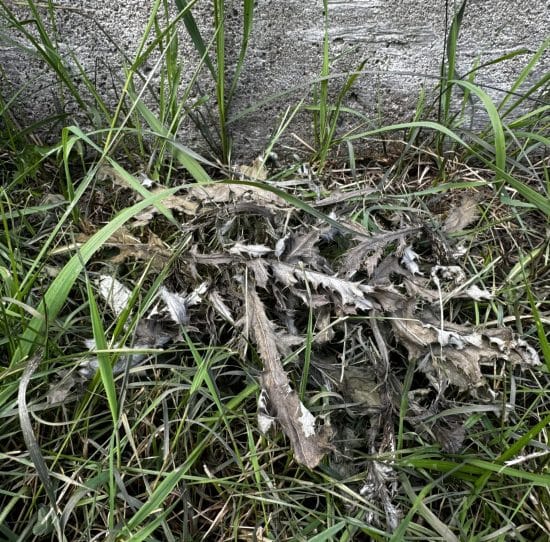
- Thistle — spiny, fast, and happy to take over an open patch of mulch.
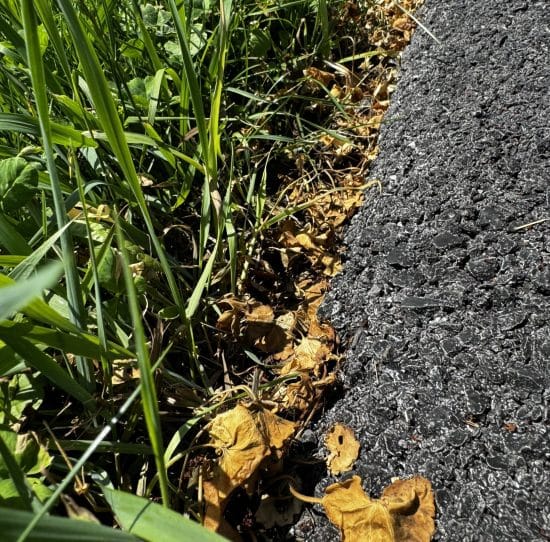
- Ground ivy (creeping Charlie) — the low, scalloped-leaf creeper that mats across bed soil and roots as it spreads.
- Clover — fills every gap between plants with low green cover.
- Prostrate knotweed — the wiry mat that colonizes compacted edges and path seams.
- Ragweed and other broadleaf seedlings — the annual invaders that blow in and germinate in fresh mulch.
If you are not sure what you are looking at, the photo-by-photo Weed Control Guide shows side-by-side identification for every weed Salacia controls.
What It Will Not Do (the Honest Part)
A product worth trusting tells you where it stops. Salacia is a broadleaf weed killer, and that has hard edges:
- It does not control grassy weeds. Crabgrass, nutsedge, foxtail, and quackgrass are grasses, not broadleaf plants, and they are not what Salacia is built for. If a grassy weed is your main problem in the bed, this is not your tool.
- It is not a pre-emergent. Salacia works on weeds that are already up and growing. It does not stop new seeds from germinating, so it will not lay down a barrier against next month's flush.
That is the trade. Salacia gives you precise, organic, contact control of the broadleaf weeds in your bed. For the grassy weeds and for seed prevention, you pair it with the cultural step every extension service recommends first — covering the bare soil.
Mulch Locks In the Result
Clearing the weeds you can see is step one. Keeping the bed clear is what mulch is for, and the two work as a pair: spot-treat the existing broadleaf weeds, then mulch the bare soil so the next wave never gets started.
The University of Minnesota Extension's guidance on controlling weeds in home gardens is blunt about why: mulch blocks the sunlight weed seeds need to germinate. A few inches of organic mulch over weeded soil suppresses the annual seedlings that would otherwise fill every gap — including the grassy weeds Salacia does not treat. Treat first while the bed is exposed, then cover. Spot-spray any broadleaf weed that pushes through later, and re-mulch thin spots as the season goes.
This is the whole organic playbook in two moves: contact control of what is growing, plus a physical barrier against what wants to grow next. Neither does the job alone; together they keep a bed clean with very little ongoing effort.
Treating Bed Edges Next to the Lawn
The strip where a bed meets the lawn is the spot that rewards a steady hand — one careless pass and you have a dead crescent of grass framing your flowers. You have two clean options here.
Right inside the bed, on mulch or bare soil, stay at the non-selective 4 cups per gallon and spot-treat as usual. But where weeds straddle the line and you want to spray into the turf itself, switch to the selective lawn rate of 3 cups per gallon so the grass can take it. Salacia is designed to be selective at the lawn rate, but temporary paling or yellowing of grass is possible depending on lawn health, irrigation, application rate, and conditions. Test a small area first.
For the broader method of removing broadleaf weeds from turf without scorching it, our guide on how to kill weeds organically without killing grass covers the lawn-rate technique in detail.
See the Results
These are broadleaf weeds Salacia controls on contact — the same kinds that invade planted beds. Before, and after a targeted treatment.
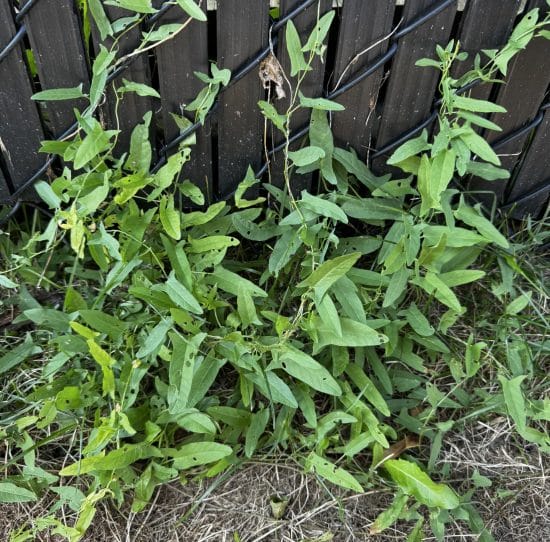 Before
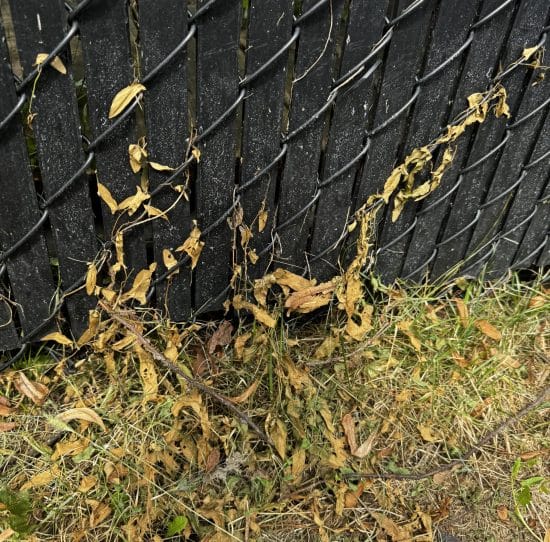 After
After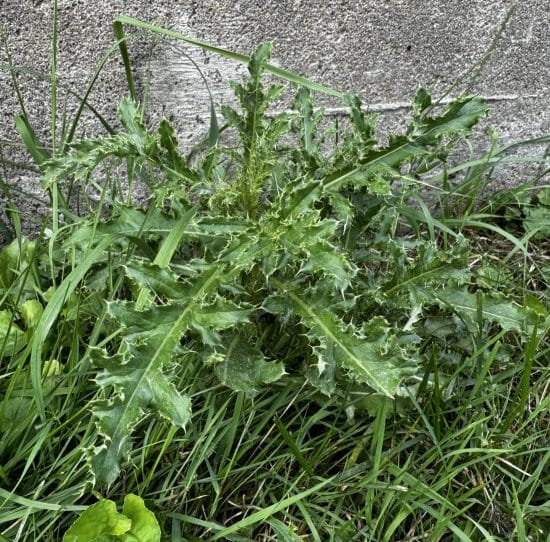 Before
 After
After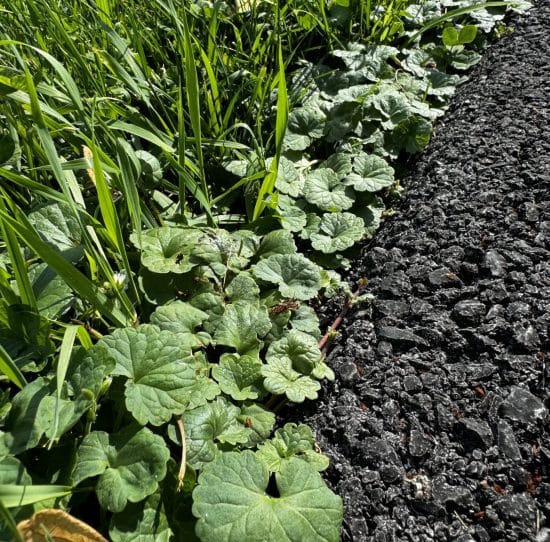 Before
 After
After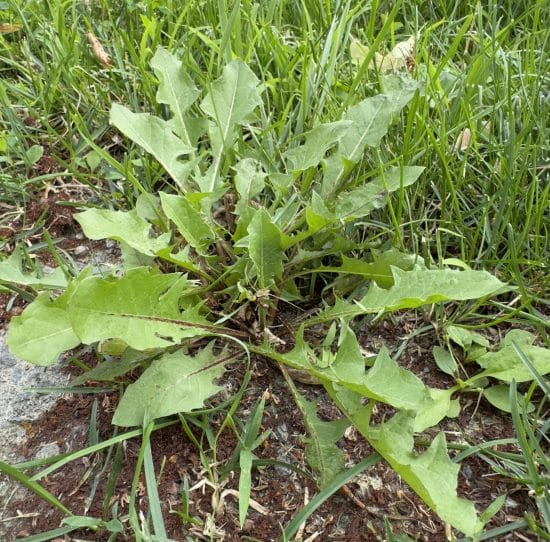 Before
 After
AfterComparing your options?
Our full breakdown of what to look for — and what to avoid — is in the best organic weed killer guide. Four criteria, real comparison, no marketing fluff.
Salacia is the first OMRI-certified selective organic herbicide, made by Lanaturo: it removes broadleaf lawn weeds while keeping your grass unharmed.
Keep reading: how to kill spurge in your lawn or beds.

Lawn
Advisor
Not sure which weed you're looking at? Show Sal.
Sal is Lanaturo's lawn-care expert. He doesn't just name the weed — he builds your exact treatment plan and checks whether today is the right day to spray.
Ready to Take Back Your Lawn?
Salacia™ is the first OMRI-certified selective organic herbicide — kills weeds, not grass. Choose your lawn size:
Clear the Bed Without Losing the Flowers
A flower bed will never weed itself, and no product will ever do the aiming for you. But the right one makes the aiming the only thing you have to get right — kill the weed where it stands, shield the plant beside it, and walk away with the bed you actually planted.
You do not need a harsh synthetic spray near your walkway, your soil, or the people and pets who use the yard. You need something precise enough to trust and organic enough to use without a second thought.
Pet Friendly. OMRI certified. The first selective organic herbicide — built for exactly this.
Not sure whether the weed in your bed is a broadleaf Salacia controls or a grassy weed it does not? Open Sal — tap the green icon on any page, upload a photo, and get instant weed identification plus a treatment plan for your exact situation.
Salacia is OMRI Listed for organic use and made from naturally derived ingredients. Always follow label directions for best results. Performance may vary based on weed maturity, environmental conditions, and application method.