
 By Pat Kelly
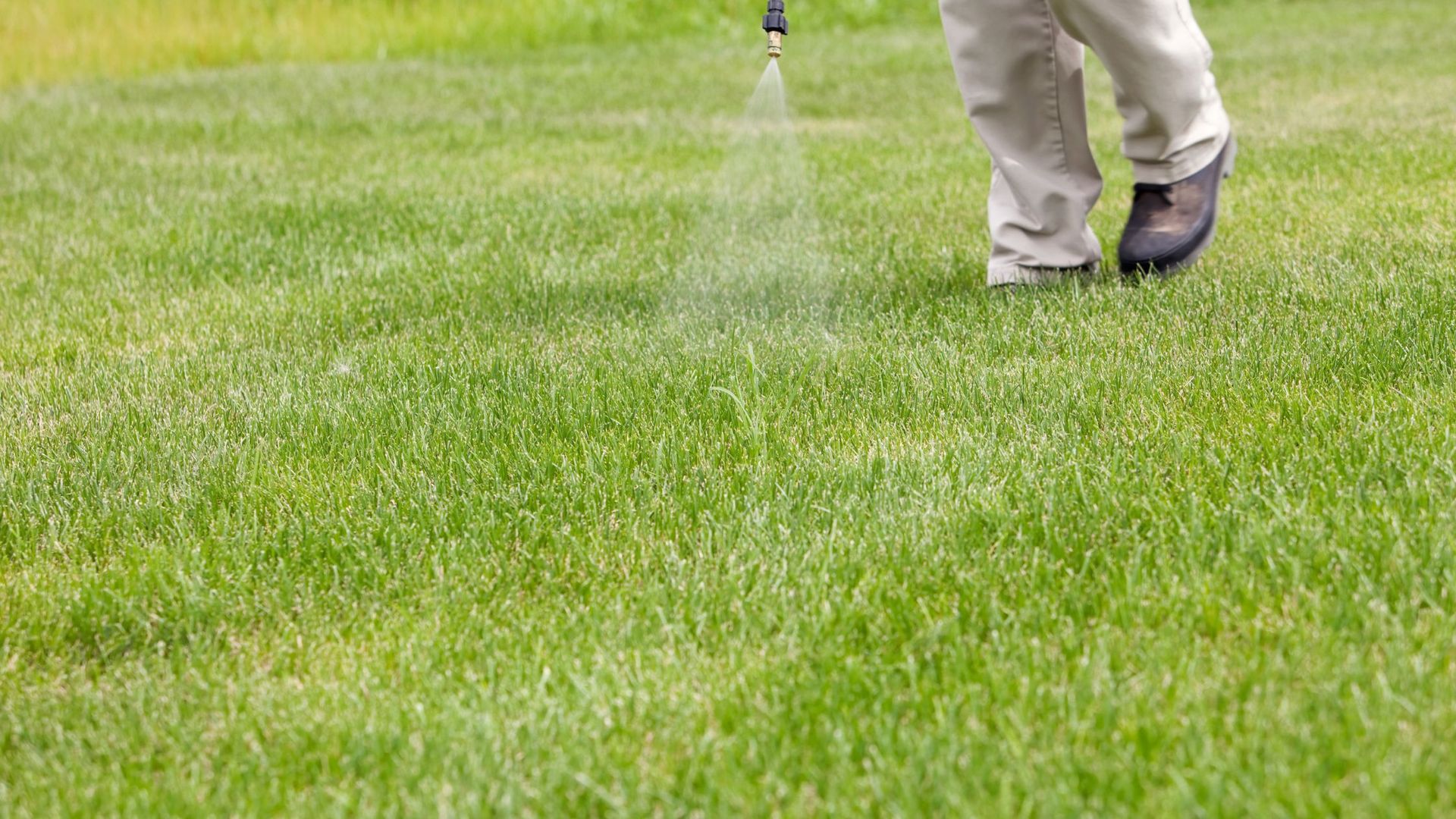
 Every homeowner who has tried to remove dandelions, clover, or ground ivy from a lawn has faced the same problem: the product that kills the weed also kills the grass. That is what a non-selective herbicide does — it destroys everything it contacts. A selective herbicide solves this by targeting specific weed types while leaving your turf completely unharmed. Understanding the difference — and knowing which selective options actually exist — is the single most important decision in lawn weed control.
Until recently, homeowners who wanted an organic option had zero selective choices. Every organic herbicide on the market was non-selective. Salacia changed that as the first OMRI-certified selective herbicide — but to understand why that matters, you need to understand how selective weed killers work and what separates them from everything else on the shelf.
What Is a Selective Weed Killer?
A selective weed killer — technically called a selective herbicide — is a product formulated to control certain plant species while leaving others unharmed. In lawn care, this means killing broadleaf weeds (dandelions, clover, wild violet, ground ivy) without damaging the surrounding grass.
Looking for the best selective weed killer? See our full comparison of selective vs. non-selective herbicides — including the first organic option that does both → Selective vs. Non-Selective: The Third Option
The concept is straightforward: grass and broadleaf weeds have different biological structures. A selective herbicide exploits those differences. It targets processes or tissues that exist in the weed but not in the grass — so the weed dies and the lawn stays green. This is the foundation of every professional turf management program, and it is the reason Penn State Extension and other university programs recommend selective herbicides as the primary tool for lawn weed control.
The key distinction: Selectivity is about the product's ability to differentiate between plant types. A truly selective herbicide can be applied to an entire lawn and only the weeds will be affected. A non-selective herbicide has no differentiation — it kills everything it contacts.
Selective vs. Non-Selective: The Critical Difference
This is the most important concept in weed control, and the one most homeowners get wrong. Choosing the wrong category does not just mean poor results — it means dead grass.
Selective Herbicides
Targets Specific Weeds Only
- Kills broadleaf weeds while grass stays intact
- Used on lawns, turf, pastures, and crop fields
- Applied directly to weed-infested areas
- Examples: 2,4-D (synthetic), Salacia (organic)
Non-Selective Herbicides
Kills Everything It Contacts
- Destroys all vegetation — weeds, grass, flowers
- Used on driveways, fence lines, gravel, sidewalks
- Never use on a lawn you want to keep
- Most organic herbicides fall in this category
Here is the problem that existed until recently: in the organic herbicide market, every available product was non-selective. Non-selective burn-down sprays — commodity contact formulas — kill everything they touch. Homeowners who wanted both organic certification and selective action had no option. Purdue University's turf research program and extension offices across the country routinely noted that no OMRI-certified selective herbicide existed.
That gap closed when Salacia launched as the first OMRI-certified selective herbicide. For the first time, homeowners and professionals can get targeted weed control from an organic product — killing broadleaf weeds at one mixing rate while preserving grass.
The 3 Types of Selective Herbicides
Not all selective herbicides work the same way. They fall into three categories based on what they target and when they are applied. Understanding these types helps you choose the right product for your specific weed problem.
Broadleaf Selective Herbicides
The most common type for lawns. These target dicot weeds — plants with wide, flat leaves like dandelions, clover, wild violet, and ground ivy — while leaving monocot grasses completely unharmed. This is the category most homeowners need. Salacia operates in this category at its selective mixing rate.
Grassy Weed Selective Herbicides
These target unwanted grass species growing inside a desirable lawn — quackgrass, foxtail, and certain annual grasses. They exploit metabolic differences between weed grasses and turf grasses. These are less commonly needed by homeowners but critical in professional turf management and agriculture.
Pre-Emergent Selective Herbicides
Applied before weeds germinate, these create a barrier in the top layer of soil that prevents weed seeds from establishing roots. They do not affect established turf. Timing is critical — they must go down before soil temperatures reach germination thresholds (typically early spring). Once weeds have already emerged, pre-emergents are ineffective.
Most homeowners dealing with visible weeds need a broadleaf post-emergent selective herbicide — something that kills the weeds already growing in their lawn without harming the grass. For a detailed breakdown of how to time your application for maximum effectiveness, see the timing and application guide.
Synthetic vs. Organic Selective Herbicides
The selective herbicide market has been dominated by synthetic chemistry for decades. Products built on 2,4-D, dicamba, and triclopyr have been the standard tools for broadleaf weed control in turf. They work — but they come with documented trade-offs that homeowners should understand.
| Factor | Synthetic Selective | Organic Selective (Salacia) |
|---|---|---|
| Active Mechanism | Hormone disruption (auxin mimics) | Osmotic dehydration (physical) |
| Certification | EPA registered | OMRI certified organic |
| Soil Persistence | Days to weeks | No synthetic residue |
| Waterway Impact | Documented runoff concerns (USGS NAWQA) | Naturally derived, minimal runoff risk |
| Pet Friendly Label | No | Yes — on the label |
| Dual-Action Capability | No — fixed mode | Yes — selective or non-selective by mixing rate |
Research from peer-reviewed environmental science journals has documented how synthetic herbicide residues move through soil into groundwater and surface waterways. The hidden costs of synthetic herbicides extend beyond the lawn — into the water supply, the soil microbiome, and the broader ecosystem.
For homeowners with dogs, cats, or children who use the lawn, the choice carries additional weight. University veterinary studies have examined associations between lawn chemical exposure and health outcomes in pets — a topic covered in depth in our Pet Friendly weed killer guide. Salacia's naturally derived formula works through dehydration — a physical mechanism that targets plant biology, not animal biology.
Common Weeds Controlled by Selective Herbicides
Broadleaf selective herbicides target the most common lawn invaders. Here are the weeds homeowners encounter most frequently — and why selective control matters for each.
Dandelions
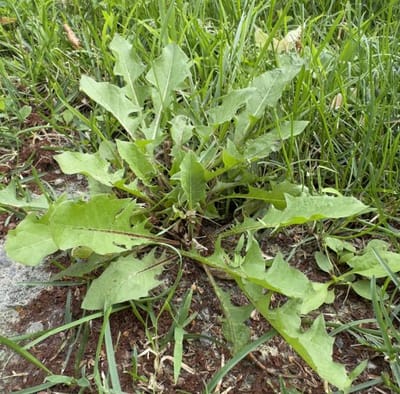
Taproots up to 12 inches deep. Pulling leaves the root behind and the weed regrows. Selective herbicide applied to the crown is the only reliable lawn-safe method. Full dandelion control guide
Clover
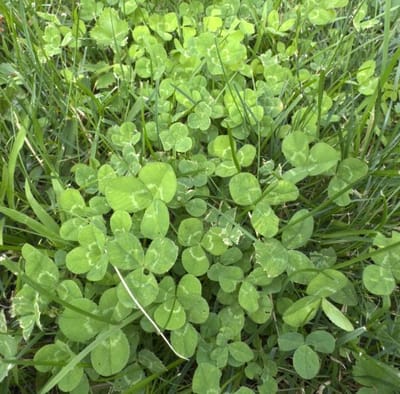
Spreads through stolons and creates dense mats that crowd out turf. A selective herbicide targets the clover without thinning the surrounding grass — critical because bare spots invite more weeds.
Wild Violet
One of the most difficult broadleaf weeds. Waxy leaves resist many herbicides. A selective product that works through dehydration bypasses the waxy barrier by drawing moisture directly from the tissue. Purple weed identification guide
Ground Ivy (Creeping Charlie)
Aggressive creeping weed that roots at every node. Non-selective treatment would leave massive bare patches. Selective control removes the weed network while the surrounding turf fills in the space.
Thistle
Root systems can extend 15 feet underground. Mowing only stimulates regrowth. A selective herbicide that dehydrates the crown tissue down to the root is the most effective lawn-safe approach. Thistle control guide
Chickweed
Rapid-spreading annual that thrives in cool, moist conditions. Each plant produces thousands of seeds. Selective control in early spring prevents the seed bank from building up season after season.
For detailed identification of every weed type and the recommended approach, visit the Lanaturo Weed Control Guide. To understand the science behind how selective herbicides differentiate between weed and grass tissue, read how selective weed killers work.
Best Selective Weed Killer for Lawns
For homeowners looking for the best selective weed killer, the choice comes down to one question: do you want organic or synthetic? In the organic category, Salacia is the first OMRI-certified selective herbicide available. It controls broadleaf weeds through dehydration while preserving grass, carries a Pet Friendly, and functions as both selective and non-selective depending on mixing rate.
How to Choose the Right Selective Herbicide
With dozens of products on the market, choosing the right selective herbicide comes down to four factors:
Weed Type
Identify whether you are dealing with broadleaf weeds, grassy weeds, or both. Most residential weed problems are broadleaf — dandelions, clover, ground ivy. A broadleaf selective herbicide is the correct choice for 90% of lawn weed problems.
Organic vs. Synthetic
If you have pets, children, or environmental concerns, organic certification matters. Look for OMRI certification — it is the gold standard verified by independent testing, not just a marketing claim. Salacia is the first OMRI-certified selective herbicide available.
Versatility
Some homeowners also need non-selective control for driveways, sidewalk cracks, or fence lines. Most products are locked to one mode. Salacia's Hybrisal Technology offers both — selective at one mixing rate, non-selective at a higher rate — so a single product covers the entire property.
Soil and Waterway Impact
Synthetic herbicides can persist in soil and move into waterways. USGS research documents herbicide contamination in over 90% of tested US streams. For properties near water features, organic options with no synthetic residue are the responsible choice.
Ready to Take Back Your Lawn?
Salacia™ is the first OMRI-certified selective organic herbicide — kills weeds, not grass. Choose your lawn size:
See the Results
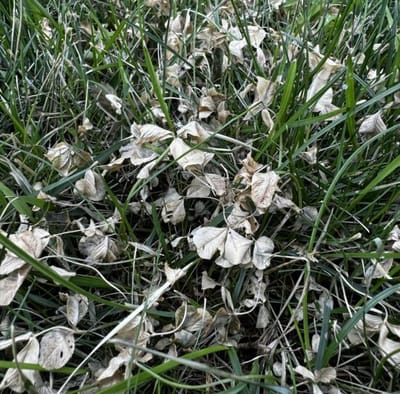
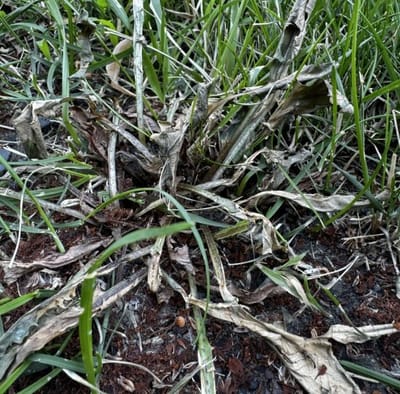
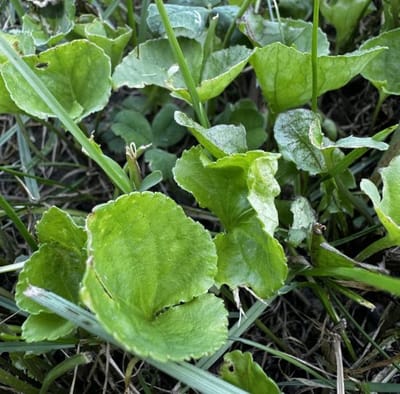
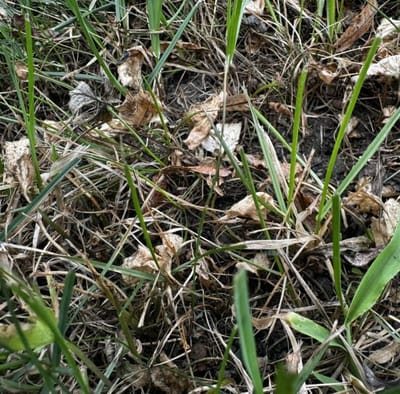
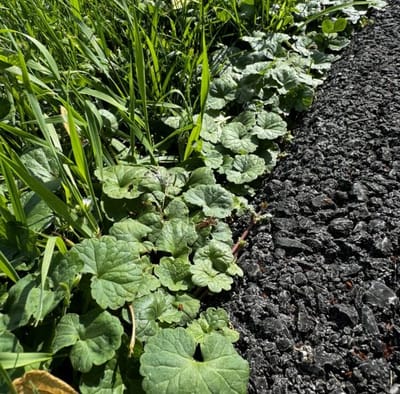
Real results, real lawns — watch Salacia eliminate tough weeds while your grass stays perfectly untouched.
Ready to put selective weed control to work in your own lawn?
See the Best Selective Weed Killer for Lawns →Ready to choose a product?
Once the selective principle clicks, the practical question is which product to trust on a real lawn. Our ranked answer: the best weed killer that won't kill grass.

Lawn
Advisor
Not sure which weed you're looking at? Show Sal.
Sal is Lanaturo's lawn-care expert. He doesn't just name the weed — he builds your exact treatment plan and checks whether today is the right day to spray.
Ready to Take Back Your Lawn?
Salacia™ is the first OMRI-certified selective organic herbicide — kills weeds, not grass. Choose your lawn size:
The Gap in the Market Just Closed
For years, extension offices and university turf programs said the same thing: there is no organic selective herbicide. Homeowners had to choose — organic and kill everything, or synthetic and keep the grass. That trade-off no longer exists. The first OMRI-certified selective herbicide is here, and it works through dehydration, not poison.
Pet Friendly — everything else second.
This article is for informational purposes. Always follow product label directions for application rates, timing, and use. Salacia is OMRI certified organic and labeled Pet Friendly.