
 By Pat Kelly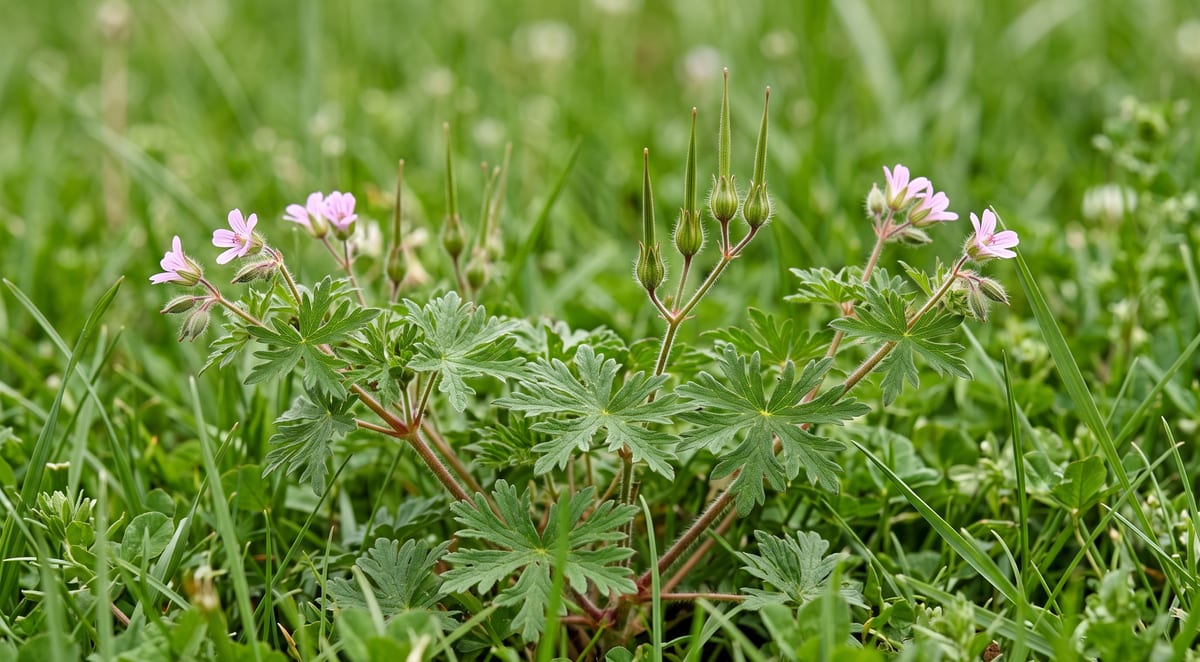
Every April, southern lawns from Texas to the Carolinas sprout the same soft, lacy rosettes with little pink flowers — and every April, homeowners meet them for the "first" time. Here's the part that changes how you fight it: that April weed was born last October. Carolina geranium is a winter annual — it germinates in fall, camps in your lawn all winter as a low rosette, then flowers, flings seed from its crane's-bill pods, and dies on its own by summer. Fight it on that calendar, not the one on the fertilizer bag.
The short answer: Carolina geranium is a broadleaf, which makes it a straightforward target for a selective organic herbicide. Mix Salacia at the selective lawn rate (1 lb — 3 cups — per gallon) and spray the rosette and stems until wet to the point of runoff; the hairy leaves hold spray well, so coverage is easy, and one good drenching application usually kills what it touches. Treat in spring before the seed beaks form — and always test a small area of lawn first, since temporary paling of grass is possible.
Not sure it's Carolina geranium?
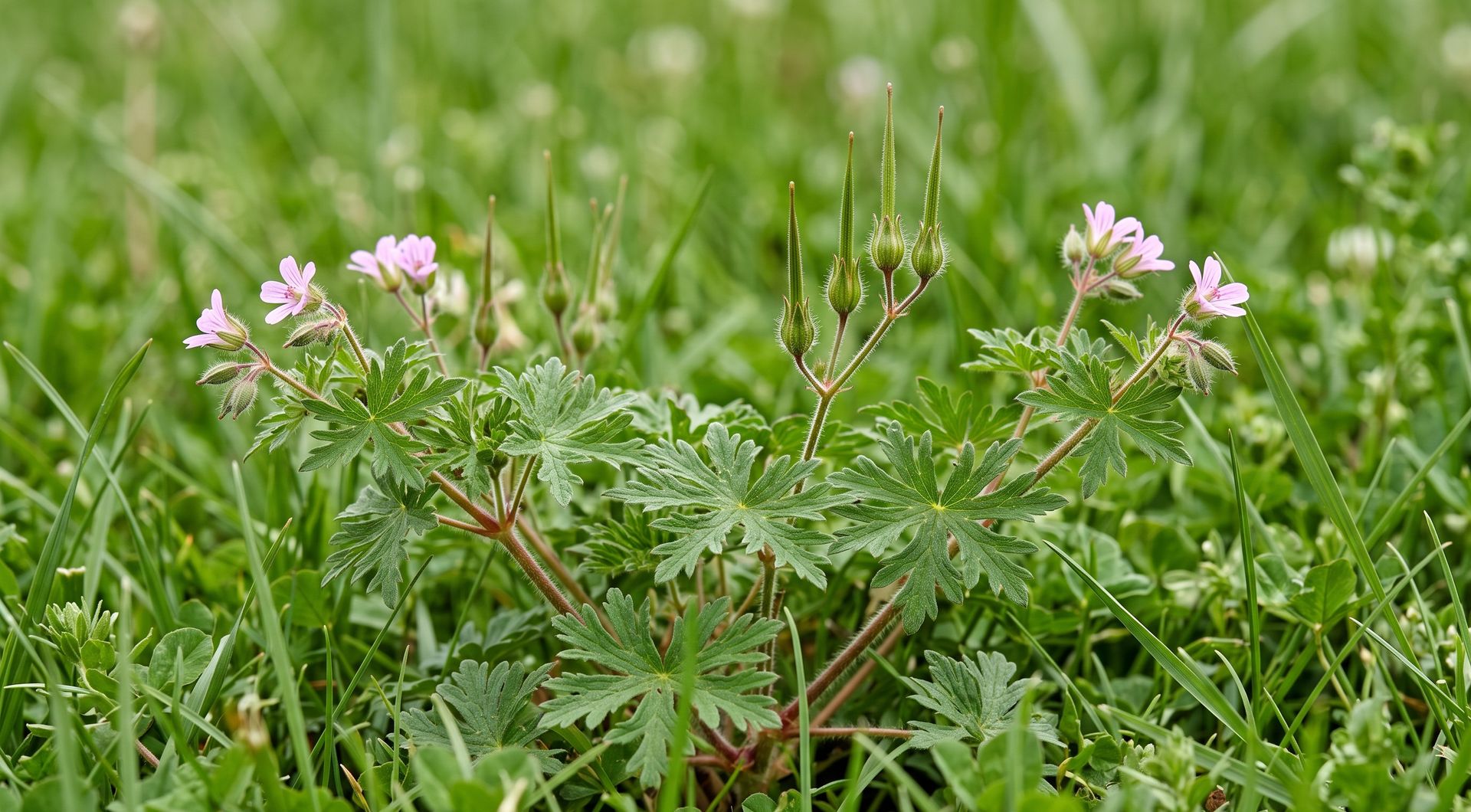
Lacy, deeply cut leaves, hairy red-tinged stems, small pink five-petal flowers, and beak-shaped seed pods pointing up like tiny cranes. Want certainty? Photograph it and send it to Sal, our free weed-ID assistant, right on this page. See how Sal works →
How to Identify Carolina Geranium
Carolina geranium (Geranium carolinianum — cranesbill, wild geranium) starts as a low basal rosette and branches into stems up to about a foot tall. Four checks settle the ID, and the Clemson Extension factsheet and NC State Extension profile both point to the same features:
- Deeply cut, lacy leaves — each leaf divided into five to seven lobes, and each lobe lobed and toothed again. From standing height the rosette looks almost fern-lace delicate.
- Hairy stems, green to red — the red tinge deepens as the plant matures.
- Small white-to-pink five-petal flowers at the stem tips, mostly April and May.
- The namesake: crane's-bill seed pods. After flowering, each seed capsule grows a long upright beak. When the pod dries, it snaps open and slings seed away from the plant — next fall's crop, pre-delivered.
Where you find it says as much as what it looks like: thin turf, disturbed ground, and poor, dry soils that better-fed lawns shade out. A thick stand of grass almost never carries it — which is a prevention hint we'll cash in below.
The Winter-Annual Timeline: Born in October, Buried in June
Fall: seed germinates as soils cool — while you're watching football, the rosettes are quietly taking ground.
Winter: the rosette sits low and green through the southern winter, below mowing height, building roots while your grass idles.
April–May: stems bolt, pink flowers open, crane's-bill beaks form and start flinging seed. This is when everyone finally notices it — after it has already banked most of its damage.
Summer: the plant dies on its own. The lawn "cleans up," the seed waits underground, and October restarts the loop.
The strategic read: a plant you kill before the beaks form is a whole colony that never happens. Treat too late in May and you're executing a plant that already finished its mission.
How to Kill Carolina Geranium Organically
The good news after two honest pages about grassy weeds and sedges on this site: Carolina geranium is a broadleaf, and broadleaf weeds in a lawn are exactly what a selective organic herbicide exists for.
1. Mix at the selective lawn rate
Salacia — the first OMRI-certified selective organic herbicide, made by Lanaturo — mixes at 1 lb (3 cups) per gallon of water for lawn use. The selective rate targets broadleaf weeds while your grass is preserved. Salacia is a water-soluble granular, so you measure dry, dissolve, and spray fresh.
2. Drench the rosette and stems to runoff
Spray directly onto the rosette and branching stems until the foliage is wet to the point of runoff. Those fine hairs that help you identify the plant now work against it — hairy leaves hold spray solution well, so getting full coverage is easier than on waxy weeds. Coverage is still the whole game: the product works on contact, and what it doesn't touch, it doesn't kill.
3. Time it before the beaks
Usually, one good drenching application kills what it touches. The window that matters is spring, before seed pods form — killing the plant then is what shrinks next October's germination. Pick a calm morning in the 60–80°F range with no rain expected for at least 4 hours; our timing and application guide covers the conditions in detail.
4. Singles? Just pull them
Honest note for light infestations: Carolina geranium has a shallow taproot and pulls out easily, especially from moist soil. A dozen rosettes in an otherwise thick lawn is a five-minute hand job. Spraying earns its keep when the rosettes number in the dozens or blanket thin areas.
Salacia is designed to be selective at the lawn mixing rate, but temporary paling or yellowing of grass is possible depending on lawn health, irrigation, application rate, and conditions. Always test a small area first. Outside lawns — beds, gravel, edges — the non-selective rate (1.5 lb / 4 cups per gallon) works faster; keep it off plants you want to keep.
Ready to Take Back Your Lawn?
Salacia™ is the first OMRI-certified selective organic herbicide — kills weeds, not grass. Choose your lawn size:
The Fall Window: Shut the Door Before It Opens
Because the whole invasion starts with fall germination in thin, hungry turf, late summer and early fall — right now, if you're reading this in August or September — is when next spring's geranium problem is actually decided:
- Thicken the lawn before soils cool. Warm-season lawns (St. Augustine, bermuda, centipede, zoysia) are still spreading in late summer — feed and water them into closing bare spots, and patch dead areas with plugs or sod while they can still knit.
- Fix the "poor, dry soil" invitation. Carolina geranium reads struggling turf as an open door. The same soil care that builds grass — fall fertility appropriate to your species, compaction relief, sensible irrigation — deletes its habitat.
- Mow at the top of your grass's range so the canopy shades fall's sunlit soil. A rosette that never germinates is the cheapest kill there is.
- Spot-check through winter. The rosettes sit low and green when your lawn is dull — easy to see, easy to pull, and every one removed before April is a beak that never fires.
The Dovefoot Cousin
If your rosette has softer, rounder, less deeply cut leaves, you've likely got dovefoot geranium (Geranium molle) — a close cousin that runs the same winter-annual playbook in the same lawns. The treatment approach is the same: selective rate, full-coverage drench of the rosette, before seed set. Sal tells the two apart from a photo if you'd rather be certain.
The Rest of the Southern Lineup
Carolina geranium rarely walks alone. Southern lawns that carry it usually host the rest of the seasonal parade — and each one has a different honest answer. Chamberbitter arrives with warm soil in early summer. Crabgrass and nutsedge are the grassy-and-sedge pair no selective product can touch — we tell you that straight and give you the cultural playbook instead. And for the broadleaf majority — geranium, clover, oxalis, dollarweed and company — a selective organic herbicide clears them while the grass is preserved. Start with our ranked guide to the best weed killer that won't kill grass, or browse the full weed control guide.
Salacia is the first OMRI-certified selective organic herbicide: naturally derived, Pet Friendly, and built exactly for the broadleaf half of that list. Send Sal a photo and get the ID plus the honest treatment plan in seconds.

Lanaturo
Intelligence
Not sure which weed you're looking at? Show Sal.
Sal is the lawn-care brain behind Lanaturo Intelligence. He doesn't just name the weed — he builds your exact treatment plan and checks whether today is the right day to spray.
Where Carolina Geranium Grows Most
Carolina geranium runs through the Southeast and South-Central states — Texas, Oklahoma, Louisiana, Arkansas, Mississippi, Alabama, Georgia, Florida and the Carolinas — and reaches north through Virginia and the Ohio Valley. Like henbit it is a winter annual, so mild winters are what it needs rather than any particular soil.
It favours thin, disturbed, sunny ground: roadsides, new lawns, the strip along a driveway, anywhere the turf has not closed. In a dense lawn it struggles to establish at all, which is why it so often shows up in the same bare corner year after year rather than spreading evenly.
Catch it as a rosette, before the beaked seed pods form. Once those pods dry and split they scatter seed across the same patch, and next winter's stand is set by what you let flower this spring. At the selective lawn rate Salacia targets it while being designed to spare grass; temporary paling or yellowing of nearby turf is possible and recovers. Always test a small area of your lawn first. Not sure what you are looking at? Sal will identify it from a photo.
Ready to Take Back Your Lawn?
Salacia™ is the first OMRI-certified selective organic herbicide — kills weeds, not grass. Choose your lawn size:
Fight It on Its Calendar, Not Yours
Carolina geranium wins by living in the one season nobody patrols the lawn. So flip it: thicken the turf before fall germination, pull or spot-check rosettes through winter, and if spring still shows pink flowers, one thorough selective application before the seed beaks form ends the colony instead of just the plant. It's a winter annual — break one loop of the cycle and next April looks very different.
Salacia is OMRI certified organic and labeled Pet Friendly. Designed to be selective at the lawn rate; temporary paling of grass is possible — test a small area first.
Pet Friendly. OMRI certified. Built for the broadleaf half of your lawn's problems.
This article is for informational purposes. Botanical references: Clemson Cooperative Extension and NC State Extension. Always follow product label directions for application rates, timing, and use.