
 By Pat Kelly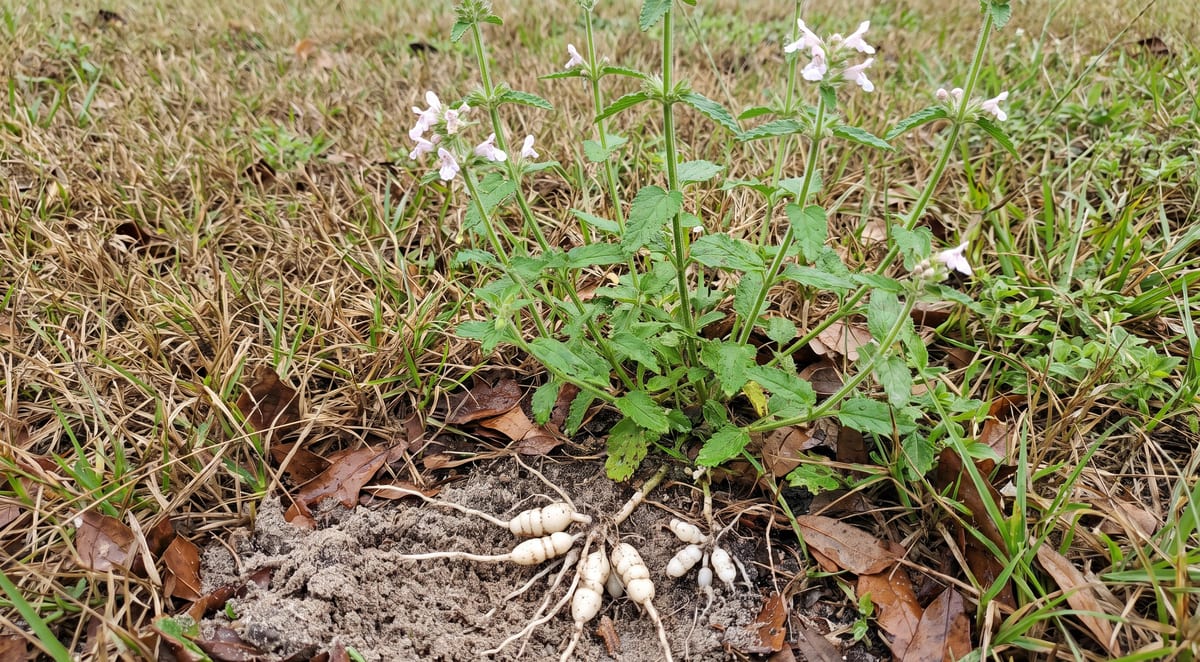
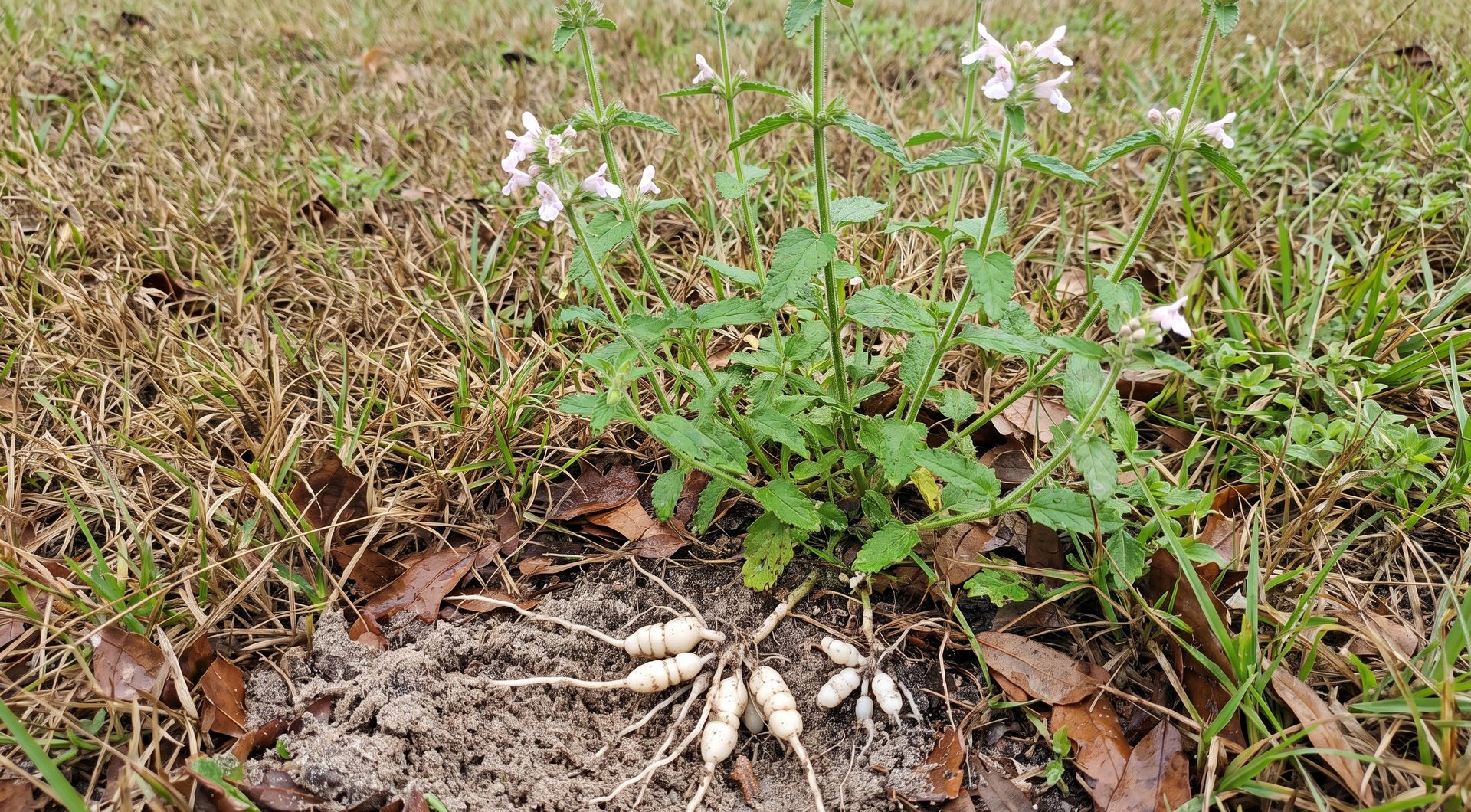
Pull up a Florida betony and you understand the problem instantly. Under the plant is a string of white, segmented tubers that look uncannily like a rattlesnake's rattle — and that, not the leafy part you have been fighting, is the actual plant. The green on top is what betony sends up. The rattles underground are what betony is. Once you know that, everything about how to beat it makes sense, including why the neighbour who sprayed once in June got nowhere.
The short answer: Treat betony when it is actually growing — fall through winter, then again in early spring — and treat it more than once. Mix Salacia at the selective lawn rate of 1 lb (about 3 cups) per gallon and drench it heavily: every leaf, every square stem down to the soil, and the ground around the base. It is a broadleaf, so the selective rate targets it while being designed to spare your grass; always test a small area first. Expect two to four treatments a season, repeated the following year — the tubers are why.
Not sure that's what you have?
Square stems you can feel between your fingers, leaves in matched pairs, pale pink trumpet flowers, standing taller than the lawn around it? Dig one gently and look for the white rattle. Or skip the digging: snap a photo and send it to Sal, our free weed-ID assistant, right on this page. See how Sal works →
Is It Betony? The Rattle Settles It
Florida betony (Stachys floridana) is a cool-season perennial in the mint family, and it wears the family uniform: square stems — roll one between your thumb and finger and you will feel the four flat sides and the fine hairs — with toothed leaves in matched opposite pairs at every node, and white-to-pale-pink tubular flowers. It stands taller than most lawn weeds, which is often how people first notice it: something is sticking up out of an otherwise flat lawn.
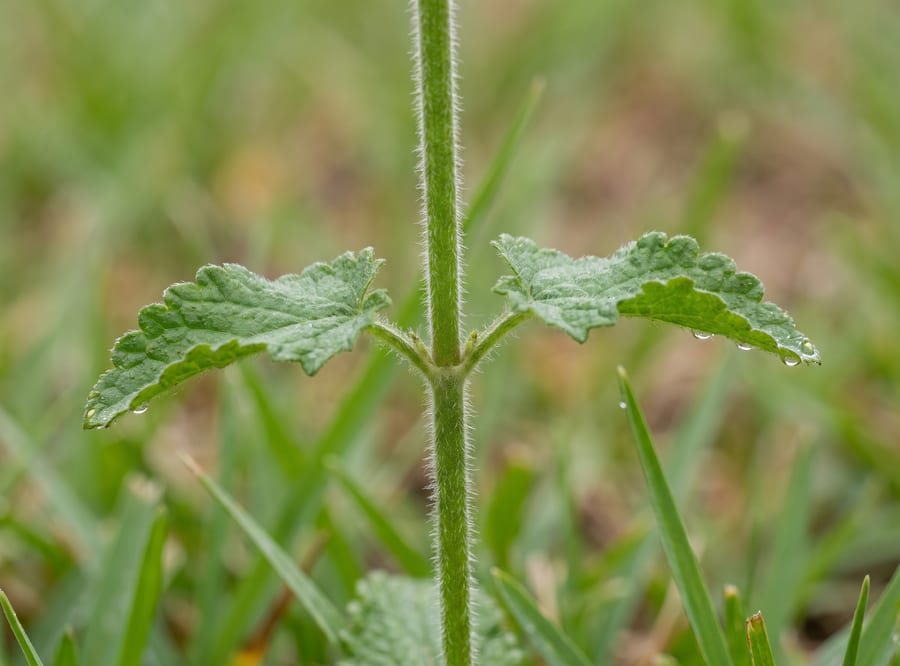
Leaves in matched pairs at every node, on a hairy stem with four flat sides. Roll the stem between your fingers — square is something you feel faster than you see.
You will also see it called rattlesnake weed, rattlesnake tail weed, Florida hedgenettle, or wild artichoke. Those last two names come from the same place as the first: the underground tubers, which are white, plump, and segmented like a rattle, and which some people do eat. That tuber is the identification that ends all argument — nothing else in a southern lawn produces it.
The mints it gets confused with
Square stems and paired leaves also describe henbit and its purple deadnettle cousin, and all three show up in the same cool months. The difference is what happens underground and what happens next: henbit is an annual with ordinary roots — it germinates, blooms, dies, and the fight is over for the year. Betony is a perennial with a tuber bank — it retreats in summer heat and comes back from storage. If a "henbit" patch returns in the same spot year after year and stands taller than you remember, dig one up and look for the rattle.
Why Betony Is a Campaign, Not One Strike
Here is the honest mechanics, because knowing it is the difference between winning and quitting. Salacia is a contact treatment: it kills the plant tissue the spray actually touches, through rapid osmotic dehydration. On an annual weed that is the whole job — touch it all, and there is nothing left to come back from.
Betony keeps a savings account. The tuber network sits below the surface, and in the loose sandy soils it loves that network can run several feet out from the plant you are looking at. A thorough treatment takes down every bit of top growth it wets, and the plant loses that season's engine — but tubers your spray never reached can still push up new shoots. That is not the treatment failing. That is the plant spending its savings.
So you treat it like a campaign, and you win it the way campaigns are won: by making the plant spend more than it can replace. Each thorough pass costs it stored energy it has to rebuild from a smaller, weaker base. Judge your progress by the regrowth, not by the calendar — sparser shoots, shorter plants, smaller patches each cycle means the account is draining. Two to four treatments across a season, repeated the following year, is what finishing it usually takes.
What "winning" looks like, season by season
Season one: Top growth goes down after each pass; new shoots appear from untouched tubers, thinner than the last. You are draining, not eradicating.
Between seasons: Betony goes dormant in summer heat. Nothing to treat, and nothing lost — this is when thick turf does your work for you.
Season two: Fewer shoots, weaker stems, patches that no longer spread. Keep the same rhythm and the patch stops being a patch.
Ready to Take Back Your Lawn?
Salacia™ is the first OMRI-certified selective organic herbicide — kills weeds, not grass. Choose your lawn size:
The Two Windows That Matter
Betony runs on the opposite schedule to your warm-season lawn, and that is the single most useful fact on this page. It wakes as soils cool, grows through the mild months while St. Augustine, bermuda, zoysia, and centipede slow down or go dormant, flowers in early spring, then retreats underground when real heat arrives.
| When | What betony is doing | Your move |
|---|---|---|
| October into winter | Waking up and growing hard while the lawn is quiet. Green and obvious against slowing turf. | Window one. The best treating of the year — it is actively growing and easy to see. |
| March into April | Second flush, flowering, rebuilding tubers for the summer sleep. | Window two. Treat before it finishes restocking underground. |
| Summer | Dormant. Top growth gone, tubers sitting tight below. | Do not spray it. There is nothing up there to treat, and the application is wasted. |
That summer line is worth repeating, because it is where most of the wasted effort in this fight goes: a summer application hits a plant that is not there. If betony has vanished from your lawn in July, it has not been beaten — it is waiting. Mark the spots and meet it in October. The daily conditions still apply the same as anywhere: a calm morning between 60 and 80 degrees Fahrenheit with no rain in the near forecast, per our timing and application guide. Southern falls and winters hand you plenty of qualifying days.
The Organic Plan, Step by Step
Salacia is the first OMRI-certified selective organic herbicide — naturally derived, Pet Friendly, made by Lanaturo. Betony is a broadleaf, which puts it squarely in what the selective rate is built for.
1. Mix the selective lawn rate
1 lb (about 3 cups) of Salacia per gallon of water, fully dissolved, tank kept agitated.
2. Drench heavily — and understand what "heavily" means
A heavy drench means more solution on the plant, not a stronger mix. Do not add extra product to the jug to punish a stubborn weed; the strength is set, and the coverage is yours. Wet every leaf, run the spray down all four sides of each square stem to where it meets the ground, and soak the soil area around the base until runoff. Betony stands tall, so work the whole plant top to bottom rather than misting the tops.
3. Know the ceiling
The non-selective rate of 1.5 lb (about 4 cups) per gallon is the strongest mix there is. Never go above it. There is no secret stronger rate for a difficult weed — past that ceiling you are wasting product, not gaining kill. When a weed is tough, the honest levers are coverage, timing, and repetition.
4. Where grass does not matter, use the faster option
In beds, gravel, fence lines, or a patch you have already decided to renovate, the non-selective rate of 1.5 lb (about 4 cups) per gallon gives the faster, harder kill. It takes down all vegetation it drenches, including your turf, so keep it off lawn you intend to keep — and expect to reseed or plug whatever you treat that way.
5. Come back, and read the regrowth
Plan the next pass when new shoots appear rather than on a fixed date. Two to four treatments across the fall and spring windows, repeated the next year, is the normal shape of this job. Weaker and sparser each time is the signal that it is working.
6. Test a small area first — every lawn, every time
The selective rate is designed to spare grass, and temporary paling or yellowing is still possible depending on rate, lawn health, and conditions. Test a small area first. The rule is the same on every turf type, warm-season or cool — no asterisks by grass type.
The Shovel Mistake, and What to Do Instead
The instinct with a tuber weed is to dig it out, and with betony that instinct backfires harder than almost anywhere else in the lawn. Tubers and runners snap easily, and fragments left in the soil start new plants. A half-dig does not remove an infestation; it divides one and plants the pieces. If you are going to dig at all, it has to be a complete lift of the soil volume around the plant — which in sandy ground, where the network runs several feet, usually means moving more dirt than the patch is worth. For most lawns, treating the top growth on schedule is both easier and more effective than a shovel.
Two more things that decide whether it comes back:
It arrives with new plants
Betony spreads readily in nursery stock — the tubers ride along in container soil. New bed going in near the lawn? That is a common entry point, and worth a look at the root ball before it goes in the ground.
It moves into thin ground
Bare and weak turf is the opening. Feeding on a real schedule, mowing at the higher end of your grass type's range, relieving compaction, and overseeding or plugging thin spots all close doors — and unlike spraying, they work while betony is asleep in the summer.
Betony also keeps company. The same cool window brings the rest of the southern winter roster, and if you are out there with a tank you may as well take the whole crew in one pass.
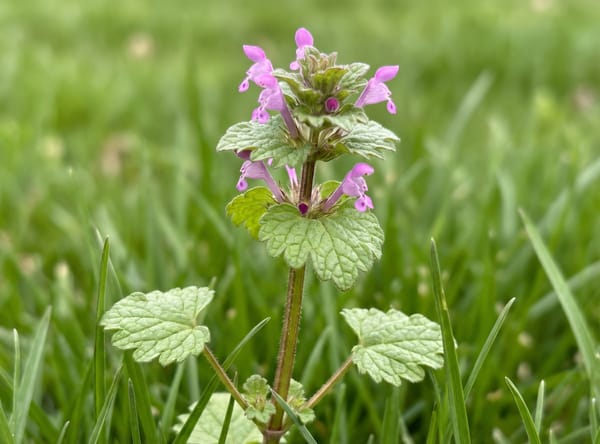
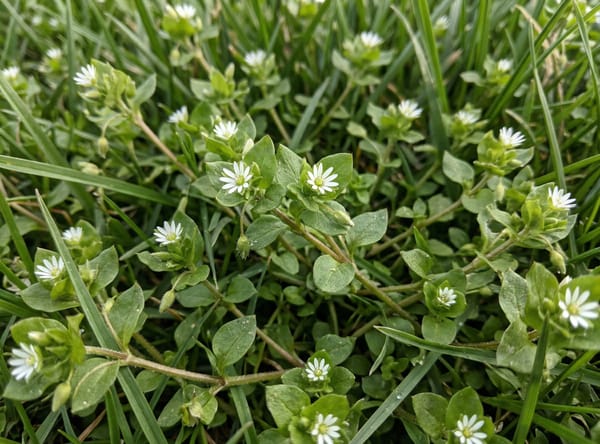
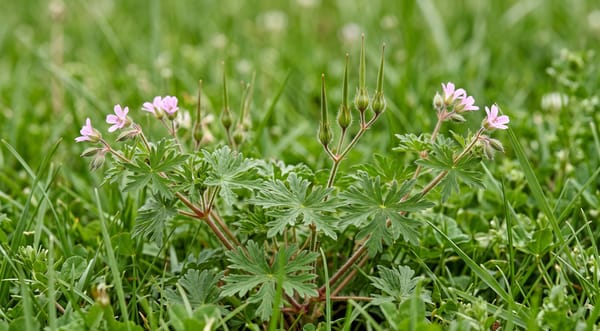
All broadleafs, all answering to the same selective pass. The one on the winter roster that plays by different rules is poa annua, a grassy winter annual no product lifts selectively out of a living lawn — it gets an honest plan of its own. And if your lawn's spring problem is spiny stickers rather than tall flowering stems, that is lawn burweed, another winter weed with a very different deadline.

Lanaturo
Intelligence
Not sure which weed you're looking at? Show Sal.
Sal is the lawn-care brain behind Lanaturo Intelligence. He doesn't just name the weed — he builds your exact treatment plan and checks whether today is the right day to spray.
The whole betony plan, in one breath
Confirm it by the rattle — or ask Sal from a photo. Treat in the fall and early spring windows, never in summer. Drench heavily at the selective rate, all four sides of every stem and the soil around the base, and never mix stronger than the non-selective ceiling. Come back when shoots return, and read them: weaker each time means you are winning. Leave the shovel alone. The rest of the southern picture lives in our Florida lawn weeds guide, the ranked treatment comparison in our guide to weed killers that won't kill grass, and the year-round fundamentals in the full weed control guide.
Where Florida Betony Grows Most
Florida betony is a Southeastern coastal-plain weed — Florida, Georgia, Alabama, Mississippi, South Carolina, North Carolina and eastern Texas — and it has been spreading north and west through the region for decades, largely in nursery stock and fill soil.
It is a cool-season perennial in a warm-season landscape, which is what makes it awkward: it is most active from autumn through spring while St. Augustine, centipede and bermuda lawns are slowing down or dormant, then dies back in summer heat and looks solved. It is not solved. The white segmented tubers underground carry it to the next cool season.
Treat it while the top growth is actively growing in the cool months, and judge progress by regrowth coming back thinner across seasons rather than by any single application clearing it. At the selective lawn rate Salacia targets it while being designed to spare grass; temporary paling or yellowing of nearby turf is possible and recovers. Always test a small area of your lawn first. Not sure what you are looking at? Sal will identify it from a photo.
Ready to Take Back Your Lawn?
Salacia™ is the first OMRI-certified selective organic herbicide — kills weeds, not grass. Choose your lawn size:
Drain the Account
Betony is not a hard weed to kill. It is a patient one — and patience is beatable, because every thorough pass in the right window costs it stored energy it has to rebuild from less. Work the fall, work the spring, skip the summer, and let the regrowth tell you how the campaign is going.
OMRI certified organic · Pet Friendly · Always test a small area first
Two seasons of the right timing beats ten of the wrong.
This article is for informational purposes. Always follow product label directions for application rates, timing, and use.