
 By Pat Kelly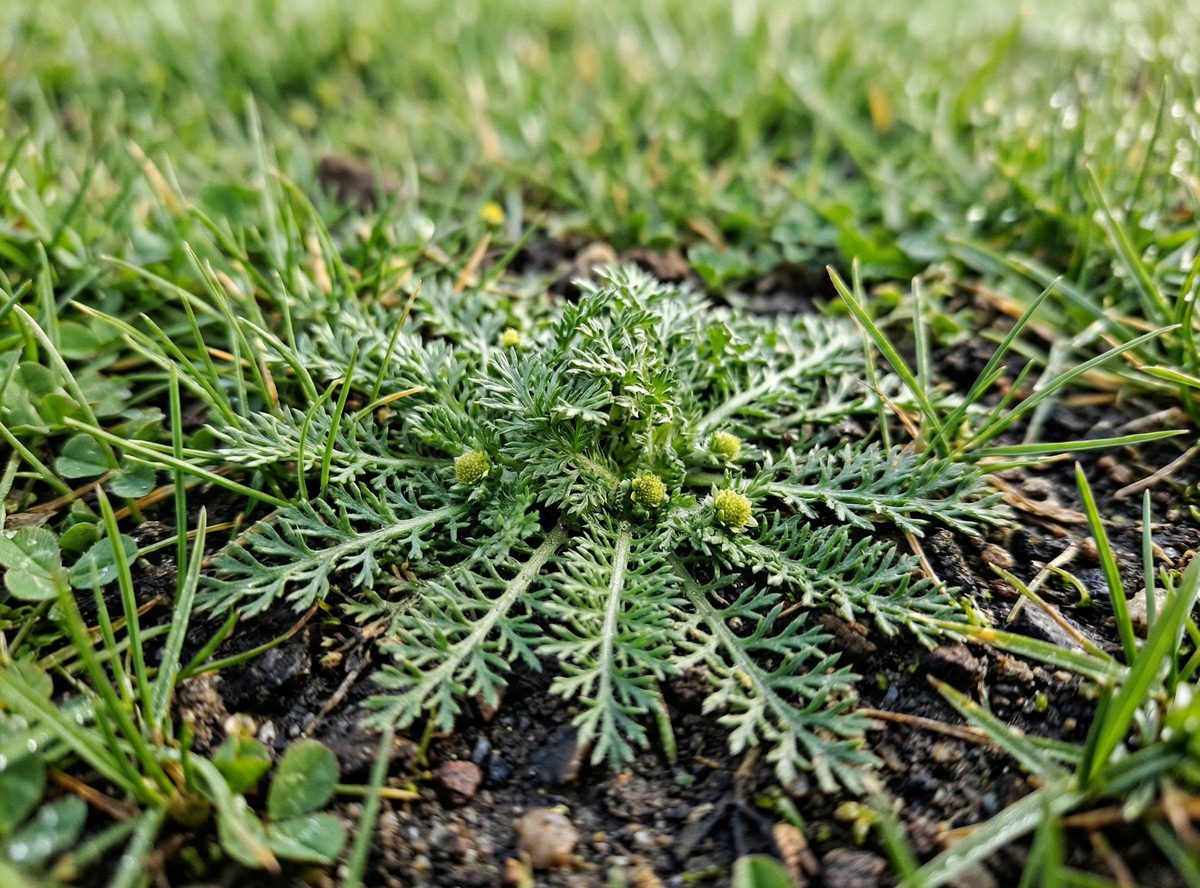
Nobody goes looking for lawn burweed. They step on it. By then it's May, the kids won't cross the yard barefoot, and the soft little fern-looking plant you mowed over all winter without a second thought has turned into a minefield of spine-tipped burs. Here's the part that changes everything: burweed is easy to kill — it is just easy to kill early. The entire fight happens months before you can feel it, while the plant is flat, tender, and completely harmless.
The short answer: Treat lawn burweed while it's a young winter rosette — December through February in most of the South, and as soon as you can see it wherever you are. Mix Salacia at the selective lawn rate of 1 lb (about 3 cups) per gallon, and drench under the flat canopy until runoff — this is a mat-former, so surface-only spray misses it. It's a broadleaf weed, so the selective rate targets it while being designed to spare your grass; always test a small area first. Wait until you feel stickers and the seed is already set.
Not sure that's what you have?
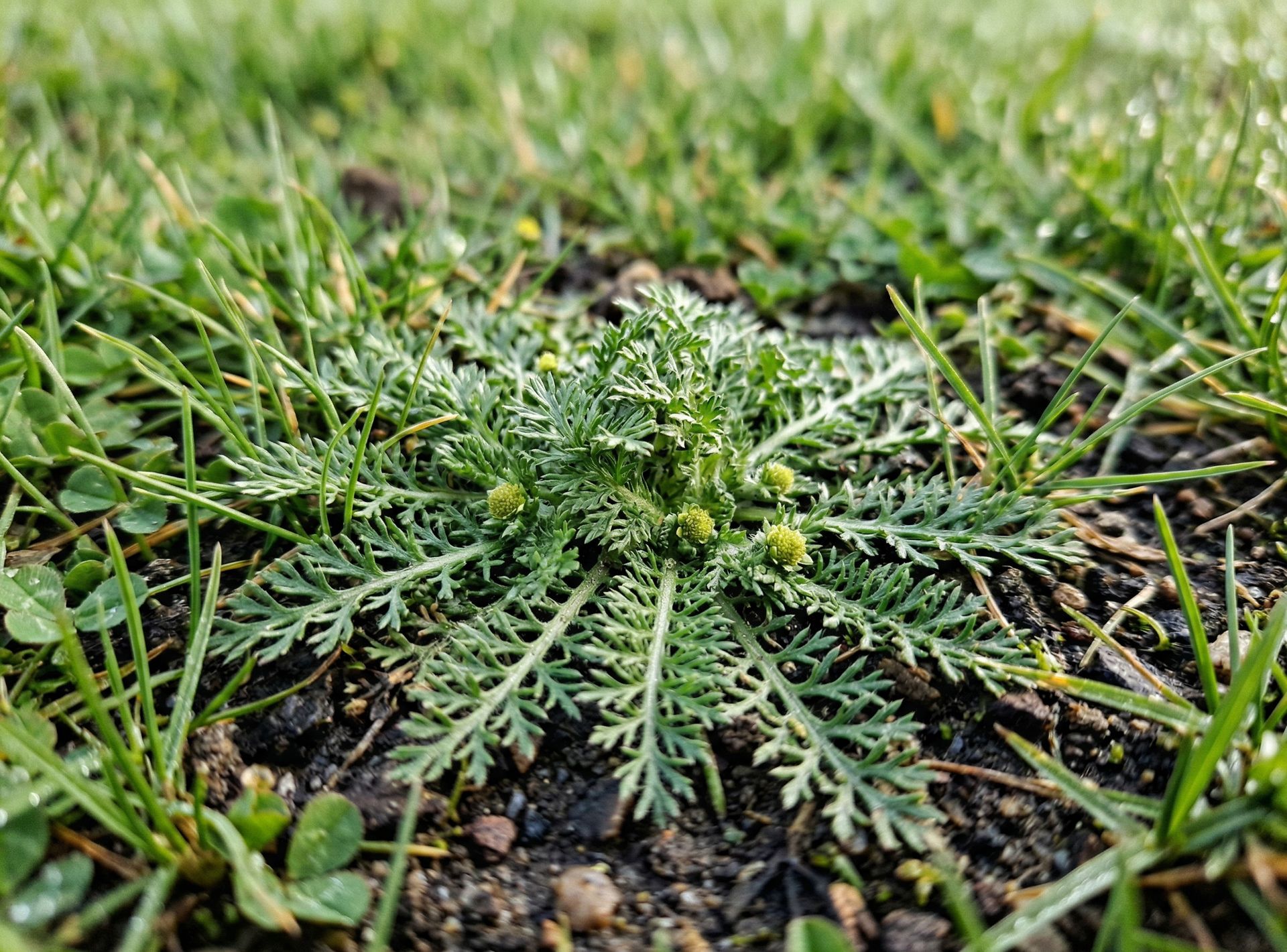
Flat rosette, leaves cut as finely as parsley or a carrot top, hugging the ground in a thin spot? That's the profile. Snap a photo and send it to Sal, our free weed-ID assistant, right on this page — an ID in winter is worth ten in spring. See how Sal works →
Is It Burweed? (And What It Isn't)
Lawn burweed (Soliva sessilis) is a low winter annual that grows in a flat rosette pressed against the soil. The giveaway is the leaf: finely divided, almost lacy, like a small parsley or carrot top spread out in a circle. It stays under mower height its whole life, which is exactly why it survives — you cannot mow a plant that never stands up.
It travels under a pile of names, and they all describe the same plant: spurweed, sticker weed, bindii or bindi weed, and — misleadingly — stinging grass. That last one is worth correcting, because it sends people down the wrong road: burweed is not a grass at all. It's a broadleaf weed, which is the entire reason a selective treatment can lift it out of a living lawn.
The one confusion that costs a whole season
Burweed is not a sandbur. They both leave you picking spines out of your foot, so people treat them the same way and lose. Sandburs are a grass on a summer cycle — they germinate in warm soil and sticker up in late summer. Burweed is a broadleaf on a winter cycle — it germinates in cool fall soil and stickers up in spring. Work the wrong calendar and you spray an empty lawn in July while next year's burweed is quietly germinating in October. If you're unsure whether your problem is a grassy weed or a broadleaf one, our grass-lookalike ID guide sorts the impostors with one tell each.
The burs themselves form at the center of the rosette, tucked in where the leaves meet the stems. Early on they're small, green, and soft. That is your window, and it closes quietly: they harden into the sharp, spine-tipped seed pods that end barefoot season without ever changing the plant's size or shape enough for you to notice.
The Window: Win in Winter
Burweed is a winter annual, and its whole life runs opposite to your lawn's. It germinates as soils cool in fall, grows all winter while warm-season grass slows down or goes dormant, sets its burs as spring warms, and dies in the first real summer heat — leaving its seed behind for the next fall. Your grass is at its weakest exactly when burweed is at its most active. That sounds like bad news. It's the opposite.
| When | What burweed is doing | Your move |
|---|---|---|
| Fall | Germinating in cooling soil. Seedlings tiny, often invisible in the turf canopy. | Scout the spots that hurt last spring. Treat as soon as you can see rosettes. |
| Winter (Dec–Feb) | Flat green rosettes, growing steadily, no burs yet. Soft, tender, fully exposed on slow turf. | The kill window. Selective rate, drench under the canopy. This is the whole game. |
| Early spring | Burs forming at the crown — green and soft, then hardening fast. | Last honest chance. Treat immediately; expect burs already made to stay in the lawn. |
| Late spring | Spines hardened. Seed set. Damage done. | Too late to save this season. Mark the spots and meet it in fall. |
| Summer | Plant dies in the heat. Burs remain in the turf. | Build turf density — that's next year's real defense. |
The reason winter works so well is visibility plus tenderness. On a slowed-down warm-season lawn a green rosette advertises itself against tan dormant turf, and a young plant that hasn't spent anything on seed yet has nothing in reserve. Cool-weather applications still work — they simply take longer to show, which our timing and application guide explains in full. Patience in January beats effort in April.
Ready to Take Back Your Lawn?
Salacia™ is the first OMRI-certified selective organic herbicide — kills weeds, not grass. Choose your lawn size:
The Organic Plan, Step by Step
Salacia is the first OMRI-certified selective organic herbicide — naturally derived, Pet Friendly, made by Lanaturo — and it works on contact, killing what it touches through rapid osmotic dehydration. Burweed is a broadleaf, which puts it squarely in what the selective rate is built for.
1. Mix the selective lawn rate
1 lb (about 3 cups) of Salacia per gallon of water. Dissolve it fully and keep the tank agitated so the mix stays even from the first spray to the last.
2. Get under the canopy — this is the step that decides it
Burweed grows as a flat mat with hidden stems and a crown pressed into the soil. A pass across the top of the lawn wets the grass and misses the weed. Angle the wand low, part the turf, and drench the foliage, the stems, and the soil ring around the base until runoff. If the spray doesn't touch it, it doesn't kill it — coverage is the number one factor in your result, and on a mat-former it's nearly the only one.
3. Pick the window twice over
The seasonal window is winter, before burs form. The daily window is a calm morning between 60 and 80 degrees Fahrenheit with no rain in the near forecast. Southern winters hand you far more qualifying days than northern ones — midday often counts.
4. One thorough drenching, then check your work
Usually one good drenching application kills what it touches. Walk the treated area afterward and look for rosettes you shaded or skipped — on a weed this flat, the misses are the only thing that comes back.
5. Test a small area first — every lawn, every time
The selective rate is designed to spare grass, and temporary paling or yellowing is still possible depending on rate, lawn health, and conditions. Test a small area first and let it tell you what to expect. That rule is the same on every turf type, warm-season or cool — St. Augustine, bermuda, zoysia, centipede, fescue. No asterisks by grass type.
For burweed in gravel, driveways, walkway cracks, and fence lines — anywhere grass doesn't matter — the non-selective rate of 1.5 lb (about 4 cups) per gallon takes down all vegetation it drenches. Never use it on turf you want to keep.
Straight Talk: The Stickers Outlive the Plant
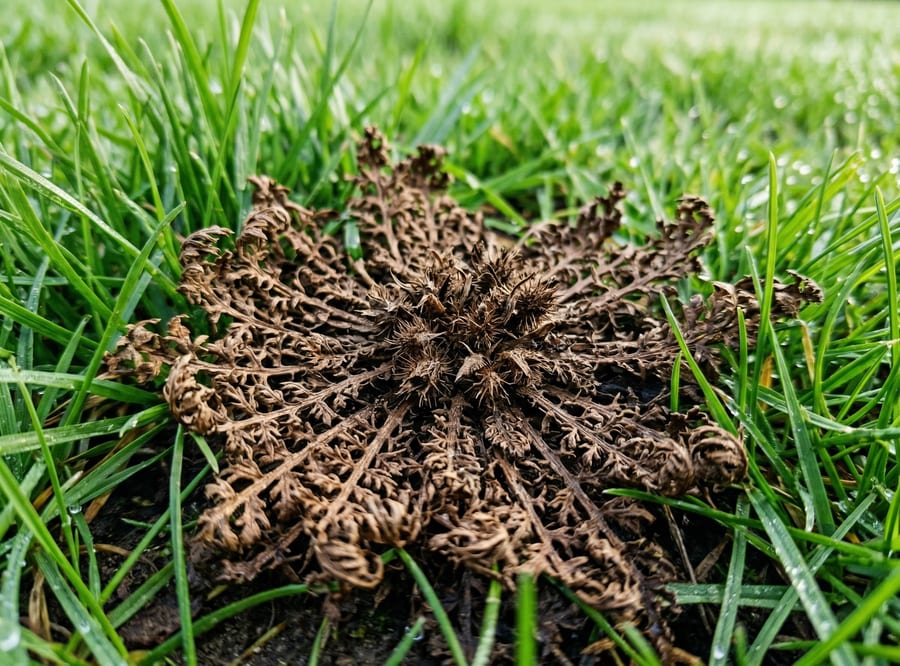
A treated burweed rosette: the plant is finished, the grass around it is untouched — and the burs are still sitting there. That's physics, not failure.
This is the thing we would rather tell you now than have you discover in your driveway: burs that have already formed stay sharp in the lawn after the plant that made them is dead. They are hardened seed pods sitting in the turf. Killing the plant stops it from making more and stops it from seeding next year's crop — it does not dissolve the ones already built.
So if you treat in March and the lawn still stings in April, the treatment did not fail. You are walking on old burs. They break down and work into the soil over the following weeks and months, and mowing, raking, and rain move the process along. But the honest version is this: the only way to have a sticker-free spring is to kill burweed before spring. Everything else is cleanup.
What a well-timed winter treatment actually buys you
No burs at all this year — because you killed the plant before it built any.
Far less pressure next year — every rosette killed in January is a seed bank that never got a deposit.
A lawn you can hand back to bare feet — which is the entire point of the exercise.

Lanaturo
Intelligence
Not sure which weed you're looking at? Show Sal.
Sal is the lawn-care brain behind Lanaturo Intelligence. He doesn't just name the weed — he builds your exact treatment plan and checks whether today is the right day to spray.
Why It Chose Your Lawn
Burweed is an opportunist, and its opportunity is thin turf. It colonizes the places where grass has given up ground — worn paths, the strip along the driveway, hard compacted soil, shady patches, anywhere sunlight reaches bare dirt in the fall. Dense turf is genuinely hostile to it: a seed that lands in a thick, closed canopy rarely gets the light it needs to establish.
That makes your long game simple, if not fast. Feed and water the lawn on a real schedule, mow at the higher end of your grass type's range so the canopy shades the soil, relieve compaction where foot traffic has packed it down, and overseed or plug the thin spots before fall — not after. Each of those closes doors that burweed has been walking through.
Burweed also rarely comes alone. The same cool-season window that brings it delivers the rest of the winter roster — and if you are already out there with a tank, you may as well take the whole crew in one pass.
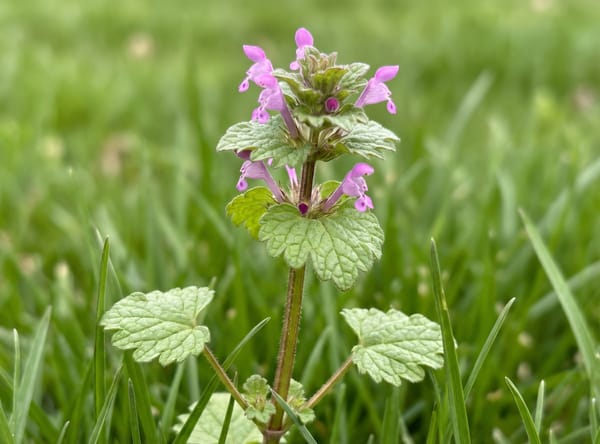
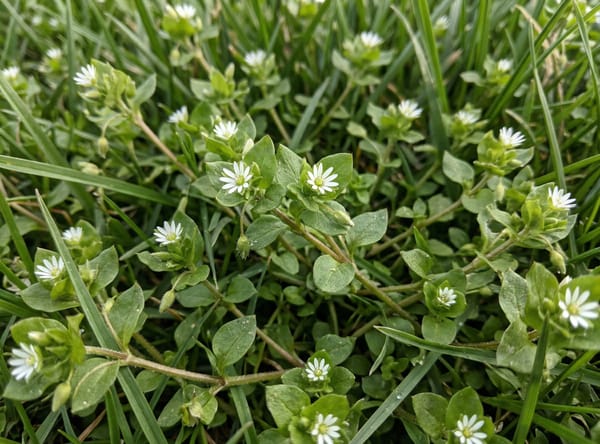
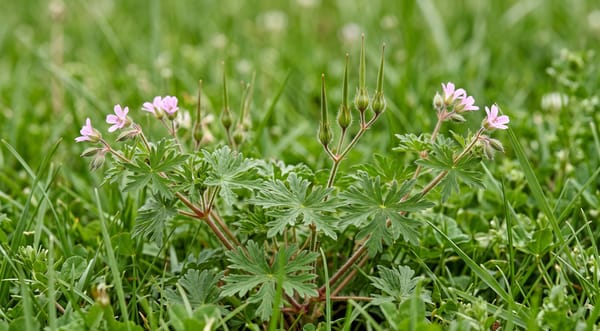
All three are broadleafs, which means they answer to the same selective winter pass that takes burweed. The exception on the winter roster is poa annua — a grassy winter annual that no product removes selectively from a living lawn, and that gets an honest plan of its own instead of an overpromise.
Regionally, burweed is a southern staple: it runs through Gulf-state and Southeast lawns from the Carolinas to Texas. The state-level picture lives in our Florida lawn weeds guide and our Texas weed guide, and the grass-specific playbooks in the St. Augustine and bermuda guides.
The whole burweed plan, in one breath
Identify it flat and green in winter — Sal will confirm it from a photo. Treat at the selective rate, under the canopy, before burs form. Accept that old burs stay until they break down. Then spend the rest of the year building turf so thick that next fall's seed never finds an opening. The ranked look at treatments that spare grass is in our guide to weed killers that won't kill grass, and the year-round fundamentals live in the full weed control guide.
Where Lawn Burweed Grows Most
Lawn burweed is a Gulf and Southeast weed — Florida, Georgia, Alabama, Mississippi, Louisiana, Texas, and the Carolinas — and it reaches up through Tennessee and Arkansas wherever winters stay mild. It is a winter annual, so its range is set by how cold the winter gets, not by soil or grass type.
It germinates in cooling autumn soil, grows flat and soft all winter while warm-season lawns are dormant, then hardens its spine-tipped burs as spring warms and dies out in summer. That calendar is why it catches people: the lawn looks fine in January and turns painful in April, and by then the burs are already built.
The whole game is treating it while it is still a soft green rosette, which in most of the South means December through February. At the selective lawn rate Salacia targets it while being designed to spare grass; temporary paling or yellowing of nearby turf is possible and recovers. Always test a small area of your lawn first. Not sure what you are looking at? Sal will identify it from a photo.
Ready to Take Back Your Lawn?
Salacia™ is the first OMRI-certified selective organic herbicide — kills weeds, not grass. Choose your lawn size:
Kill It While It's Still Soft
Burweed gives you a long, quiet, generous window and almost nobody uses it. Put a treatment on the flat green rosettes this winter and you will spend next spring not thinking about burweed at all — which is exactly how a solved weed is supposed to feel.
OMRI certified organic · Pet Friendly · Always test a small area first
Barefoot season is won in January.
This article is for informational purposes. Agronomic references: Clemson Home & Garden Information Center — Lawn Burweed, NC State Extension Plant Toolbox — Soliva sessilis, and Texas A&M AggieTurf — Lawn Burweed. Always follow product label directions for application rates, timing, and use.