
 By Pat Kelly
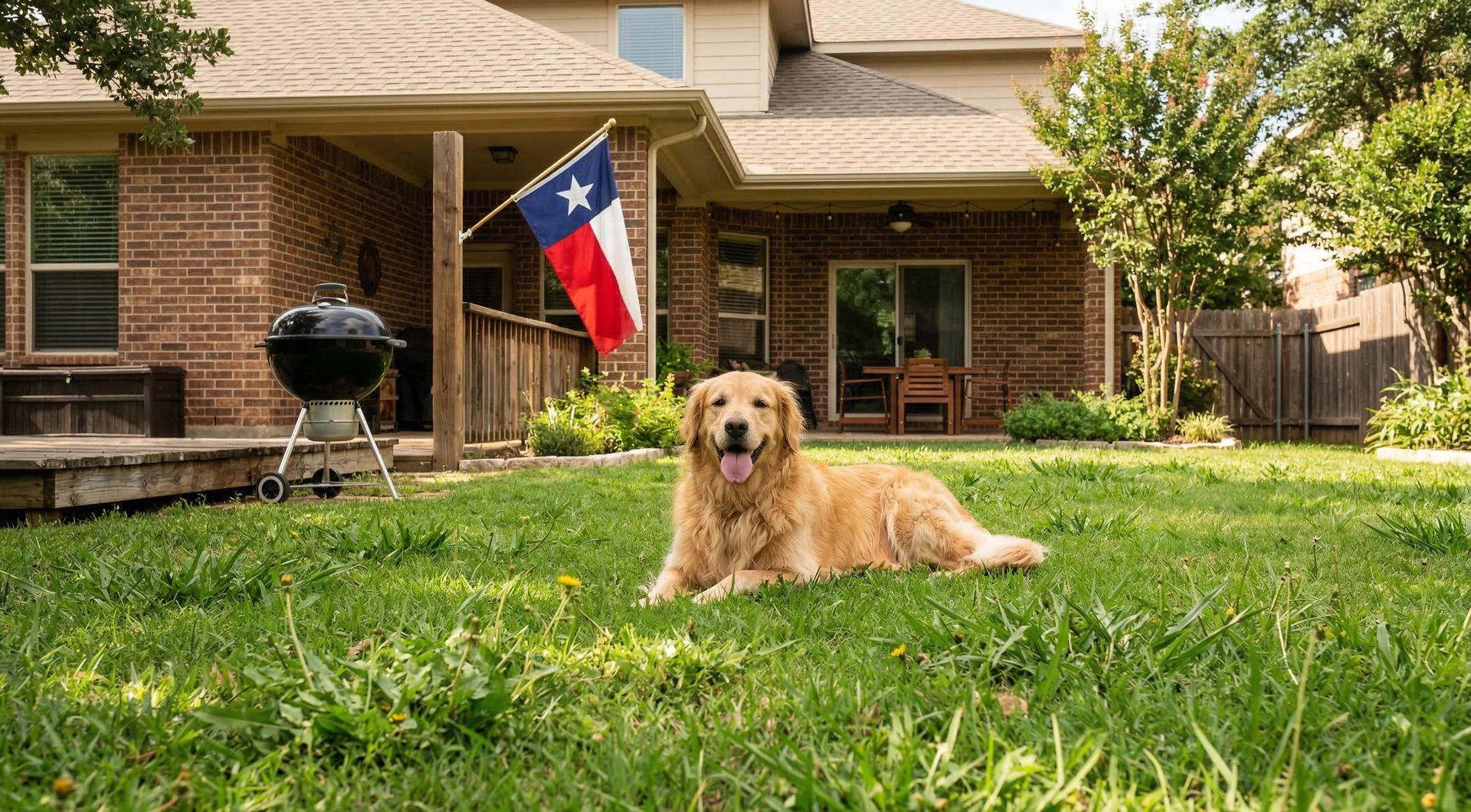
 It's March in Texas. Your Bermuda is still brown. Your St. Augustine is barely waking up. But something green is growing out there — and it's covered in purple flowers.
That's henbit. And it's just getting started.
From the new subdivisions going up in Frisco and McKinney to the established neighborhoods of Plano and Aledo, from the limestone hills around Austin and San Marcos to the humidity-soaked yards of Houston, Texas homeowners fight a weed war unlike any other state. The growing season is longer. The soil is harder. The HOAs are stricter. And if you have a dog — which 43% of Texas households do — you need solutions that won't put your family at risk.
This guide covers the seven worst broadleaf weeds destroying Texas lawns right now, broken down by region, grass type, and exactly how to treat each one organically with Salacia — the first OMRI-certified selective herbicide on the market.
Why Texas Lawns Have It Harder Than Anywhere Else
Texas isn't a state with a weed problem. It's a state where the weeds have a homeowner problem.
Here's what you're up against:
- Your grass sleeps while weeds attack. Bermuda and St. Augustine go dormant in winter. But cool-season weeds like henbit and chickweed thrive in exactly those conditions — moving in while your lawn can't fight back.
- Clay soil everywhere. From the heavy clay of North Texas to the caliche and limestone of Central Texas, compacted soil weakens root systems and gives weeds the advantage.
- Water restrictions. Cities like San Antonio enforce four drought stages. Under-water your lawn and the turf thins. Thin turf means weeds win. But you'll get fined for over-watering. And you'll get an HOA letter for the weeds. You're trapped.
- A growing season that starts earlier than anywhere else. In South Texas, weeds begin growing in February. By the time the rest of the country is thinking about spring, Texas lawns are already under siege.
Texas Isn't One Lawn — It's Five
The weeds in your yard depend on where in Texas you live, what grass you have, and what your soil looks like. Here's the landscape:
North Texas (DFW Metroplex)
Towns: Plano, Frisco, McKinney, Allen, Forney, Aledo, Celina, Princeton
Grass: Bermuda dominates. Some Zoysia in shaded yards.
Soil: Heavy clay, high pH, compacts fast.
The reality: DFW is home to five of the eleven fastest-growing cities in America. New construction everywhere means new lawns — thin, young turf on compacted builder-grade soil. Henbit and chickweed carpet these yards from November through April while the Bermuda sleeps. Then come the HOA letters.
Central Texas (Austin Corridor)
Towns: Austin, San Marcos, Temple, Round Rock, Cedar Park, Georgetown
Grass: Mix of Bermuda, St. Augustine, some Buffalo grass.
Soil: Limestone and caliche. Alkaline. Drains fast.
The reality: Austin is called the Allergy Capital of the World — with the highest cedar pollen counts of any plant anywhere on Earth. Homeowners here already associate plant growth with misery. Then ragweed hits in summer. And Austin's organic lawn care movement is booming — neighborhoods from South Congress to Round Rock want chemical-free solutions.
Houston & Gulf Coast
Towns: Houston, Katy, Sugar Land, The Woodlands, Pearland
Grass: St. Augustine is king. Some Zoysia.
Soil: Heavy clay, poor drainage, standing water after storms.
The reality: Humidity above 85% in summer. Standing water breeds dollarweed, clover, and chickweed. And St. Augustine is notoriously sensitive to synthetic herbicides — many broadleaf products damage it. Houston homeowners need selective weed control that's safe on their grass type.
West Texas & Panhandle
Towns: Abilene, Lubbock, Midland, Odessa, Amarillo
Grass: Native Buffalo grass. Some Bermuda.
Soil: Sandy, dry, nutrient-deficient.
The reality: This is sandbur and goathead country — the weeds with spines that puncture bike tires, embed in dog paws, and make kids cry at the community pool. Broadleaf weeds like dandelions and thistle also thrive on the thin, drought-stressed turf. Every drop of irrigation money matters out here.
South Texas
Towns: San Antonio, Laredo, McAllen, Corpus Christi
Grass: Bermuda, St. Augustine, Buffalo grass.
Soil: Caliche near San Antonio, sandy near the coast.
The reality: Weeds start growing in February here. By the time North Texas homeowners are thinking about pre-emergent, South Texas lawns are already overrun. San Antonio's SAWS drought restrictions create a cruel paradox: you can't water enough to maintain thick, competitive turf, but you'll get fined for the weeds that move into the thin spots.
1. Henbit — The Purple Invasion
Type: Winter annual
Active season: October through April
Worst in: North Texas, Central Texas
Attacks: Bermuda, Zoysia, any dormant warm-season grass
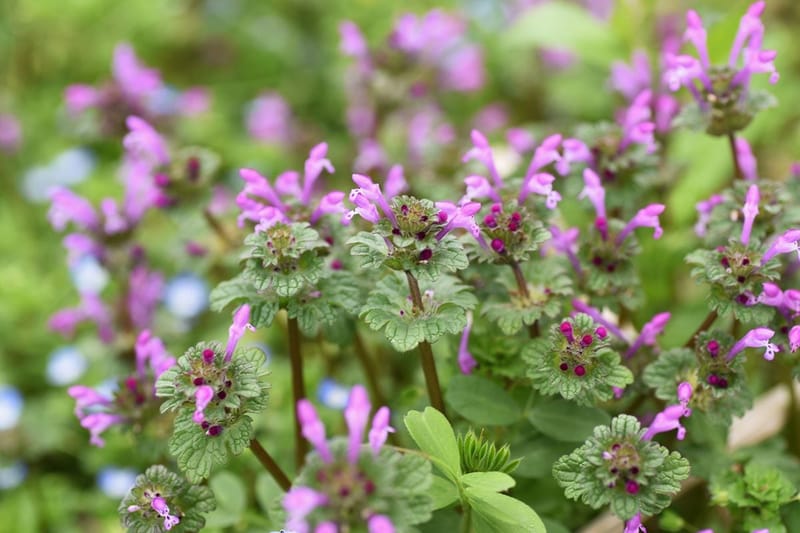
If you've seen a carpet of small purple flowers covering your lawn between January and April, that's henbit. It's the weed that drives Texas homeowners crazy — and it's far more aggressive in Texas than most other states because of the mild winters.
Henbit germinates in fall when your Bermuda starts going dormant. It grows quietly through winter. Then in early spring it explodes with purple flowers and drops up to 2,000 seeds per plant. By the time your grass greens up in April, the damage is done — the seeds are in the soil waiting for next year.
Why it's worse in DFW: The heavy clay soil stays moist in winter. New construction neighborhoods in Frisco, McKinney, Celina, and Princeton have thin, young turf that offers zero competition. Square stems poking through brown Bermuda is the defining visual of a North Texas lawn in March.
How to treat with Salacia: Selective rate (3 cups per gallon). Henbit forms upright clusters with square stems — spray all foliage, stems, and the soil area around the base until runoff. Get full coverage including the lower leaves that hide near the ground. Salacia's contact-based dehydration collapses the plant tissue without harming your dormant or greening-up Bermuda. Always test a small area of your lawn first.
Full guide: Purple Weeds in Your Lawn: Identify & Kill Them Organically
2. Dandelion — Deep Roots in Texas Clay
Type: Perennial
Active season: March through November (year-round in South TX)
Worst in: Statewide — every region
Attacks: All grass types
You already know the dandelion. Yellow flower, puffy seed head, every kid's first bouquet. But in Texas, the dandelion is a different beast.
The taproots grow 6 to 12 inches deep in North Texas clay. Pull one and you'll snap the root — and it regrows from whatever's left underground. In Central Texas limestone, the roots wedge into cracks in the rock. You can hand-pull for an hour on a Saturday and still see yellow flowers by Wednesday.
Dandelions appear in DFW from April through June when the flower heads mature and seeds scatter on the wind. In San Antonio and the Valley, they can bloom nearly year-round.
How to treat with Salacia: Selective rate (3 cups per gallon). Crown pooling is essential — spray the leaves generously until runoff, then pool solution directly in the crown (the center rosette where the leaves meet the root). Blanket spraying alone won't control dandelions. Each plant needs that direct crown shot. Salacia dehydrates the crown tissue, collapsing the plant's connection to the taproot.
Full guide: How to Kill Dandelions in Your Lawn | Technique deep-dive: The Crown Technique
3. Clover — The HOA Nightmare
Type: Perennial
Active season: Spring through fall
Worst in: North Texas (nitrogen-depleted clay), Houston (wet yards)
Attacks: Bermuda, St. Augustine
Some people think clover is charming. Your HOA disagrees.
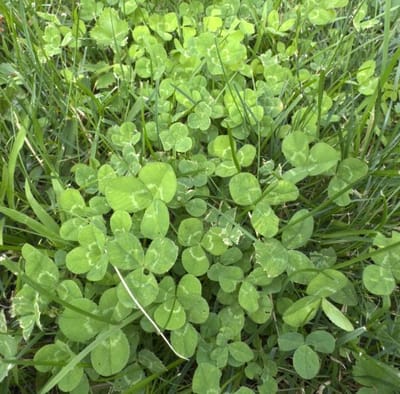
White clover creeps into lawns where the soil is low on nitrogen — which describes most of North Texas. Those three-leaf clusters and white flower heads create a patchy, uneven look that shows up immediately against Bermuda. And in Houston's wet, heavy-clay yards, clover spreads aggressively in the areas where water pools after afternoon thunderstorms.
The real problem: clover forms dense mats that smother the grass beneath them. Left alone, it doesn't just look bad — it weakens the turf and opens the door to other weeds.
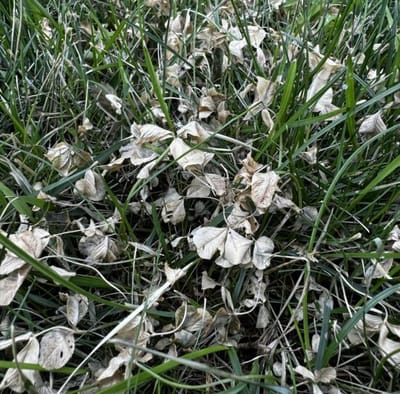
How to treat with Salacia: Selective rate (3 cups per gallon). Clover forms dense mats — you need to get UNDER the canopy, not just spray the top surface. Target the stems, undersides of leaves, and the soil area around the base. The hidden growth underneath is what comes back if you only treat the surface. Thorough, drenching application until runoff is the key.
Full guide: How to Kill Clover in Your Lawn Without Killing Grass
4. Chickweed — The Winter Assassin
Type: Winter annual
Active season: November through May
Worst in: North Texas, Houston (shaded yards), Central Texas
Attacks: All grass types in shade and moist areas
Chickweed is henbit's partner in crime. While henbit takes the sunny spots, chickweed dominates the shade — under trees, along fence lines, the north side of the house. It forms low, dense mats of small white star-shaped flowers that suffocate the grass beneath.
In Houston, chickweed invades St. Augustine lawns in the shaded, perpetually moist areas under live oaks. In DFW, it colonizes the north-facing sides of yards where the Bermuda struggles anyway. The mat-forming habit means it doesn't just outcompete your grass for sunlight — it physically smothers it.
How to treat with Salacia: Selective rate (3 cups per gallon). Chickweed forms dense, low-growing mats — the key is getting UNDER the canopy. Spray stems, undersides of leaves, and the soil area around the base. Surface-only spray misses the hidden growth that drives regrowth. Lift edges of the mat if you can and drench thoroughly.
Full guide: How to Kill Chickweed Without Killing Grass
5. Thistle — Texas's Native Weapon
Type: Biennial
Active season: Rosette in winter, flowering stalk in spring
Worst in: Statewide — Texas Thistle (Cirsium texanum) is native
Attacks: All grass types, pastures, fence lines
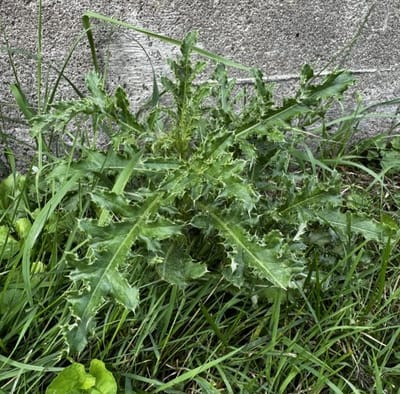
Texas has 10 native thistle species. Texas Thistle can grow 2 to 5 feet tall. The spiny leaves will draw blood if you grab one barehanded. The deep taproot anchors into DFW's clay soil like a bolt.
Thistle is worse than a visual problem — it's a safety problem. Kids step on the rosettes barefoot. Dogs roll into the spines. And if you let one go to seed, the wind carries those seeds across your entire property.
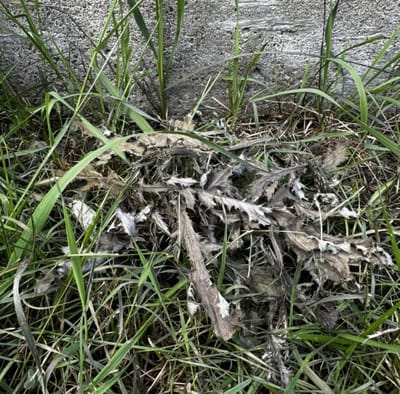
How to treat with Salacia: Non-selective rate (4 cups per gallon) applied precisely on the thistle foliage, stems, and crown. Get full coverage on all leaf surfaces and drench the crown area. Do NOT blanket spray — use precision application to preserve surrounding grass. Salacia dehydrates the spiny leaves and stem tissue, collapsing the plant from the crown down.
Full guide: How to Get Rid of Thistle in Your Lawn
6. Ground Ivy (Creeping Charlie) — The Creeper That Won't Quit
Type: Perennial
Active season: Year-round in mild climates
Worst in: Shady yards across North and Central TX
Attacks: All grass types in shaded, moist conditions
Ground ivy smells like mint when you mow it. That's the only pleasant thing about it.
It spreads by creeping stems (stolons) that root at every node, creating a dense, interconnected mat that hides pests and disease underneath. In Texas, it targets the shaded, moist areas where your warm-season grass already struggles — under trees, behind garages, along creek beds.
What makes it maddening: pull a piece and you leave the runners behind. Those runners regenerate into new plants within days. Conventional herbicides struggle because the waxy leaf surface sheds product before it can absorb.
How to treat with Salacia: Selective rate (3 cups per gallon). Get UNDER the canopy. Lift mat edges if needed and spray stems, undersides of leaves, and the soil area beneath. The hidden runners underneath drive regrowth if you only treat the surface. Drench thoroughly until runoff.
Full guide: How to Kill Ground Ivy (Creeping Charlie) Organically
7. Wild Violet — Pretty Until It Isn't
Type: Perennial
Active season: Spring through fall
Worst in: East Texas, shaded yards in DFW and Houston
Attacks: All grass types in shade and partial shade
Wild violet produces delicate purple flowers in spring that look almost decorative. People leave it alone. Then by summer, it's colonized half the yard through aggressive underground rhizomes and self-seeding.
The leaves are thick and waxy — which is the real problem. Most herbicides bead right off the surface. Wild violet shrugs off treatments that kill everything else. It's the weed Texas homeowners describe but can't name: "I've got this purple flower thing that nothing kills."
How to treat with Salacia: Selective rate (3 cups per gallon). Wild violet's waxy leaves mean thorough drenching coverage is critical. Get the undersides of leaves where the wax coating is thinner. Spray stems and the soil area around the crown. Salacia's contact-based mode of action works on the tissue directly — it doesn't need to be absorbed through the wax to work.
Full guide: How to Kill Wild Violet in Your Lawn
Ready to Take Back Your Lawn?
Salacia™ is the first OMRI-certified selective organic herbicide — kills weeds, not grass. Choose your lawn size:
The Ones That Aren't Broadleaf: Grassy Invaders and Sedges
Every weed above is a broadleaf — the category a selective organic herbicide can pull out of a lawn while the grass is preserved. But Texas lawns host a second family that needs a completely different playbook, because no selective product on earth — ours included — can remove one grass from another:
- Crabgrass — the summer sprawler of hot, thin edges statewide. The honest fix is prevention on the warm-season calendar (the soil warms far earlier here than northern timing charts assume). Our organic crabgrass guide covers the southern split-window timing.
- Dallisgrass — the coarse, clumping impostor half of Texas calls crabgrass. Different plant, same honest answer: identification first, then culture — see weeds that look like grass.
- Nutsedge ("nutgrass") — the shiny, fast-rising spikes in Houston's soggy clay. It's a sedge, not a grass, and its presence is a drainage report about your yard: our nutsedge guide is the drainage-first battle plan.
New on the Texas radar: two more southern specialists we've profiled in depth — chamberbitter, the "little mimosa" that erupts in humid southeast-Texas lawns each June once soil passes 70°F, and Carolina geranium, the lacy winter annual that joins henbit and chickweed in the November-to-April window statewide.
The Pet Problem Nobody Talks About
Texas is a dog state. 43% of Texas households own a dog — an average of 1.7 dogs per household. Labs, German Shepherds, and Bulldogs are the most popular breeds. These aren't apartment dogs. They live in backyards. They roll in the grass. They eat things they shouldn't.
And here's the problem most Texas lawn guides won't tell you:
- Synthetic broadleaf herbicides come with re-entry restrictions. In a state where families live outside nine months a year, keeping a dog off the lawn after every treatment is a non-starter.
- 2,4-D — the most common broadleaf herbicide in Texas — is linked to increased cancer risk in dogs according to research published in Environmental Health Perspectives. Your dog walks on it. Licks their paws. Absorbs it through paw pads. Every application is a gamble.
- Most organic alternatives are non-selective. They burn the weed — and your grass along with it. So you trade a weed problem for a bare-dirt problem, which guarantees more weeds next season.
This is exactly why Salacia exists. It's Pet Friendly — stated on the label. It's OMRI certified organic. And it's selective — it targets the broadleaf weeds while preserving your Bermuda or St. Augustine. Let the treated area dry before allowing pets back — not because of safety concerns, but because animals may be attracted to lick it, which could affect results on the weeds.
Deep dive: Pet Friendly Weed Killer: Best Dog-Safe Organic Herbicide | Weed Killer Safe for Dogs: What the Research Says
How to Treat These Weeds Without Chemicals
Salacia works through rapid osmotic dehydration — a physical process, not a chemical one. The product draws moisture out of plant tissue on contact. Dehydration, not poisoning. The weed dries out and collapses. Your grass stays.
Salacia is the first OMRI-certified selective herbicide. That means one bag gives you two modes:
- Selective rate (3 cups per gallon): Kills broadleaf weeds while preserving lawn grass. Use on henbit, chickweed, clover, dandelion, ground ivy, wild violet, and more.
- Non-selective rate (4 cups per gallon): Total control for driveways, fence lines, and precision applications on stubborn weeds like thistle and poison ivy.
Salacia is designed to be selective, but temporary paling or yellowing on lawn grass is possible depending on irrigation, general lawn health, application rate, and environmental conditions. Always test a small area first before full-lawn application.
Application Tips for Texas
- Timing: Apply on calm mornings between 60-80°F. In Texas, that means early morning from March through May, and September through November. Avoid the midday heat June through August.
- Mow first. Shorter weeds expose more surface area to the spray.
- Full coverage is everything. Salacia works on contact. If the product doesn't touch it, it doesn't kill it. Drench each weed — canopy, undersides, stems, crown, and the soil area around the base. Misting the lawn is NOT enough.
- No watering for 24 hours after application. This matters especially in Houston and South Texas where afternoon thunderstorms are unpredictable — check the forecast.
- One bag covers up to 10,000 sq ft — enough for most Texas residential lots with room to spare for follow-up treatments on stubborn spots.
Full timing guide: Best Time to Apply Weed Killer | Understanding the science: How Selective Herbicides Work
See the Results
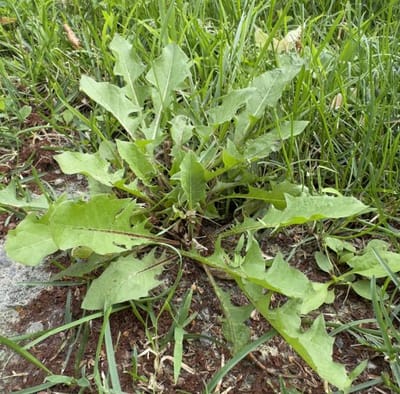
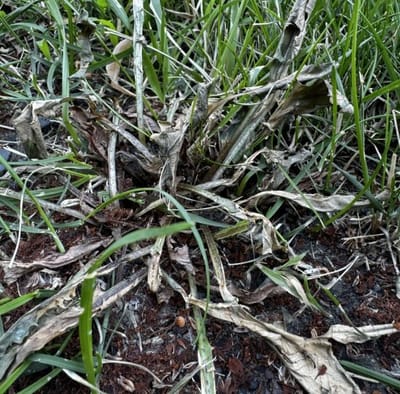
Real before-and-after results from Salacia-treated weeds.
View all 46 weeds in our interactive Weed Control Guide →
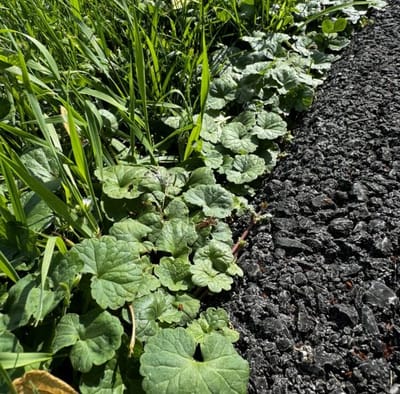
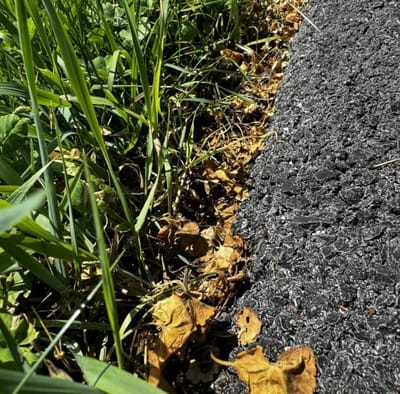
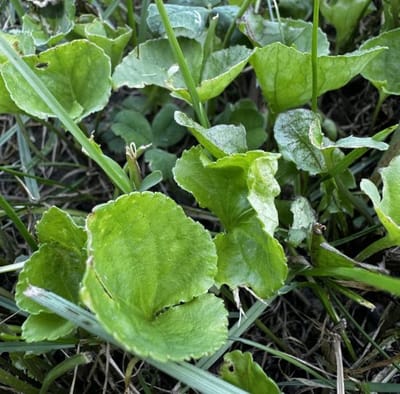
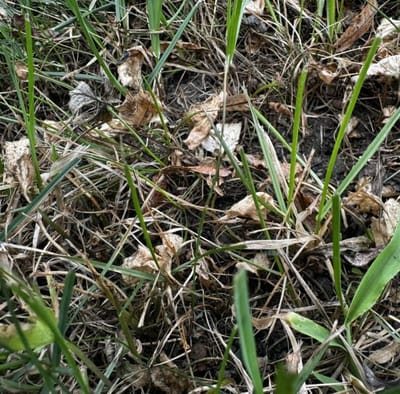
Not sure what's in your Texas lawn?
Our Weed Control Guide covers 46 weeds with before-and-after photos, mixing rates, treatment techniques, and full guides.
Explore the Weed Control Guide →Fighting more than one weed?
Most lawns battling one broadleaf weed have others growing alongside it. Our ranked guide to the best weed killer that won't kill grass covers the full lineup a selective treatment clears in the same pass.

Lanaturo
Intelligence
Not sure which weed you're looking at? Show Sal.
Sal is the lawn-care brain behind Lanaturo Intelligence. He doesn't just name the weed — he builds your exact treatment plan and checks whether today is the right day to spray.
Ready to Take Back Your Lawn?
Salacia™ is the first OMRI-certified selective organic herbicide — kills weeds, not grass. Choose your lawn size:
Texas yards deserve better than chemicals
that punish your family for having a lawn.
From Plano to Austin to Houston — every region, every grass type, every weed on this list. One bag. One solution. No compromises.
This guide is for informational purposes only. Always follow the product label directions when applying any herbicide. Results may vary based on weed species, lawn health, application technique, and environmental conditions. Salacia is designed to be selective, but temporary paling or yellowing on lawn grass is possible. Test a small area first.